SAN SEBASTIAN (PROBABLY)
Protected Area
South-East Islay Skerries
Why dive here
With 112+ marine species recorded in the area - including blue whales, dolphins, dwarf minke whales, humpback whales and ocean sunfish (mola mola) - SAN SEBASTIAN (PROBABLY) offers some of Scottish West Coast's richest wreck diving.
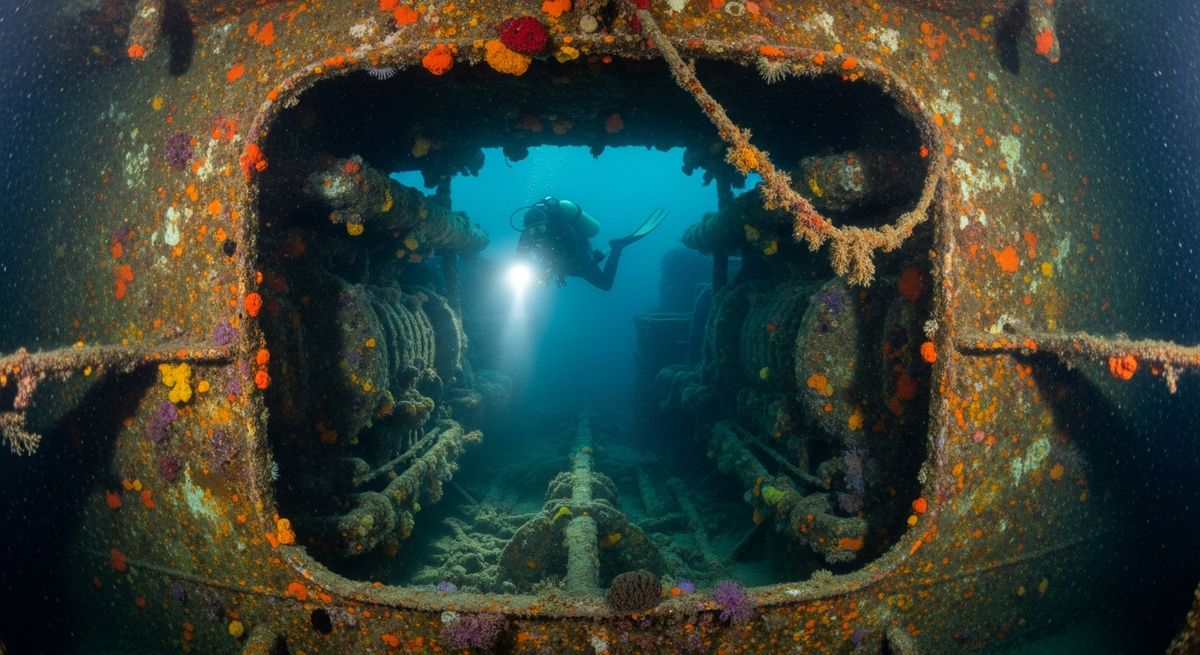
The San Sebastian, or what we’re pretty sure is the San Sebastian, sits upright in the shallows off the Scottish west coast. This trawler went down in 1937, and while time and fishing gear have taken their toll, you can still make out the distinct lines of a working vessel. We’ve found the single boiler and the triple expansion engine are the main points of interest, now draped in dead man’s fingers and home to plenty of wrasse darting between the plates. It’s a nice shallow dive, maxing out at 9 metres, making it a good option for a relaxed exploration, perhaps as a second dive when you’re not looking for anything too demanding. The hull provides plenty of cover for squat lobsters and the occasional conger eel.
Typical SAN SEBASTIAN (PROBABLY) Dive Profile
Illustrative profile based on site depth and type. Actual dive profiles vary - always follow your dive computer and training.
Safety Notes
Wreck site - avoid penetration without wreck diving certification. Watch for sharp metal and entanglement hazards.
Reviews for SAN SEBASTIAN (PROBABLY)
Conditions
Ocean conditions, forecast and tides for SAN SEBASTIAN (PROBABLY)
Plan & book
Ways to dive Scottish West Coast, from day trips to liveaboards.
Day trips & courses
via GetYourGuideGuided dives, courses and snorkel trips with instant booking.
Find dive trips in Scottish West CoastPlaces to stay
via Booking.comHotels and dive resorts near Scottish West Coast.
Search stays in Scottish West CoastDive insurance
Most travel insurance excludes or limits scuba. Check what you need before you go.
Dive insurance explainedPartner links: we may earn a commission if you book, at no extra cost to you. How we make money
Where to Stay near SAN SEBASTIAN (PROBABLY)
Prices from Booking.com. We may earn a commission at no extra cost to you.