ST CLAIR
Protected Area
Crossapol and Gunna
Why dive here
With 112+ marine species recorded in the area - including blue whales, dolphins, dwarf minke whales, humpback whales and ocean sunfish (mola mola) - ST CLAIR offers some of Scottish West Coast's richest wreck diving.
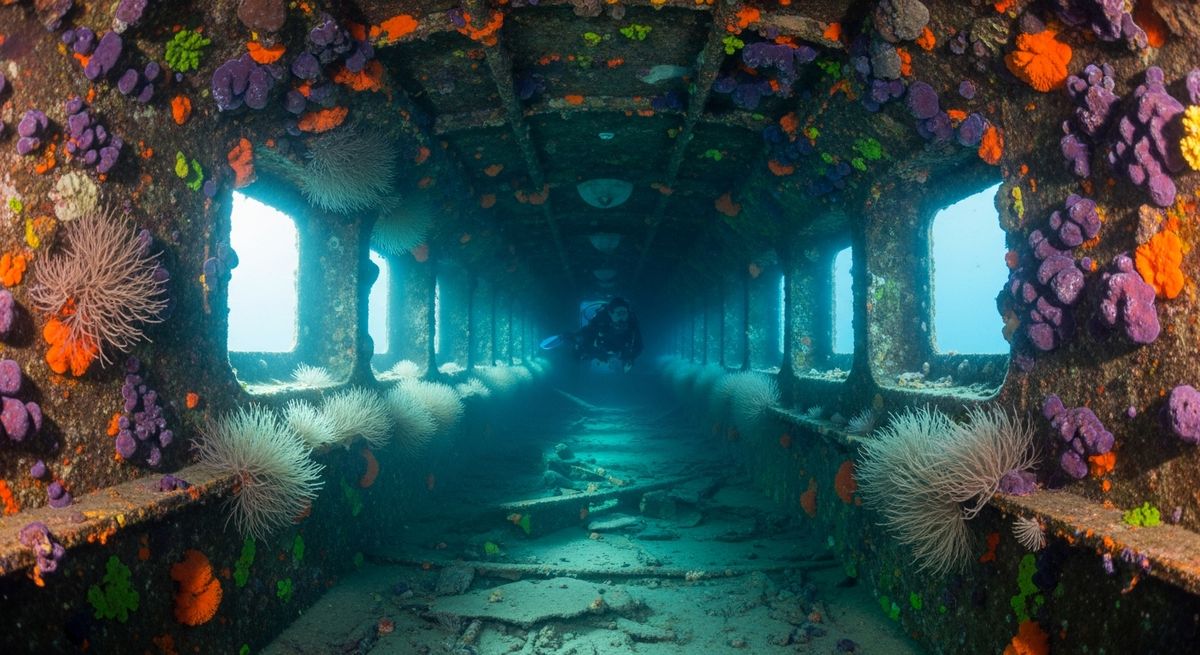
Diving the St Clair on Scotland's west coast offers a proper slice of maritime history, even if she isn't the biggest wreck out there. This iron-built steamship, down since 1880, sits upright at 23 metres, largely intact. You can trace her lines, spotting the single boiler and the still-visible engine works, a real testament to Victorian engineering. Over the years, the wreck has become a solid home for critters; expect to find wrasse darting between the plates, and plenty of anenomes clinging to the metalwork. It’s a good one for those who appreciate a wreck with a clear story, not just a pile of scattered debris.
Typical ST CLAIR Dive Profile
Illustrative profile based on site depth and type. Actual dive profiles vary - always follow your dive computer and training.
Safety Notes
Depth of 23m - Advanced Open Water certification recommended.
Wreck site - avoid penetration without wreck diving certification. Watch for sharp metal and entanglement hazards.
Always perform a 3-minute safety stop at 5m before surfacing.
Reviews for ST CLAIR
Conditions
Ocean conditions, forecast and tides for ST CLAIR
Plan & book
Ways to dive Scottish West Coast, from day trips to liveaboards.
Day trips & courses
via GetYourGuideGuided dives, courses and snorkel trips with instant booking.
Find dive trips in Scottish West CoastPlaces to stay
via Booking.comHotels and dive resorts near Scottish West Coast.
Search stays in Scottish West CoastDive insurance
Most travel insurance excludes or limits scuba. Check what you need before you go.
Dive insurance explainedPartner links: we may earn a commission if you book, at no extra cost to you. How we make money
Where to Stay near ST CLAIR
Prices from Booking.com. We may earn a commission at no extra cost to you.