WALLACHIA
Protected Area
Largs Coast Section
Why dive here
With 112+ marine species recorded in the area - including blue whales, dolphins, dwarf minke whales, humpback whales and ocean sunfish (mola mola) - WALLACHIA offers some of Scottish West Coast's richest wreck diving.
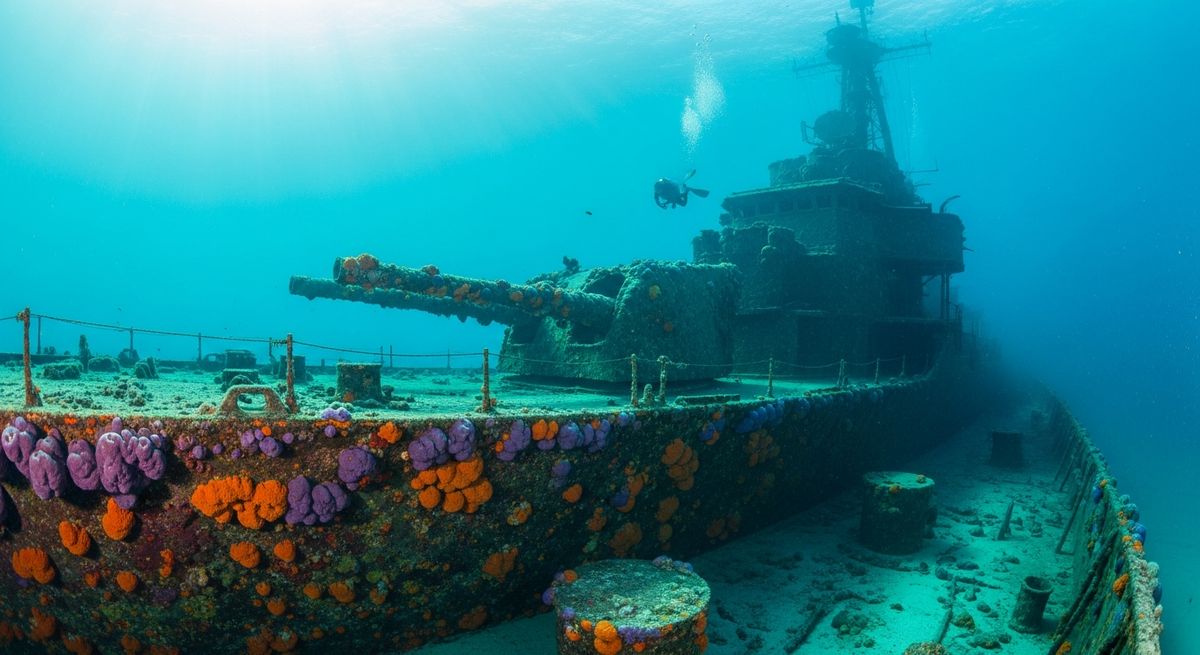
The Wallachia is exactly why we love wreck diving in Scotland, especially on the west coast. She’s an iron steamship, sunk in 1895, and lying upright at 32 metres, with her bow pointing north. The visibility here can be superb, letting you really appreciate the scale of this 78-metre vessel. You can drop onto her deck and explore the collapsed holds, which are now home to some seriously chunky conger eels – we’ve seen heads the size of small dogs peeking out from the gloom. What makes the Wallachia special, for us, is how intact she feels for a wreck of her age. The two large boilers are prominent, and you can still make out the engine room structure, often draped in dead man’s fingers. The stern section is particularly photogenic, with a decent propeller still in place and usually covered in jewel anemones, glowing orange and pink in your torch beam. This is a dive for experienced wreck enthusiasts who appreciate history and don't mind the chillier North Atlantic waters. We’d suggest a good drysuit and a solid dive light to properly appreciate the nooks and crannies. Keep an eye out for ling lurking in the shadows and inquisitive wrasse darting between the deck plates.
Typical WALLACHIA Dive Profile
Illustrative profile based on site depth and type. Actual dive profiles vary - always follow your dive computer and training.
Safety Notes
Deep dive (32m) - monitor air consumption closely. Advanced certification recommended.
Wreck site - avoid penetration without wreck diving certification. Watch for sharp metal and entanglement hazards.
Always perform a 3-minute safety stop at 5m before surfacing.
Nearest Dive Centres to WALLACHIA
Dive shops near WALLACHIA
C&C MARINE SERVICES
Field Studies Council Millport
Just Dive In CIC
Splashsports Services
Fyne Diving
Scuba Diving Scotland
Reviews for WALLACHIA
Conditions
Ocean conditions, forecast and tides for WALLACHIA
Plan & book
Ways to dive Scottish West Coast, from day trips to liveaboards.
Day trips & courses
via GetYourGuideGuided dives, courses and snorkel trips with instant booking.
Find dive trips in Scottish West CoastPlaces to stay
via Booking.comHotels and dive resorts near Scottish West Coast.
Search stays in Scottish West CoastDive insurance
Most travel insurance excludes or limits scuba. Check what you need before you go.
Dive insurance explainedPartner links: we may earn a commission if you book, at no extra cost to you. How we make money
Where to Stay near WALLACHIA
Prices from Booking.com. We may earn a commission at no extra cost to you.