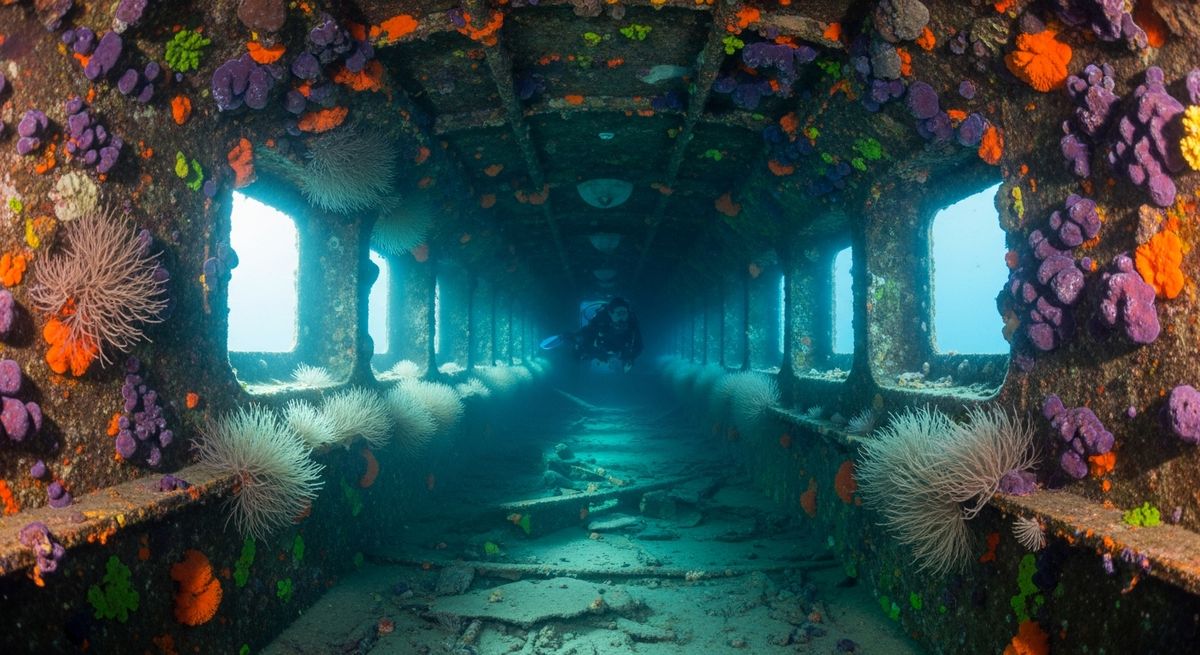
Wreck of Trelawney
Protected Area
Stevenston Beach
Why dive here
With 112+ marine species recorded in the area - including blue whales, dolphins, dwarf minke whales, humpback whales and ocean sunfish (mola mola) - Wreck of Trelawney offers some of Scottish West Coast's richest wreck diving.
Diving the Trelawney wreck, for us, is less about checklists and more about the atmosphere. It’s a deep dive, usually around 30 metres, which means you need to be comfortable with your buoyancy and watchful of your no-decompression limits. What we love about her is how she’s settled into the seabed, listing hard to port, giving the whole dive a sense of drama. You drop down onto the stern first, often in a gentle current, and the sheer scale of the ship starts to reveal itself. We always make a point of heading into the aft holds; they’re wide open and surprisingly accessible, even for newer wreck divers. Look out for the massive winches and machinery, now completely encrusted with dead man’s fingers and hydroids. The light filters down, creating these eerie shafts through the gloom, and it’s a proper feeling of exploration. Fish life here tends to be the usual suspects for a Scottish wreck: conger eels peeking out of pipes, wolfish often tucked away deep inside, and dense shoals of pollack swirling above the deck when the tide is just right. It’s not a vibrant coral reef, obviously, but it’s a living museum, and that’s why we keep coming back.
Safety Notes
Wreck site - avoid penetration without wreck diving certification. Watch for sharp metal and entanglement hazards.
Nearest Dive Centres to Wreck of Trelawney
Dive shops near Wreck of Trelawney
C&C MARINE SERVICES
Field Studies Council Millport
Just Dive In CIC
Splashsports Services
Scuba Diving Scotland
Reviews for Wreck of Trelawney
Conditions
Ocean conditions, forecast and tides for Wreck of Trelawney
Plan & book
Ways to dive Scottish West Coast, from day trips to liveaboards.
Day trips & courses
via GetYourGuideGuided dives, courses and snorkel trips with instant booking.
Find dive trips in Scottish West CoastPlaces to stay
via Booking.comHotels and dive resorts near Scottish West Coast.
Search stays in Scottish West CoastDive insurance
Most travel insurance excludes or limits scuba. Check what you need before you go.
Dive insurance explainedPartner links: we may earn a commission if you book, at no extra cost to you. How we make money
Where to Stay near Wreck of Trelawney
Prices from Booking.com. We may earn a commission at no extra cost to you.