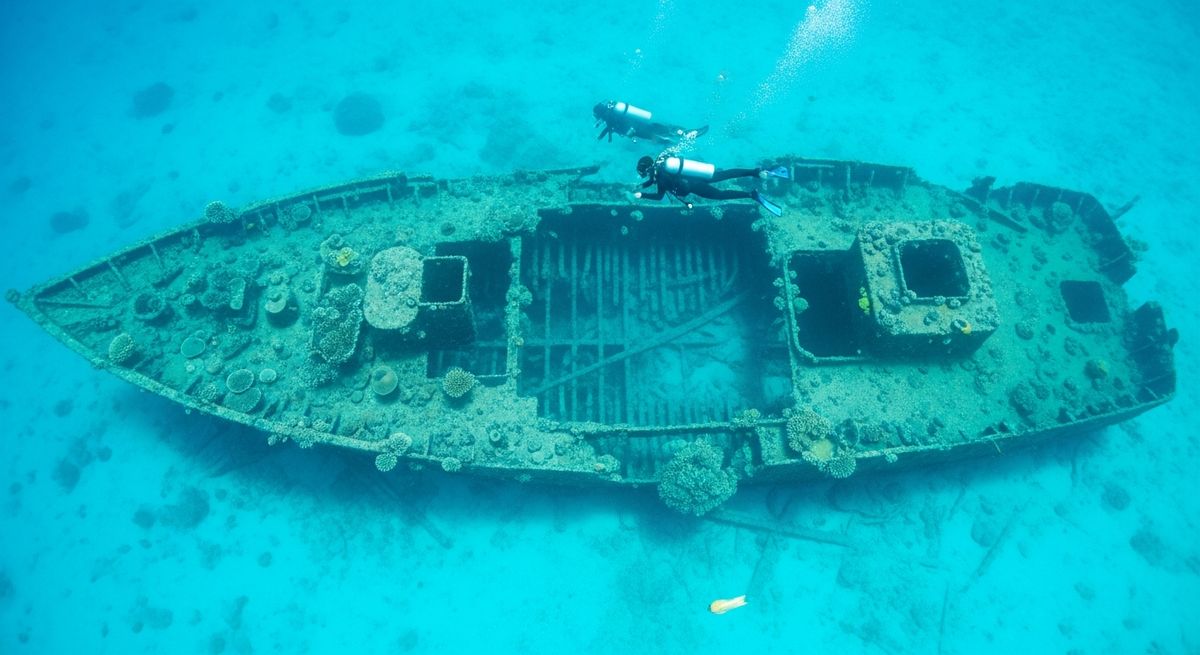
Costa Rican Trader Shipwreck
Protected Area
DUC Fee Simple Lands
Why dive here
With 77+ marine species recorded in the area - including blue sharks, dwarf minke whales, humpback whales, ocean sunfish (mola mola) and jellyfish lake - Costa Rican Trader Shipwreck offers some of Nova Scotia's richest wreck diving. Water ranges 1-17°C, warmest August, September, October.
The Costa Rican Trader wreck is a standout in Nova Scotia, a proper ship that’s become a cold-water reef. We love this site for its sheer presence, sitting upright and mostly intact on the seabed. Dropping down, the first thing you notice is the way the light filters through the murky surface, giving the whole wreck an eerie, blue-green glow. It’s got that classic wreck vibe – steel plates draped in green algae, the occasional porthole staring out like a blind eye. You can spend a good chunk of a dive finning along the decks, peeking into cargo holds, and imagining the ship's last moments. Look for the wolf eels tucked into crevices, their broad heads and toothy grins a welcome surprise, and the schools of pollock that swirl through the superstructure. For wreck enthusiasts who appreciate a bit of history and a lively ecosystem, it’s a solid pick. We’d suggest going on a calm day; the surface chop can make the entry a bit challenging.
Safety Notes
Wreck site - avoid penetration without wreck diving certification. Watch for sharp metal and entanglement hazards.
Cold water this month (avg 15°C). Drysuit or thick wetsuit (7mm+) recommended.
Nearest Dive Centres to Costa Rican Trader Shipwreck
Dive shops near Costa Rican Trader Shipwreck
View all dive centres in Nova ScotiaReviews for Costa Rican Trader Shipwreck
Conditions
Ocean conditions, forecast and tides for Costa Rican Trader Shipwreck
Costa Rican Trader Shipwreck Ocean Conditions
Monthly averages for Costa Rican Trader Shipwreck, sourced from Open-Meteo marine data + Copernicus Marine (EU) - nearest station: Open-Meteo marine grid (44.6, -63.5) (0km away)
October Averages
Sea Temperature
15°C
58°F · Range: 8.7–17.2°C
Current Speed
1 cm/s
Direction: N (0°)
Salinity
30.56 PSU
Based on 4 years of monitoring data · Data sources: Open-Meteo marine data + Copernicus Marine (EU)
Plan & book
Ways to dive Nova Scotia, from day trips to liveaboards.
Day trips & courses
via GetYourGuideGuided dives, courses and snorkel trips with instant booking.
Find dive trips in Nova ScotiaPlaces to stay
via Booking.comHotels and dive resorts near Nova Scotia.
Search stays in Nova ScotiaDive insurance
Most travel insurance excludes or limits scuba. Check what you need before you go.
Dive insurance explainedPartner links: we may earn a commission if you book, at no extra cost to you. How we make money
Where to Stay near Costa Rican Trader Shipwreck
Prices from Booking.com. We may earn a commission at no extra cost to you.