Cross Island
Protected Area
Grassy Island Nature Reserve
Why dive here
With 77+ marine species recorded in the area - including blue sharks, dwarf minke whales, humpback whales, ocean sunfish (mola mola) and jellyfish lake - Cross Island offers some of Nova Scotia's richest wreck diving. Water ranges 1-17°C, warmest August, September, October.
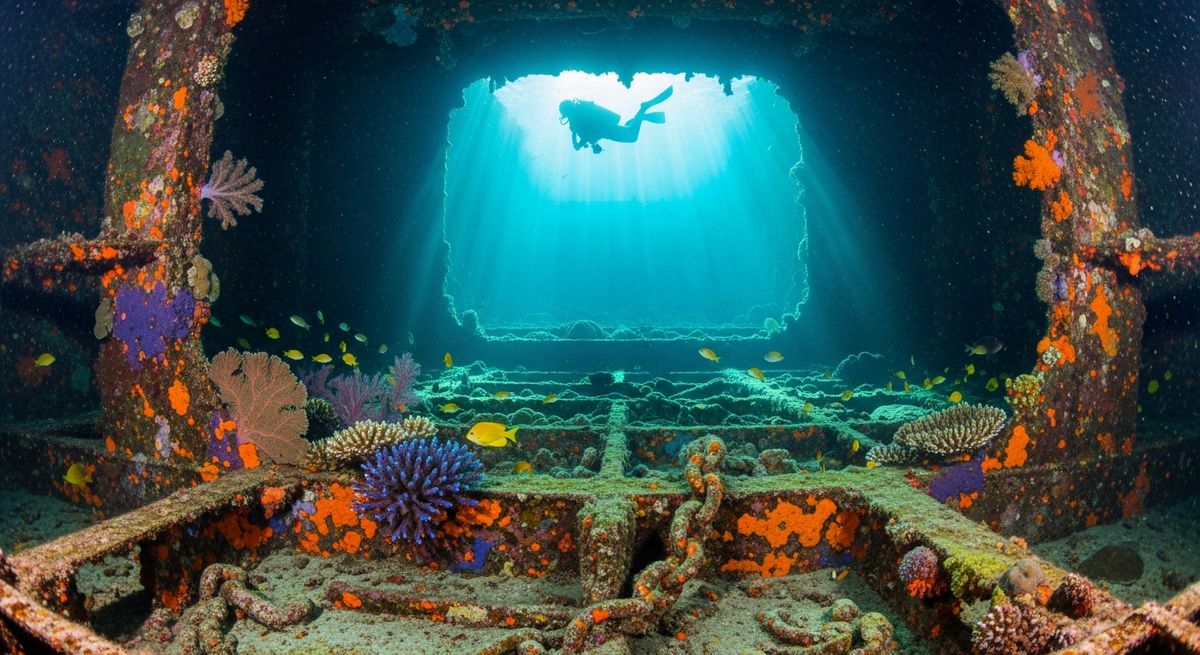
Cross Island isn't your typical colourful reef dive, and that's exactly why we love it. Out here on the exposed Atlantic coast, the wrecks are gnarly, broken, and utterly compelling. We’re talking about a graveyard of ships, really, especially the remains of the SS **Cape Breton**, a freighter that met its end here in 1957. Dropping down, the gloom feels… different. It's colder, darker, but incredibly atmospheric. The wreck itself is pretty mangled, split into sections, but that just adds to the sense of history. You push through the kelp, thick like a forest canopy, and suddenly you’re over these twisted metal plates and beams. Look closely and you’ll find wolfish lurking in the crevices, their grumpy faces peering out, and often schools of pollack swirling above the wreckage. The visibility can be hit or miss, but even on a murkier day, the sheer scale of the wreck, silhouetted against the emerald light filtering from above, is impressive. We'd suggest checking conditions carefully before heading out, as currents can be strong, and the exposed location means swells are often a factor. This one’s for divers who appreciate history, a bit of an adventure, and don't mind trading bright corals for a truly wild, rugged dive experience.
Typical Cross Island Dive Profile
Illustrative profile based on site depth and type. Actual dive profiles vary - always follow your dive computer and training.
Safety Notes
Wreck site - avoid penetration without wreck diving certification. Watch for sharp metal and entanglement hazards.
Cold water this month (avg 15°C). Drysuit or thick wetsuit (7mm+) recommended.
Reviews for Cross Island
Conditions
Ocean conditions, forecast and tides for Cross Island
Cross Island Ocean Conditions
Monthly averages for Cross Island, sourced from Open-Meteo marine data + Copernicus Marine (EU) - nearest station: Open-Meteo marine grid (44.6, -63.5) (0km away)
October Averages
Sea Temperature
15°C
58°F · Range: 8.7–17.2°C
Current Speed
1 cm/s
Direction: N (0°)
Salinity
30.56 PSU
Based on 4 years of monitoring data · Data sources: Open-Meteo marine data + Copernicus Marine (EU)
Plan & book
Ways to dive Nova Scotia, from day trips to liveaboards.
Day trips & courses
via GetYourGuideGuided dives, courses and snorkel trips with instant booking.
Find dive trips in Nova ScotiaPlaces to stay
via Booking.comHotels and dive resorts near Nova Scotia.
Search stays in Nova ScotiaDive insurance
Most travel insurance excludes or limits scuba. Check what you need before you go.
Dive insurance explainedPartner links: we may earn a commission if you book, at no extra cost to you. How we make money
Where to Stay near Cross Island
Prices from Booking.com. We may earn a commission at no extra cost to you.