HALHAWK
Protected Area
DUC Fee Simple Lands
Why dive here
With 77+ marine species recorded in the area - including blue sharks, dwarf minke whales, humpback whales, ocean sunfish (mola mola) and jellyfish lake - HALHAWK offers some of Nova Scotia's richest wreck diving. Water ranges 1-17°C, warmest August, September, October.
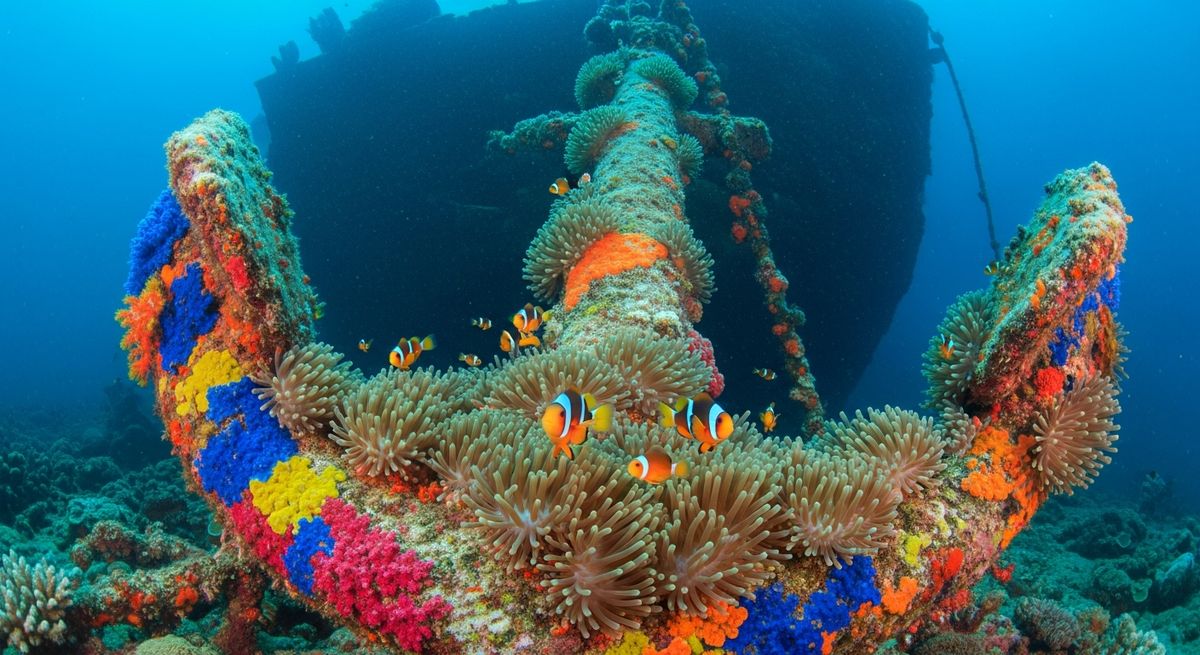
Alright, let's talk about the HALHAWK. This isn't your typical deep wreck dive, and that's precisely why we love it. Sunk in 1969, this fishing vessel lies completely exposed at two metres deep, making it one of the most accessible wreck dives you'll ever do. It’s perfect for snorkelers, freedivers, or anyone just getting comfortable in their drysuit who wants to explore a piece of history without the pressure of depth or complex navigation. When we dive the HALHAWK, we spend our time picking through the ribs of the boat, noticing how the rust has painted the surrounding rocks in oranges and browns. You’ll see schools of small sculpins darting between the metal plates and sometimes a curious crab peeking from under a hull section. Our favourite part? How the sunlight plays on the exposed timbers, creating a shifting mosaic of light and shadow, even on a cloudy day. It’s a completely different kind of wreck experience, one that encourages slow exploration and a real connection to the wreck’s past, rather than just a quick swim-through. Keep an eye out for the remnants of old fishing gear still tangled in the wreckage – it tells a story.
Typical HALHAWK Dive Profile
Illustrative profile based on site depth and type. Actual dive profiles vary - always follow your dive computer and training.
Safety Notes
Wreck site - avoid penetration without wreck diving certification. Watch for sharp metal and entanglement hazards.
Cold water this month (avg 15°C). Drysuit or thick wetsuit (7mm+) recommended.
Nearest Dive Centres to HALHAWK
Dive shops near HALHAWK
View all dive centres in Nova ScotiaReviews for HALHAWK
Conditions
Ocean conditions, forecast and tides for HALHAWK
HALHAWK Ocean Conditions
Monthly averages for HALHAWK, sourced from Open-Meteo marine data + Copernicus Marine (EU) - nearest station: Open-Meteo marine grid (44.6, -63.5) (0km away)
October Averages
Sea Temperature
15°C
58°F · Range: 8.7–17.2°C
Current Speed
1 cm/s
Direction: N (0°)
Salinity
30.56 PSU
Based on 4 years of monitoring data · Data sources: Open-Meteo marine data + Copernicus Marine (EU)
Plan & book
Ways to dive Nova Scotia, from day trips to liveaboards.
Day trips & courses
via GetYourGuideGuided dives, courses and snorkel trips with instant booking.
Find dive trips in Nova ScotiaPlaces to stay
via Booking.comHotels and dive resorts near Nova Scotia.
Search stays in Nova ScotiaDive insurance
Most travel insurance excludes or limits scuba. Check what you need before you go.
Dive insurance explainedPartner links: we may earn a commission if you book, at no extra cost to you. How we make money
Where to Stay near HALHAWK
Prices from Booking.com. We may earn a commission at no extra cost to you.