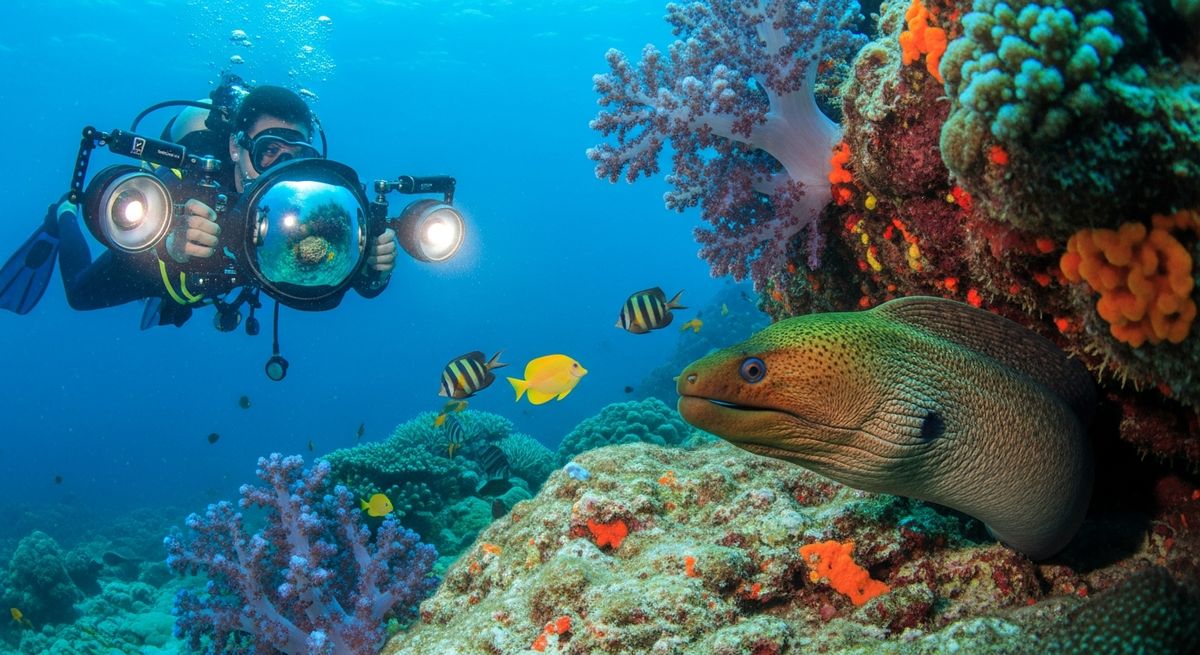
El Bajo - Sea of Cortez

El Bajo, near Cabo Pulmo, is a collection of three submerged peaks. We usually focus on the central one, since it’s the shallowest, topping out around 18-25 meters, giving you more bottom time. This is a site for advanced divers, primarily because you’re here for the scalloped hammerheads. They school around the pinnacles, sometimes in numbers that will genuinely surprise you – it’s a proper highlight of diving in the Sea of Cortez. Keep an eye on your depth and no-decompression limits, though; it’s easy to get absorbed watching them.

Location
Sea of Cortez, Mexico, North America
Coordinates
24.650000, -110.583300

Marine Protected Area: Zona marina del Archipiélago de Espíritu Santo

Best Time to Dive in Sea of Cortez

The warmest water temperatures in Sea of Cortez occur in September, averaging 30.4°C. The coolest conditions are in February at 21.1°C.

Monthly Water Temperatures

  • January: 22.2°C
  • February: 21.1°C
  • March: 21.5°C
  • April: 22.6°C
  • May: 24.8°C
  • June: 27.1°C
  • July: 29.1°C
  • August: 30.1°C
  • September: 30.4°C
  • October: 29.8°C
  • November: 27.6°C
  • December: 25.1°C

Nearby Dive Sites in Sea of Cortez

Nearest Dive Centres to El Bajo

Marine Life in Sea of Cortez

Home to 197 recorded species including 172 reef fish, 14 whales & dolphins, 5 sharks & rays, 3 other, 1 sea cucumbers, 1 seagrass & algae.

Notable Species

Recommended Packing List for El Bajo

Based on average water temperature of 26.0°C, currents 9 cm/s.

  • Shorty or Rashguard - warm 26°C water needs minimal exposure protection
  • Mask - essential for every dive
  • Fins
  • BCD - buoyancy compensator
  • Regulator - your most safety-critical piece of gear
  • Dive Computer - tracks depth, time, and NDL
  • Surface Marker Buoy (SMB) - essential for boat pickups
  • Dive Torch - useful for crevices and colour at depth
  • Underwater Camera - capture your diving memories

Frequently Asked Questions

What is the typical depth range for diving at El Bajo?
The submerged peaks at El Bajo rise between 50-80 ft (18-25m), which represents the commonly explored shallowest parts of the dive. However, divers can explore much greater depths around these pinnacles, depending on their experience and dive plan. The central peak, being the shallowest, allows for longer dive times within this range.
What kind of marine life, especially large pelagics, can divers expect to see at El Bajo?
The primary attraction at El Bajo is the opportunity to encounter large schools of scalloped hammerhead sharks, a true highlight of the Sea of Cortez. These impressive pelagics frequently circle the pinnacles, with groups sometimes numbering up to 100 individuals. This makes El Bajo a premier destination for thrilling shark encounters.
How difficult is the El Bajo dive site, and is it suitable for all experience levels?
El Bajo is officially rated as an intermediate dive site, though its description also notes it as an advanced site. While the central peak is shallower, the potential for much greater depths means it is not suitable for absolute beginners. Divers should possess appropriate experience and certifications for deeper dives and potentially challenging conditions.
What is the best time of year to dive El Bajo for optimal conditions and specific marine life encounters like hammerhead sharks?
The provided data does not specify the best time of year for diving El Bajo or for optimal conditions and specific marine life encounters like hammerhead sharks. For seasonal information regarding the Sea of Cortez, we recommend consulting a dedicated when to dive resource.
What scuba diving certifications are required to dive at El Bajo?
While specific certifications are not explicitly stated in the data, El Bajo is an intermediate rated site with potential for much greater depths beyond the 50-80 ft (18-25m) peaks. Therefore, an Advanced Open Water certification or equivalent is highly recommended. This ensures divers are adequately prepared for deeper profiles and potentially varying conditions at this site.
What are the typical current and surface conditions like at El Bajo?
The provided data does not contain specific information regarding the typical current or surface conditions at El Bajo. However, as an intermediate rated site featuring submerged pinnacles and the potential for greater depths, divers should be prepared for varying conditions. It is always advisable to consult with local dive operators for the most current conditions before planning your dive.