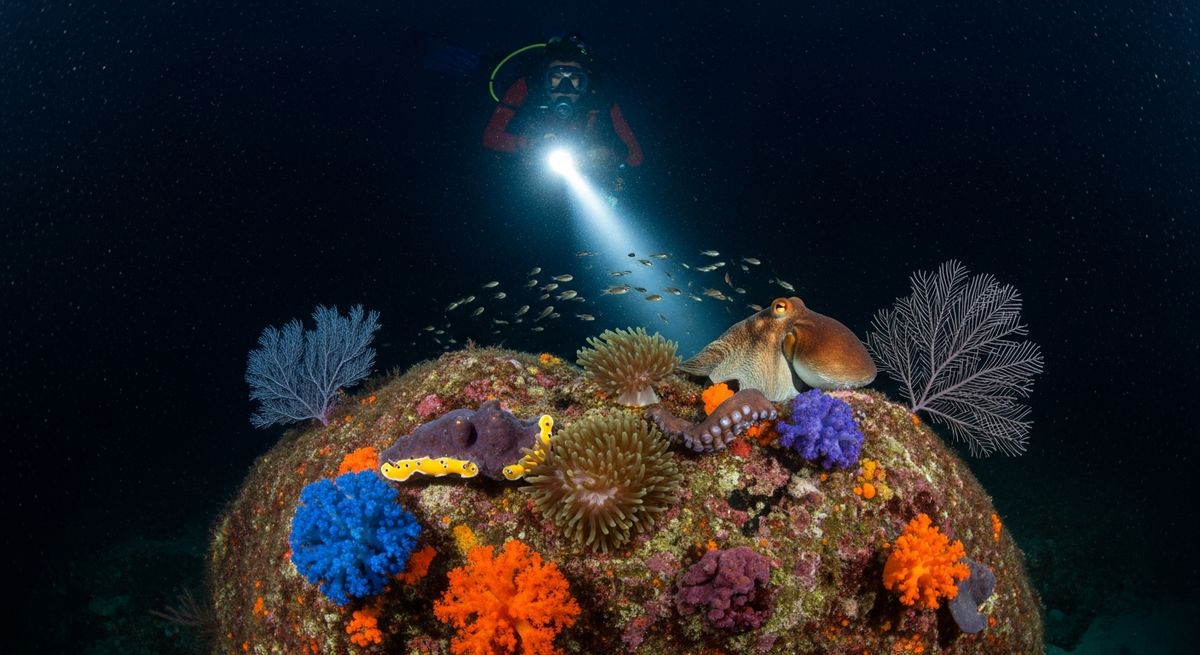
Ras Corali - Gulf of Tadjoura

Ras Corali, tucked away in Djibouti's Gulf of Tadjoura, is definitely one for the logbook if you like a bit of pace. The currents here are consistent, making it a proper drift dive along steep walls and slopes that are generously draped in coral. We’ve found the clear water often brings in the bigger pelagics; think reef sharks cruising the blue and rays gliding past in the distance. It’s a site that rewards experienced divers who are comfortable with moving water and want to cover some ground underwater.

Location
Gulf of Tadjoura, Djibouti, Red Sea & Middle East
Coordinates
11.783300, 43.166700

Marine Protected Area: Iles Musha et Maskhali

Best Time to Dive in Gulf of Tadjoura

The warmest water temperatures in Gulf of Tadjoura occur in January, averaging 26.9°C. The coolest conditions are in December at 26.9°C.

Monthly Water Temperatures

  • January: 26.9°C (air: 24.8°C)
  • February: 26.9°C (air: 25.3°C)
  • March: 26.9°C (air: 26.9°C)
  • April: 26.9°C (air: 28.9°C)
  • May: 26.9°C (air: 32.5°C)
  • June: 26.9°C (air: 35.7°C)
  • July: 26.9°C (air: 36.4°C)
  • August: 26.9°C (air: 34.9°C)
  • September: 26.9°C (air: 34.5°C)
  • October: 26.9°C (air: 30.2°C)
  • November: 26.9°C (air: 27.2°C)
  • December: 26.9°C (air: 25.5°C)

Nearby Dive Sites in Gulf of Tadjoura

Marine Life in Gulf of Tadjoura

Home to 205 recorded species including 95 hard corals, 75 reef fish, 8 sharks & rays, 6 crabs & lobsters, 5 sea cucumbers, 4 sea snails & nudibranchs.

Notable Species

Recommended Packing List for Ras Corali

Based on average water temperature of 26.9°C.

  • Shorty or Rashguard - warm 27°C water needs minimal exposure protection
  • Mask - essential for every dive
  • Fins
  • BCD - buoyancy compensator
  • Regulator - your most safety-critical piece of gear
  • Dive Computer - tracks depth, time, and NDL
  • Surface Marker Buoy (SMB) - essential for boat pickups
  • Dive Torch - useful for crevices and colour at depth
  • Underwater Camera - capture your diving memories

Frequently Asked Questions

What is the typical depth range for diving at Ras Corali?
The typical depth range for diving at Ras Corali is not specified in our current data. However, as a reef dive site featuring steep walls and coral-covered slopes, divers can expect varied depths. It's always best to consult with local dive operators for the most up-to-date information on specific dive profiles.
What kind of marine life and coral formations can divers expect to see at Ras Corali?
Divers at Ras Corali can expect to encounter beautiful coral-covered slopes. The exceptionally clear waters make it an ideal location for spotting larger marine creatures, including various species of sharks and rays.
How difficult is diving at Ras Corali, and is it suitable for beginner divers?
Diving at Ras Corali is rated as intermediate difficulty. Due to the presence of strong currents, it is particularly suited for experienced divers who are comfortable with drift diving. Beginner divers may find the conditions challenging and should consider other sites in the Gulf of Tadjoura.
What are the best months or seasons to dive at Ras Corali for optimal conditions?
Our current data does not specify the best months or seasons for optimal diving conditions at Ras Corali. For detailed seasonal information, we recommend consulting local dive operators in Djibouti or checking our When to Dive guide for general regional advice.
Are there any specific diving certifications required to dive at Ras Corali?
While specific diving certifications are not explicitly stated for Ras Corali, its intermediate difficulty and strong currents suggest that an advanced certification or significant experience in drift diving would be highly beneficial. Divers should always confirm requirements with their chosen dive operator in the Gulf of Tadjoura.
What are the typical current conditions and visibility like at Ras Corali?
Ras Corali is known for its strong currents, making it an excellent location for drift diving. Despite the currents, divers can expect exceptionally clear waters, providing excellent visibility for observing the marine environment.