PRINCE ARAC
Protected Area
Manglares El Morro
Why dive here
With 145+ marine species recorded in the area - including blue whales, dolphins, humpback whales, manta rays and mobula rays (devil rays) - PRINCE ARAC offers some of Isla de la Plata's richest wreck diving. Water ranges 25-28°C, warmest February, March, April.
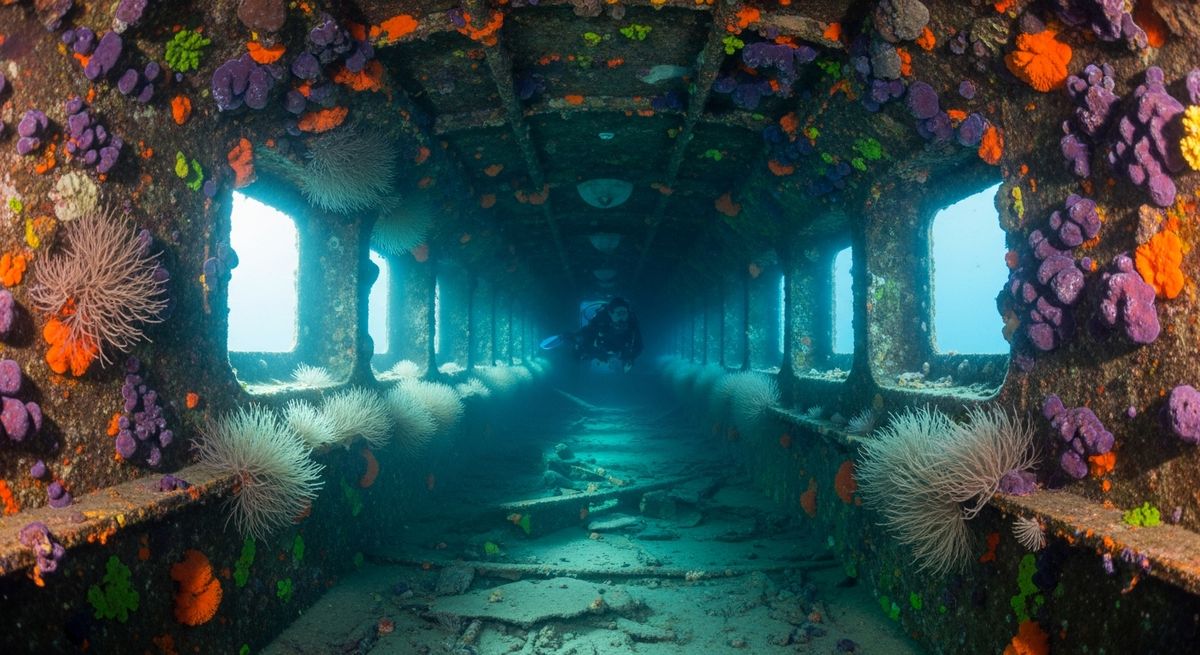
The Prince Arac, an old tanker, went down in '86 after a tank explosion. It’s a shallow wreck, sitting at just nine metres off Isla de la Plata, which means plenty of bottom time and great light penetration. We love how accessible it is; even newer divers can poke around without feeling overwhelmed. You can still make out the superstructure, and the sheer scale of an 86-metre ship in such shallow water is always impressive. The wreck itself is a magnet for the local reef fish, particularly the grunts and snappers that school thick around the fallen metal. Look closely at the hull and you’ll find nudibranchs crawling over the encrusting corals. Our favourite part has to be the feeling of the sunbeams cutting through the water, dappling the deck. It's not a site for big pelagics, but for a relaxed dive exploring a piece of history that’s become an artificial reef, it's pretty special. We’d suggest going in the morning before any wind picks up, when the visibility tends to be at its best.
Typical PRINCE ARAC Dive Profile
Illustrative profile based on site depth and type. Actual dive profiles vary - always follow your dive computer and training.
Safety Notes
Wreck site - avoid penetration without wreck diving certification. Watch for sharp metal and entanglement hazards.
Reviews for PRINCE ARAC
Conditions
Ocean conditions, forecast and tides for PRINCE ARAC
PRINCE ARAC Ocean Conditions
Monthly averages for PRINCE ARAC, sourced from Open-Meteo marine data + Copernicus Marine (EU) - nearest station: Open-Meteo marine grid (-1.94, -80.79) (26km away)
October Averages
Sea Temperature
25°C
76°F · Range: 23.5–25.9°C
Current Speed
2.24 cm/s
Direction: NE (63.4°)
Chlorophyll-a
0.733 mg/m³
Moderate productivity
Salinity
33.26 PSU
Based on 4 years of monitoring data · Data sources: Open-Meteo marine data + Copernicus Marine (EU)
Plan & book
Ways to dive Isla de la Plata, from day trips to liveaboards.
Day trips & courses
via GetYourGuideGuided dives, courses and snorkel trips with instant booking.
Find dive trips in Isla de la PlataPlaces to stay
via Booking.comHotels and dive resorts near Isla de la Plata.
Search stays in Isla de la PlataDive insurance
Most travel insurance excludes or limits scuba. Check what you need before you go.
Dive insurance explainedPartner links: we may earn a commission if you book, at no extra cost to you. How we make money
Where to Stay near PRINCE ARAC
Prices from Booking.com. We may earn a commission at no extra cost to you.