Diving in Morrocoy & Chichiriviche
Why dive here
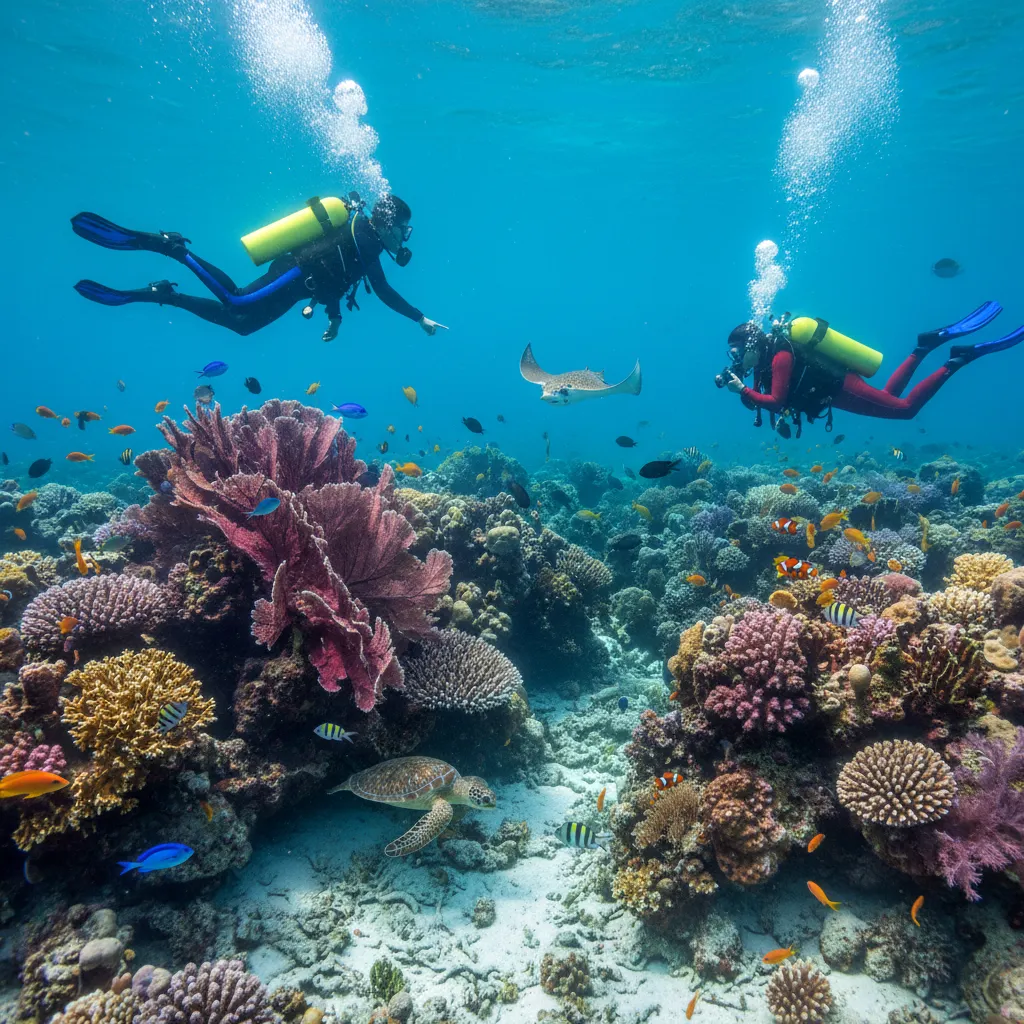
Morrocoy & Chichiriviche offers some of Venezuela's richest diving, with 259+ marine species recorded in the area - including barracuda, dolphins, lemon sharks, orcas and sea turtles.
Morrocoy, with its scattered islands and mainland mangroves, isn’t about huge pelagics or dramatic drop-offs. It’s about the smaller things, the quiet details you might miss if you’re always looking out to sea. We love the feeling of slipping into the calm, warm water, especially around the leeward side of places like Cayo Sombrero. You’ll spend most dives between 10 and 18 metres, often drifting gently over patch reefs or alongside a quiet wall. Our favourite dives often involve a slow cruise, letting the current do the work while we hunt for Slender Filefish tucked into gorgonians or watch Atlantic Lookdowns shimmer past. Keep an eye out for the Elliptical star coral and Great star coral formations - they’re pretty spectacular in their own right, and often host Christmas tree worms in every colour you can imagine. We’d suggest focusing on the morning dives; the light penetration through the shallows is just gorgeous, really bringing out the reds and oranges of the sponges. Conditions here are generally very mellow, making it a super spot for getting back into the swing of things after a break, or for newer divers.
Morrocoy & Chichiriviche Dive Site Map
Dive sites and dive centres in Morrocoy & Chichiriviche
Morrocoy & Chichiriviche Dive Sites
23 dive sites in Morrocoy & Chichiriviche
Bajo de Canaveral
Bajo de Canaveral is a straightforward dive off the coast of Morrocoy. We’ve found it’s a good spot for newer divers, often calm with decent visibility, typically around 10-15 meters. Expect to see schools of snappers and grunts, with the occasional barracuda cruising by. It’s a solid, undemanding dive if you’re looking for an easy afternoon out.
Bajo de Chuao
Bajo de Chuao offers a solid dive experience off Morrocoy, Venezuela. We often see schools of snapper and barracuda moving through, with plenty of smaller reef fish darting between the coral heads. It's a pretty straightforward dive, good for knocking the dust off your gear or for newer divers getting comfortable in a new spot. Expect decent visibility, usually around 15 metres, depending on the season.
Caraballeda - Cayo Sal
Caraballeda, near Cayo Sal, is a straightforward dive off the coast of Morrocoy. We’ve found decent hard coral formations here, with the occasional parrotfish grazing the reef. Visibility is usually consistent, making it a good spot for newer divers looking for a relaxed introduction to the area. It’s a pleasant enough dive if you're in the vicinity.
Carabelleda - Caribe Soy
Carabelleda – Caribe Soy offers a straightforward reef dive within Morrocoy, popular for its dependable conditions. You’ll find healthy hard corals providing shelter for schooling snapper and grunts. It’s a solid choice for a relaxing afternoon dive, suitable for open water divers looking for an easy drift. We often see turtles here, too.
CAYO MEDIO
Cayo Medio sits right between Cayo Sur and Cayo Norte, and it’s one of those spots that just clicks. We love the quirky collection of junk here – a small fishing boat, a pickup truck, even a Jeep – all resting on the sand at around 17 meters. It’s not a grand historical wreck, but it’s certainly unique, and the marine life has really made it home. You’ll find Slate-pencil Urchins tucked into crevices, Shy Hamlets darting between the decaying metal, and plenty of Spotted Trunkfish poking around. Visibility averages about 7 meters, which gives it a wonderfully atmospheric, almost eerie feel as you descend onto the scattered debris. Our favourite is exploring the truck bed, often full of Cottonwicks and young Spot Snapper. It's a relaxed dive, great for anyone who enjoys pottering around a site and seeing how nature reclaims man-made objects.
CAYO NORTE
Cayo Norte always leaves us smiling. We love dropping in here, especially when the light hits just right, illuminating that shallow coral garden. It’s not about huge pelagics, though a barracuda might cruise past, more about the intricate details. Keep an eye out for those peculiar Bastard Eels wriggling through the sand patches, or a well-camouflaged Dark-spotted Snake Eel. The coral formations, including big heads of Thin Leaf Lettuce Coral, are a genuine highlight and surprisingly healthy. We often spend a fair bit of time just hovering, watching the French Grunts and Barred Grunts schooling, their stripes shimmering. The site has a maximum depth of 26 meters, but honestly, some of the best diving is shallower, around 10-15 meters, where the light is better and the coral thrives. Visibility averages 11 meters, but on a good day, it can easily push 20, making those schools of fish seem even more expansive. It's a great spot for newer divers, but also perfect for photographers who appreciate a macro hunt or just want to capture the vibrant coral scenery. You’ll spot plenty of Two-spined sea stars, and if you’re patient, maybe even a Hind or Porgy darting between the coral heads.
Cayo Pescadores
Cayo Pescadores is exactly what we picture when someone mentions Morrocoy. It’s a shallow, bright dive, topping out around 16m, making it perfect for a relaxed afternoon. The water often has that milky turquoise glow, especially on sunny days, which we think adds to the charm, even if it means visibility averages closer to 6m. We love dropping in here, particularly for the sheer density of French grunts. They hang in these shimmering schools, thick enough to make you feel like you're swimming through a liquid silver cloud. Keep an eye on the sand patches between the corals for sand gobies and even the elusive fringed filefish – they’re masters of camouflage but worth the patient search. Our favourite is spotting the shy hamlets peeking out from under ledges. It’s a great spot for newer divers, or anyone who just wants to glide over a lively, colourful reef without battling currents.
Cayo Sombrero
Cayo Sombrero is one of our favourite spots in Morrocoy, and it’s a great example of a beginner-friendly site that still delivers. We love drifting along the shallower sections, watching the light play over the massive elkhorn coral formations. You’ll see plenty of parrotfish here, munching away, and if you’re patient, you might spot a rockfish tucked into a crevice or a lobster peeking out from under a ledge. The reef averages around 3-15m, making it super accessible. Even though it’s shallow, there’s still plenty to see. Look out for the donkey dung sea cucumbers and the bright lavender rope sponges, they really add pops of colour. We’d suggest an early morning dive if you can swing it; the visibility tends to be at its best before the day boats really get going, and the light is just beautiful. It’s a perfect chill dive after exploring some of the deeper wrecks nearby.
Cayo Sombrero
Cayo Sombrero offers some gentle diving around rocky outcrops and small coral patches. You’ll generally find parrotfish grazing the algae and damselfish flitting through the nooks. It’s a good spot for newer divers or those looking for a relaxed afternoon, as currents tend to be mild. Surface intervals on the white sand beach are a real treat.
Cayo Sur
Cayo Sur offers a straightforward dive, popular with local operators. You'll generally find healthy hard coral formations and a good variety of reef fish. Visibility can vary, but on a good day, it's a pleasant enough dive for those looking to get wet and see some typical Caribbean reef life without any major challenges. We'd suggest it for divers who appreciate easy access and a relaxed pace.
Chichiriviche
Chichiriviche offers a straightforward boat dive, generally calmer than some of the more exposed Morrocoy sites. You’ll find a mix of hard corals and sponges, with a good chance of spotting parrotfish and snapper in the shallows. It's a comfortable spot for newer divers or those looking for a relaxed afternoon dip. Visibility is typically decent, though it can drop after heavy rains.
CLEVELAND
Cleveland isn’t just a sunken boat; it’s a time capsule with a story. This dredger rolled over and sank back in 1979 while still working, and that capsized position makes it really unique to explore. We love that it’s lying on its side, the hull a massive wall on one flank, opening up a different perspective on how wrecks usually settle. Dropping down, the sheer scale hits you. The propellor is huge, and you can still make out the workings of the dredging equipment, now heavily encrusted. Schools of snapper and grunts hang around the superstructure, darting in and out of the darker spaces. Look closely for moray eels tucked into crevices; they’re almost always there. It’s a proper penetration dive for those with the right training, but even just exploring the exterior offers plenty. The way the light filters through the remaining deck plates is fantastic, painting shafts of blue on the sand below. We’d suggest going in the morning; the visibility tends to be clearer, and the sun angle really brings out the wreck’s details.
Show all 23 dive sites in Morrocoy & Chichiriviche
Morrocoy & Chichiriviche Dive Centres
5 dive shops and operators in Morrocoy & Chichiriviche
Ocean Wildlife in Morrocoy & Chichiriviche
259 species recorded in Morrocoy & Chichiriviche
Morrocoy & Chichiriviche Daylight & Sunrise/Sunset
Sunrise and sunset times for Morrocoy & Chichiriviche, calculated from coordinates
Today - Sunday 11 October
Sunrise
05:21
Sunset
17:17
Daylight
11h 57m
Golden Hour
16:49
First light (dawn) at 04:59 · Last light (dusk) at 17:38
Monthly Averages
| Month | Sunrise | Sunset | Daylight |
|---|---|---|---|
| Jan | 05:54 | 17:28 | 11h 34m |
| Feb | 05:53 | 17:40 | 11h 47m |
| Mar | 05:40 | 17:43 | 12h 3m |
| Apr | 05:22 | 17:43 | 12h 21m |
| May | 05:10 | 17:47 | 12h 36m |
| JunLongest | 05:10 | 17:55 | 12h 44m |
| Jul | 05:17 | 17:59 | 12h 42m |
| Aug | 05:22 | 17:51 | 12h 29m |
| Sep | 05:22 | 17:34 | 12h 12m |
| OctNow | 05:21 | 17:15 | 11h 55m |
| Nov | 05:27 | 17:06 | 11h 39m |
| DecShortest | 05:42 | 17:12 | 11h 30m |
Times are approximate local times based on longitude. Actual times may vary slightly depending on the exact timezone observed in Morrocoy & Chichiriviche.
Where to Stay near Morrocoy & Chichiriviche
Prices from Booking.com. We may earn a commission at no extra cost to you.
Marine Protected Areas near Morrocoy & Chichiriviche
7 protected areas near Morrocoy & Chichiriviche - please respect local regulations when diving
Archipiélago Los Roques
Parque Nacional Archipiélago Los Roques
Morrocoy
Hueque - Sauca
Cuare
Refugio de Fauna Silvestre de Cuare
Playa Norte
Getting to Morrocoy & Chichiriviche
Puerto Cabello
Valencia
Maiquetía
Plan & book
Ways to dive Morrocoy & Chichiriviche, from day trips to liveaboards.
Day trips & courses
via GetYourGuideGuided dives, courses and snorkel trips with instant booking.
Find dive trips in Morrocoy & ChichirivichePlaces to stay
via Booking.comHotels and dive resorts near Morrocoy & Chichiriviche.
Search stays in Morrocoy & ChichirivicheDive insurance
Most travel insurance excludes or limits scuba. Check what you need before you go.
Dive insurance explainedPartner links: we may earn a commission if you book, at no extra cost to you. How we make money