Grand coude de Kele
Protected Area
Île Verte
Why dive here
With 116+ marine species recorded in the area - including dugongs, eagle rays, great white sharks, manta rays and mobula rays (devil rays) - Grand coude de Kele offers some of Loyalty Islands's richest reef diving. Water ranges 24-29°C, warmest January, February, March.
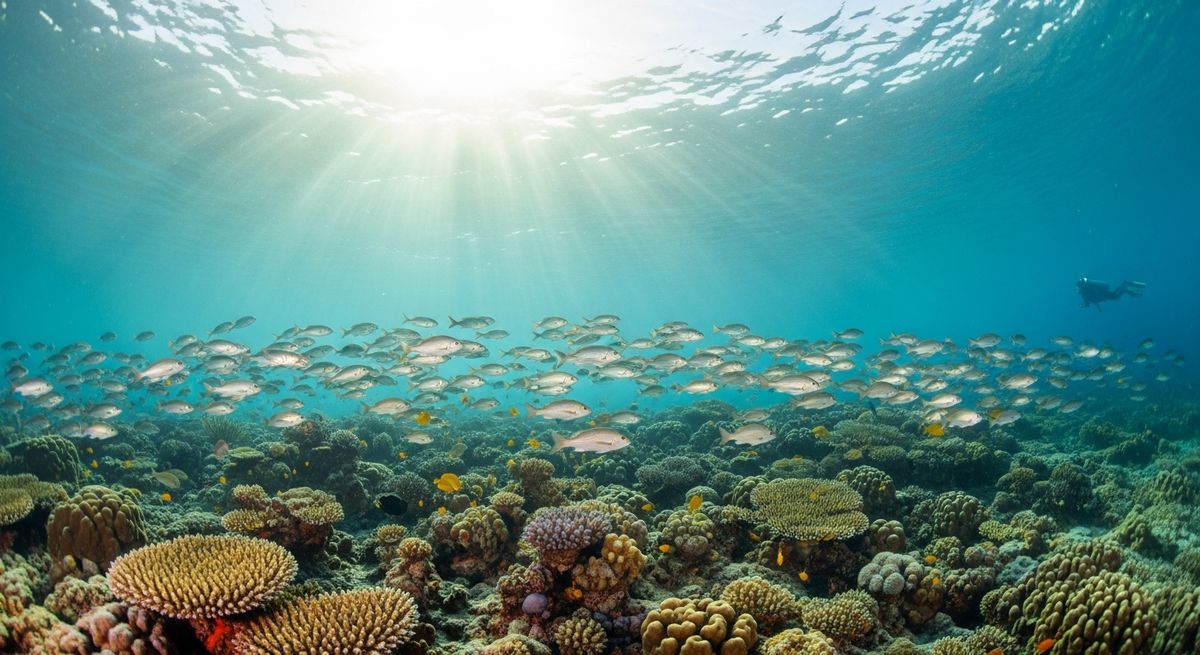
Grand Coude de Kele is a spot we keep coming back to in the Loyalty Islands. It’s a definite standout, and a personal favourite for a relaxed but rewarding dive. The name translates to ‘Big Elbow’, and that’s precisely what you get: a bend in the reef wall that creates some wonderfully sheltered pockets, even when there's a bit of current out deeper. We typically drop in right on the elbow and let the reef guide us along. The coral health here is really something; big, solid formations of porites and branching acropora that feel ancient. You’ll find those vibrant fluted clams tucked into crevices, their iridescent mantles pulsing. We’ve had some truly memorable encounters with schools of fusiliers here, so dense they momentarily block out the sun, followed by hunting black surgeonfish darting through the chaos. Keep an eye out for the resident bumphead parrotfish cruising the reef crest, too. They’re a real treat to watch. Maximum depth sits at around 24 metres, but honestly, some of the best action, especially the nudibranchs, is shallower, around the 10-15 metre mark. Visibility averages 19 metres, which gives you plenty of scope to take it all in. This site is brilliant for divers who appreciate healthy coral and diverse reef fish life, without needing extreme depths or challenging conditions. It’s perfect for a second dive of the day, when you want to soak up the atmosphere and spot the smaller stuff.
Reviews for Grand coude de Kele
Conditions
Ocean conditions, forecast and tides for Grand coude de Kele
Grand coude de Kele Ocean Conditions
Monthly averages for Grand coude de Kele, sourced from Open-Meteo marine data + Copernicus Marine (EU) - nearest station: Open-Meteo marine grid (-20.94, 165.47) (8km away)
October Averages
Sea Temperature
25°C
77°F · Range: 23.4–27.1°C
Current Speed
8.06 cm/s
Direction: S (187.1°)
Chlorophyll-a
0.052 mg/m³
Very clear (oligotrophic)
Salinity
35.08 PSU
Based on 4 years of monitoring data · Data sources: Open-Meteo marine data + Copernicus Marine (EU)
Plan & book
Ways to dive Loyalty Islands, from day trips to liveaboards.
Day trips & courses
via GetYourGuideGuided dives, courses and snorkel trips with instant booking.
Find dive trips in Loyalty IslandsPlaces to stay
via Booking.comHotels and dive resorts near Loyalty Islands.
Search stays in Loyalty IslandsDive insurance
Most travel insurance excludes or limits scuba. Check what you need before you go.
Dive insurance explainedPartner links: we may earn a commission if you book, at no extra cost to you. How we make money
Where to Stay near Grand coude de Kele
Prices from Booking.com. We may earn a commission at no extra cost to you.