la faille de baye
Protected Area
Povilla Forest Reserve
Why dive here
With 116+ marine species recorded in the area - including dugongs, eagle rays, great white sharks, manta rays and mobula rays (devil rays) - la faille de baye offers some of Loyalty Islands's richest wreck diving. Water ranges 24-29°C, warmest January, February, March.
Now, La Faille de Baye, this one’s a proper adventure. You’re dropping down a chimney, which is always a fun way to start a dive, and then you’re in this canyon. It’s covered in gorgonians, really colourful, and then the hatchetfish – literally hundreds of them. They swirl so thick you’ll actually nudge them aside just to get through. We love that feeling, like you’re part of the school. Look closely in the cracks for banded whip lobsters and those soft locust lobsters; they’re often tucked away. Then, just when you think it’s all about the macro, you emerge into the blue. We’ve seen spinnaker whiptails out there, sometimes dorado cruising past. It’s a site that suits divers who enjoy a bit of a squeeze and then a grand reveal, perfect for those who appreciate both intimate details and the sudden expanse of the open ocean. Just be ready for that chimney entry, it's part of the charm.
Safety Notes
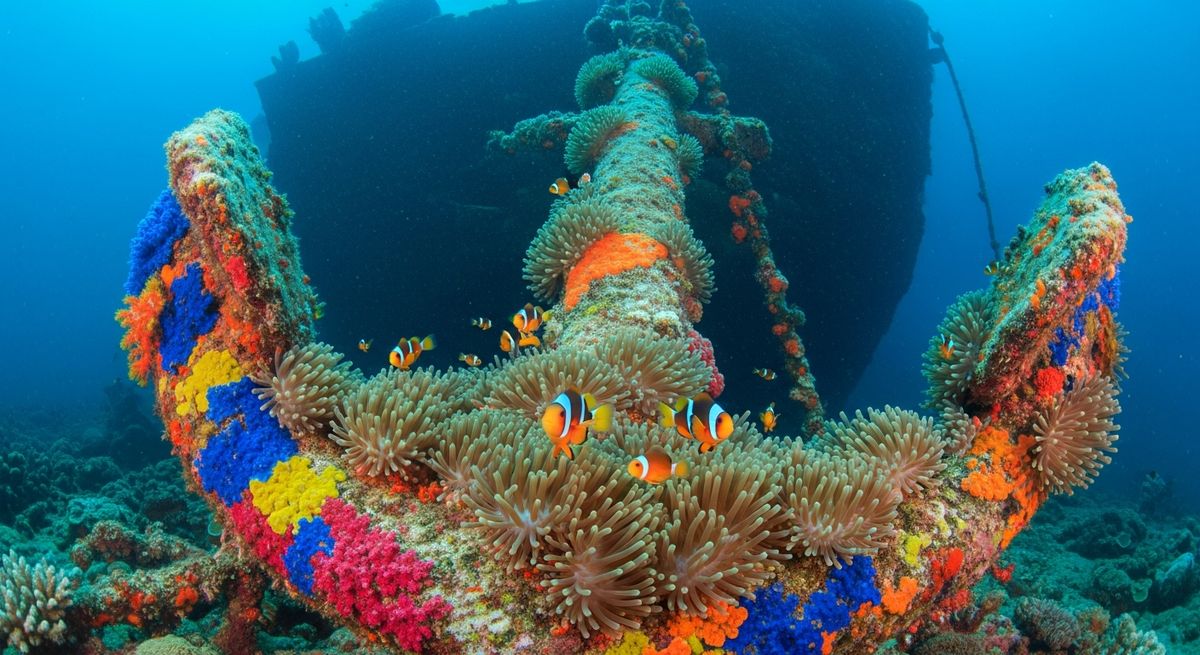
Wreck site - avoid penetration without wreck diving certification. Watch for sharp metal and entanglement hazards.
Nearest Dive Centres to la faille de baye
Dive shops near la faille de baye
View all dive centres in Loyalty IslandsReviews for la faille de baye
Conditions
Ocean conditions, forecast and tides for la faille de baye
la faille de baye Ocean Conditions
Monthly averages for la faille de baye, sourced from Open-Meteo marine data + Copernicus Marine (EU) - nearest station: Open-Meteo marine grid (-20.94, 165.47) (8km away)
October Averages
Sea Temperature
25°C
77°F · Range: 23.4–27.1°C
Current Speed
8.06 cm/s
Direction: S (187.1°)
Chlorophyll-a
0.052 mg/m³
Very clear (oligotrophic)
Salinity
35.08 PSU
Based on 4 years of monitoring data · Data sources: Open-Meteo marine data + Copernicus Marine (EU)
Plan & book
Ways to dive Loyalty Islands, from day trips to liveaboards.
Day trips & courses
via GetYourGuideGuided dives, courses and snorkel trips with instant booking.
Find dive trips in Loyalty IslandsPlaces to stay
via Booking.comHotels and dive resorts near Loyalty Islands.
Search stays in Loyalty IslandsDive insurance
Most travel insurance excludes or limits scuba. Check what you need before you go.
Dive insurance explainedPartner links: we may earn a commission if you book, at no extra cost to you. How we make money
Where to Stay near la faille de baye
Prices from Booking.com. We may earn a commission at no extra cost to you.