Natacha
Protected Area
Povilla Forest Reserve
Why dive here
With 116+ marine species recorded in the area - including dugongs, eagle rays, great white sharks, manta rays and mobula rays (devil rays) - Natacha offers some of Loyalty Islands's richest reef diving. Water ranges 24-29°C, warmest January, February, March.
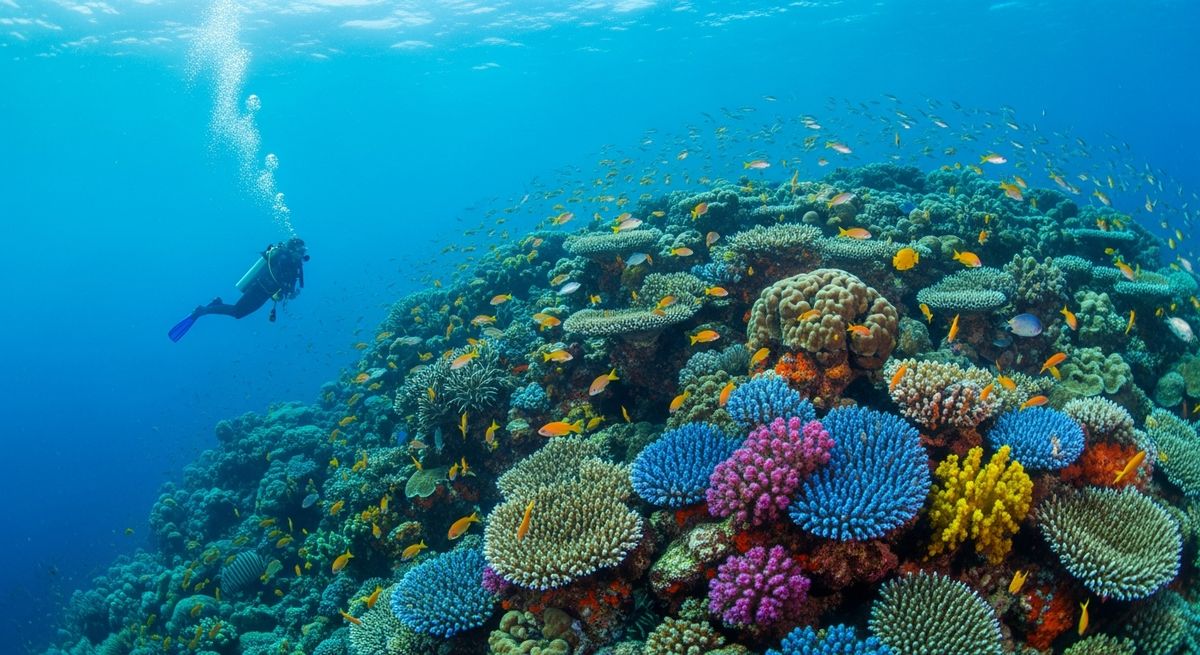
Natacha is a site we keep coming back to in the Loyalty Islands, and honestly, we think it’s one of the best pinnacles in the region. It’s a bit of a boat ride, about 45 minutes out into the Bayes channel, but that just means fewer crowds. The four pinnacles here are absolutely smothered in gorgonians. Not just a few, but huge, colourful fans reaching out, swaying in the current. You can actually feel the surge gently pushing you as you drift past these coral gardens. We’ve seen schools of spangled emperor and five-lined snapper so dense they almost form a wall, and the blue fusiliers are always a riot around the tops of the pinnacles. Keep an eye out into the blue for dorado flashing past. We’ve had a few encounters with tiger sharks here, usually cruising the deeper sections around 20-25m, which is always a thrill. It’s a site that suits divers who appreciate healthy coral, pelagic action, and don’t mind a bit of current to make things interesting. Definitely aim for a slack tide if you want to really spend time photographing the smaller stuff like the granular frog shells we’ve spotted tucked into crevices.
Nearest Dive Centres to Natacha
Dive shops near Natacha
View all dive centres in Loyalty IslandsReviews for Natacha
Conditions
Ocean conditions, forecast and tides for Natacha
Natacha Ocean Conditions
Monthly averages for Natacha, sourced from Open-Meteo marine data + Copernicus Marine (EU) - nearest station: Open-Meteo marine grid (-20.94, 165.47) (8km away)
October Averages
Sea Temperature
25°C
77°F · Range: 23.4–27.1°C
Current Speed
8.06 cm/s
Direction: S (187.1°)
Chlorophyll-a
0.052 mg/m³
Very clear (oligotrophic)
Salinity
35.08 PSU
Based on 4 years of monitoring data · Data sources: Open-Meteo marine data + Copernicus Marine (EU)
Plan & book
Ways to dive Loyalty Islands, from day trips to liveaboards.
Day trips & courses
via GetYourGuideGuided dives, courses and snorkel trips with instant booking.
Find dive trips in Loyalty IslandsPlaces to stay
via Booking.comHotels and dive resorts near Loyalty Islands.
Search stays in Loyalty IslandsDive insurance
Most travel insurance excludes or limits scuba. Check what you need before you go.
Dive insurance explainedPartner links: we may earn a commission if you book, at no extra cost to you. How we make money
Where to Stay near Natacha
Prices from Booking.com. We may earn a commission at no extra cost to you.