tombant 60
Protected Area
Povilla Forest Reserve
Why dive here
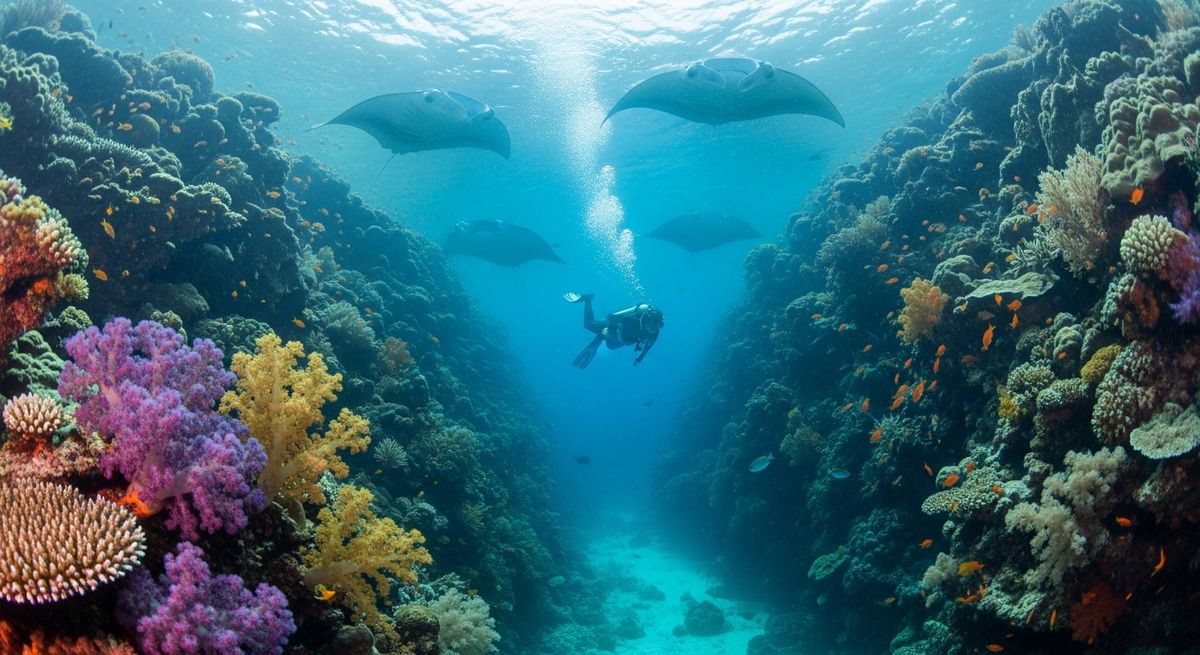
With 116+ marine species recorded in the area - including dugongs, eagle rays, great white sharks, manta rays and mobula rays (devil rays) - tombant 60 offers some of Loyalty Islands's richest reef diving. Water ranges 24-29°C, warmest January, February, March.
Tombant 60 is one of those spots we love to tell our friends about, especially those with a bit of tech training under their belt. You drop into this incredible blue, aiming for around 40m, and then the real show starts as you approach the drop-off. It just plummets, down to over 120m, a proper vertical world. We’re talking some seriously huge gorgonians here, not just big, but some easily pushing past four metres. And no, we weren’t narced when we measured them, they’re genuinely massive. We’ve seen golden-yellow cones tucked into the crevices and the occasional dorado zipping past in the blue. For certified advanced nitrox divers, this wall offers an amazing sense of exposure and depth, with pristine visibility usually around 30m. It’s a site for those who appreciate the vastness of the ocean and the thrill of a deep wall dive, but you can also stay shallower and admire the honeycomb corals if you prefer.
Nearest Dive Centres to tombant 60
Dive shops near tombant 60
View all dive centres in Loyalty IslandsReviews for tombant 60
Conditions
Ocean conditions, forecast and tides for tombant 60
tombant 60 Ocean Conditions
Monthly averages for tombant 60, sourced from Open-Meteo marine data + Copernicus Marine (EU) - nearest station: Open-Meteo marine grid (-20.94, 165.47) (8km away)
October Averages
Sea Temperature
25°C
77°F · Range: 23.4–27.1°C
Current Speed
8.06 cm/s
Direction: S (187.1°)
Chlorophyll-a
0.052 mg/m³
Very clear (oligotrophic)
Salinity
35.08 PSU
Based on 4 years of monitoring data · Data sources: Open-Meteo marine data + Copernicus Marine (EU)
Plan & book
Ways to dive Loyalty Islands, from day trips to liveaboards.
Day trips & courses
via GetYourGuideGuided dives, courses and snorkel trips with instant booking.
Find dive trips in Loyalty IslandsPlaces to stay
via Booking.comHotels and dive resorts near Loyalty Islands.
Search stays in Loyalty IslandsDive insurance
Most travel insurance excludes or limits scuba. Check what you need before you go.
Dive insurance explainedPartner links: we may earn a commission if you book, at no extra cost to you. How we make money
Where to Stay near tombant 60
Prices from Booking.com. We may earn a commission at no extra cost to you.