Bird Rock
Protected Area
Oke Bay
Why dive here
With 163+ marine species recorded in the area - including blue sharks, blue whales, dolphins, great white sharks and hammerhead sharks - Bird Rock offers some of Bay of Islands's richest drift diving. Water ranges 16-22°C, warmest January, February, March.
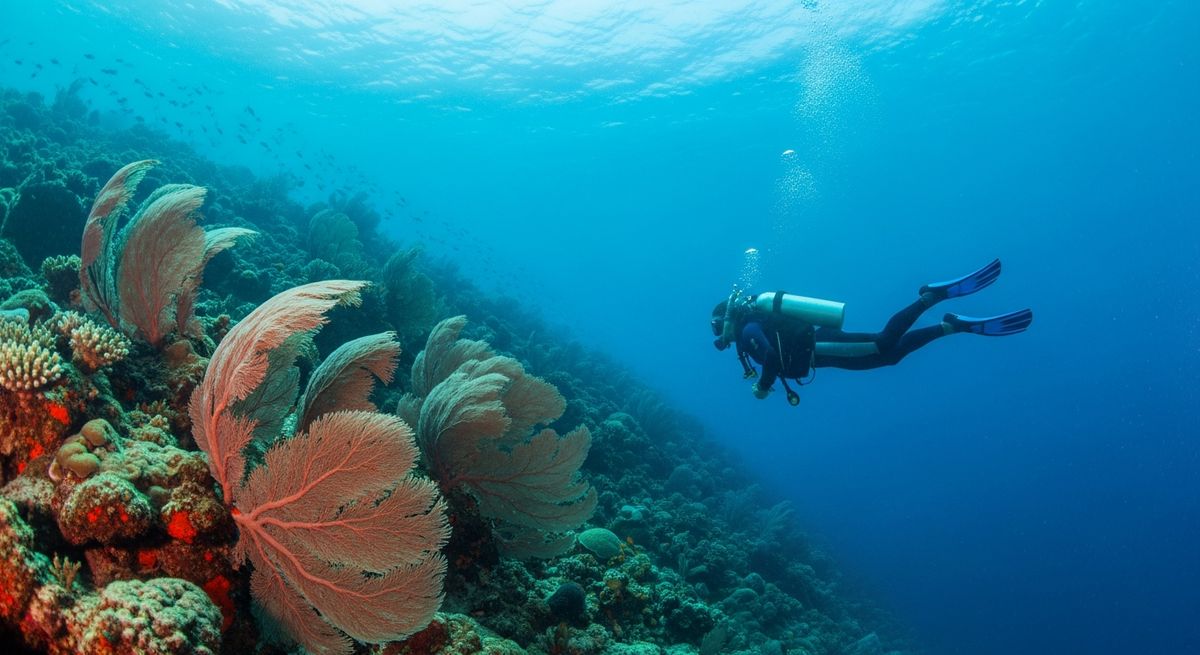
Bird Rock is one of those sites we always recommend, especially if you’re comfortable with a bit of a push. It’s essentially a big rock poking out of the water, and what makes it special is how the currents play around it. We’ve found the eastern side often offers the best show, especially on an incoming tide. You’ll drift past walls covered in sponges and anemones, feeling the water move around you, keeping an eye out for kingfish zipping by. The maximum depth here is 19m, but it’s the sheer density of life in that shallower zone that grabs you. Look closely into the cracks and you'll spot moray eels, crayfish, and those iridescent Luculentus wrasse. Our favourite dives here have been in late winter when the fur seals are often lounging on the rock. They’ll frequently drop in for a swim, twisting and turning just out of reach, a really playful interaction. Visibility averages 16m, which is decent for New Zealand, giving you enough clarity to appreciate the schools of butterfly perch and snapper that hang in the current. This site really shines for experienced divers who appreciate a dynamic drift and aren’t afraid of a bit of movement.
Typical Bird Rock Dive Profile
Illustrative profile based on site depth and type. Actual dive profiles vary - always follow your dive computer and training.
Safety Notes
Drift dive - carry a surface marker buoy (SMB) and stay with your group. Brief the current direction before entry.
Always perform a 3-minute safety stop at 5m before surfacing.
Nearest Dive Centres to Bird Rock
Dive shops near Bird Rock
View all dive centres in Bay of IslandsReviews for Bird Rock
Conditions
Ocean conditions, forecast and tides for Bird Rock
Bird Rock Ocean Conditions
Monthly averages for Bird Rock, sourced from Open-Meteo marine data - nearest station: Open-Meteo marine grid (-35.24, 174.22) (2km away)
October Averages
Sea Temperature
16°C
61°F · Range: 14.9–16.8°C
Air Temperature
16°C
60°F
Wind Speed
7.43 m/s
14.4 knots
Atmospheric Pressure
1019.1 hPa
Based on 4 years of monitoring data · Data sources: Open-Meteo marine data
Plan & book
Ways to dive Bay of Islands, from day trips to liveaboards.
Day trips & courses
via GetYourGuideGuided dives, courses and snorkel trips with instant booking.
Find dive trips in Bay of IslandsPlaces to stay
via Booking.comHotels and dive resorts near Bay of Islands.
Search stays in Bay of IslandsDive insurance
Most travel insurance excludes or limits scuba. Check what you need before you go.
Dive insurance explainedPartner links: we may earn a commission if you book, at no extra cost to you. How we make money
Where to Stay near Bird Rock
Prices from Booking.com. We may earn a commission at no extra cost to you.