Big Eyes Lair
Protected Area
Oke Bay
Why dive here
With 163+ marine species recorded in the area - including blue sharks, blue whales, dolphins, great white sharks and hammerhead sharks - Big Eyes Lair offers some of Bay of Islands's richest cave diving. Water ranges 16-22°C, warmest January, February, March.
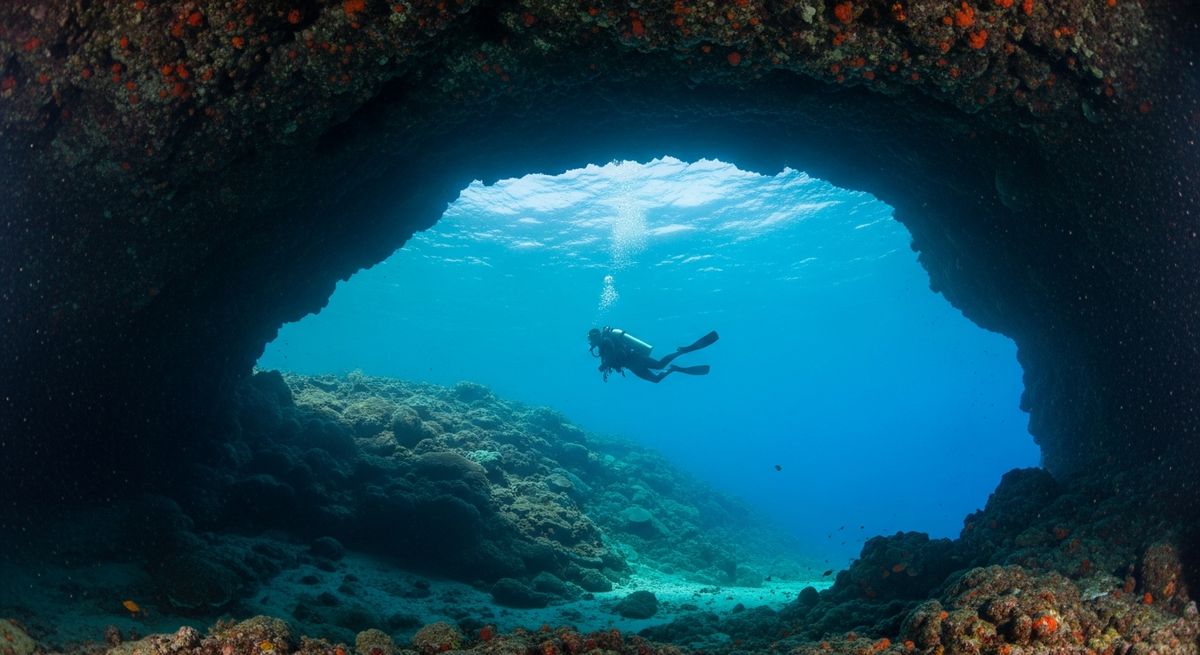
Big Eyes Lair is one of our picks in the Bay of Islands, especially when you’re after something a bit different. The main draw here is a fantastic swim-through, kicking off around 24 metres and running for a good 35 metres before you pop out at 18 metres into a patch of kelpy boulders. It’s dark in there, properly dark in places, and we love how your torch beam picks out the big eyes of the resident Big Eye fish, alongside the odd scorpionfish tucked into a crevice. You’ll probably spot crayfish antennae waving from cracks, and if you’re lucky, a moray eel peering out. Visibility averages around 15 metres, which is decent enough for navigating the tunnel and checking out the Maomao and demoiselles schooling around the entrance and exit. We’d suggest a dive light even on a sunny day, just to appreciate the cave properly. It’s a great dive for anyone comfortable with confined spaces and keen to explore a natural tunnel rather than just a reef wall.
Safety Notes
Overhead environment - never enter without proper cave/cavern training, redundant equipment, and a guideline.
Nearest Dive Centres to Big Eyes Lair
Dive shops near Big Eyes Lair
View all dive centres in Bay of IslandsReviews for Big Eyes Lair
Conditions
Ocean conditions, forecast and tides for Big Eyes Lair
Big Eyes Lair Ocean Conditions
Monthly averages for Big Eyes Lair, sourced from Open-Meteo marine data - nearest station: Open-Meteo marine grid (-35.24, 174.22) (2km away)
October Averages
Sea Temperature
16°C
61°F · Range: 14.9–16.8°C
Air Temperature
16°C
60°F
Wind Speed
7.43 m/s
14.4 knots
Atmospheric Pressure
1019.1 hPa
Based on 4 years of monitoring data · Data sources: Open-Meteo marine data
Plan & book
Ways to dive Bay of Islands, from day trips to liveaboards.
Day trips & courses
via GetYourGuideGuided dives, courses and snorkel trips with instant booking.
Find dive trips in Bay of IslandsPlaces to stay
via Booking.comHotels and dive resorts near Bay of Islands.
Search stays in Bay of IslandsDive insurance
Most travel insurance excludes or limits scuba. Check what you need before you go.
Dive insurance explainedPartner links: we may earn a commission if you book, at no extra cost to you. How we make money
Where to Stay near Big Eyes Lair
Prices from Booking.com. We may earn a commission at no extra cost to you.