Diving in Bay of Islands
Why dive here
Bay of Islands offers some of New Zealand's richest diving, with 163+ marine species recorded in the area - including blue sharks, blue whales, dolphins, great white sharks and hammerhead sharks.
The Bay of Islands offers a real mixed bag for diving, which we appreciate. You’ve got the famous Rainbow Warrior wreck, of course, but don't overlook the natural reefs and walls around the islands. We love the dramatic drop-offs and the feeling of space out here, especially on a calm day when the visibility stretches out. Diving the Rainbow Warrior is an experience in itself. The history is palpable, and the wreck is now home to schools of snapper and koheru that swirl around the structure. We’ve spotted green turtles here, lazily finning past the bow, and once saw a ribbonfish gracefully undulating in the blue. Keep an eye on the current though, it can pick up around the wreck and make for a lively drift. Beyond the wreck, the reef dives can be stunning. Look for blackfoot pāua clinging to rocks and the unusual banded bellowsfish drifting near kelp forests. In summer, the water warms up and the visibility can hit a comfortable 15-20 meters. We always suggest an early morning dive to beat any crowds and catch the light filtering through the water. It’s New Zealand diving, so expect a bit of chill, but the sheer variety keeps us coming back.
Bay of Islands Dive Site Map
Dive sites and dive centres in Bay of Islands
Bay of Islands Dive Sites
46 dive sites in Bay of Islands
3 ways
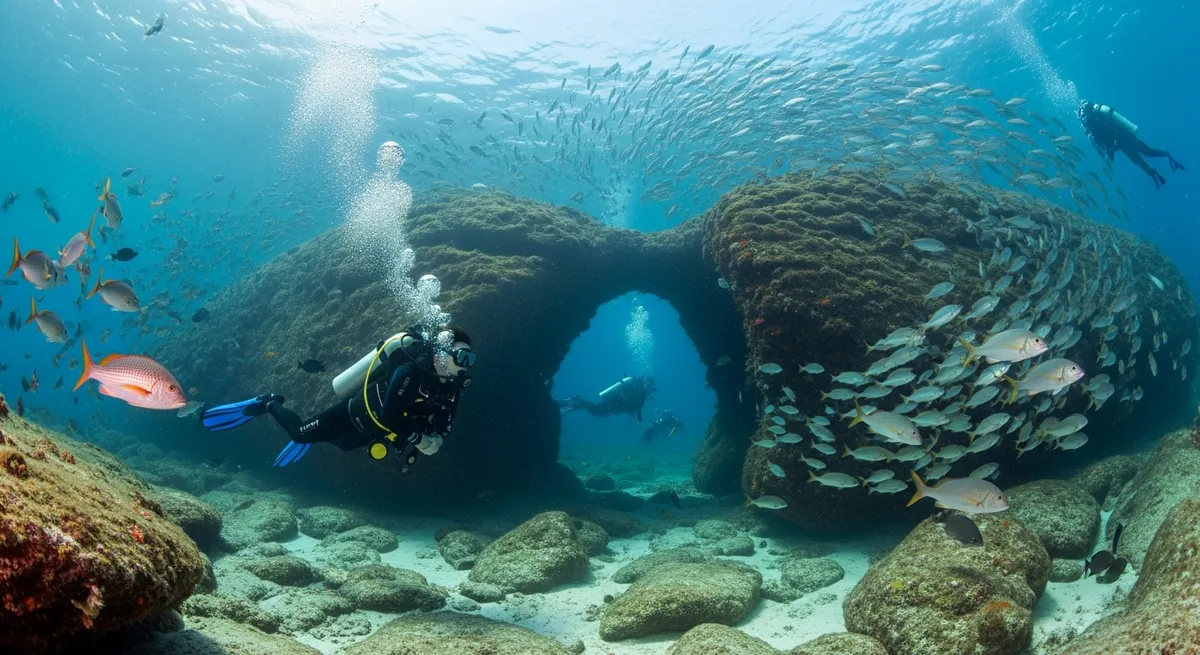
Three Ways, tucked into the Bay of Islands, is one of those sites that just feels like home. We’ve probably spent more bottom time here than anywhere else in Northland, and for good reason. It’s an archway system cutting right through Te Anaputa Island, so you get this fantastic play of light and shadow, especially when the sun hits it just right in the late morning. The site is a network of swim-throughs and small caves, perfect for exploring without needing to be a tech diver. Max depth hits around 15 metres, so it’s forgiving for newer divers but still offers plenty to see for the more experienced. Keep an eye out for Bulldog Stargazers buried in the sand patches just inside the arches – they’re masters of camouflage. We’ve also had some cracking encounters with larger stingrays here, especially in the warmer months when they seem to cruise through the channels. Look up, and you’ll often see schools of demoiselles and goatfish darting around. It’s a great spot for an easy, leisurely dive, suited to anyone who loves a bit of cave exploration without the serious commitment.
3 ways
Three Ways, tucked into the Bay of Islands, is one of those sites that just feels like home. We’ve probably spent more bottom time here than anywhere else in Northland, and for good reason. It’s an archway system cutting right through Te Anaputa Island, so you get this fantastic play of light and shadow, especially when the sun hits it just right in the late morning. The site is a network of swim-throughs and small caves, perfect for exploring without needing to be a tech diver. Max depth hits around 15 metres, so it’s forgiving for newer divers but still offers plenty to see for the more experienced. Keep an eye out for Bulldog Stargazers buried in the sand patches just inside the arches – they’re masters of camouflage. We’ve also had some cracking encounters with larger stingrays here, especially in the warmer months when they seem to cruise through the channels. Look up, and you’ll often see schools of demoiselles and goatfish darting around. It’s a great spot for an easy, leisurely dive, suited to anyone who loves a bit of cave exploration without the serious commitment.
Big Eyes Lair
Big Eyes Lair is one of our picks in the Bay of Islands, especially when you’re after something a bit different. The main draw here is a fantastic swim-through, kicking off around 24 metres and running for a good 35 metres before you pop out at 18 metres into a patch of kelpy boulders. It’s dark in there, properly dark in places, and we love how your torch beam picks out the big eyes of the resident Big Eye fish, alongside the odd scorpionfish tucked into a crevice. You’ll probably spot crayfish antennae waving from cracks, and if you’re lucky, a moray eel peering out. Visibility averages around 15 metres, which is decent enough for navigating the tunnel and checking out the Maomao and demoiselles schooling around the entrance and exit. We’d suggest a dive light even on a sunny day, just to appreciate the cave properly. It’s a great dive for anyone comfortable with confined spaces and keen to explore a natural tunnel rather than just a reef wall.
Big Eyes Lair
Big Eyes Lair is one of our picks in the Bay of Islands, especially when you’re after something a bit different. The main draw here is a fantastic swim-through, kicking off around 24 metres and running for a good 35 metres before you pop out at 18 metres into a patch of kelpy boulders. It’s dark in there, properly dark in places, and we love how your torch beam picks out the big eyes of the resident Big Eye fish, alongside the odd scorpionfish tucked into a crevice. You’ll probably spot crayfish antennae waving from cracks, and if you’re lucky, a moray eel peering out. Visibility averages around 15 metres, which is decent enough for navigating the tunnel and checking out the Maomao and demoiselles schooling around the entrance and exit. We’d suggest a dive light even on a sunny day, just to appreciate the cave properly. It’s a great dive for anyone comfortable with confined spaces and keen to explore a natural tunnel rather than just a reef wall.
Bird Rock
Bird Rock is one of those sites we always recommend, especially if you’re comfortable with a bit of a push. It’s essentially a big rock poking out of the water, and what makes it special is how the currents play around it. We’ve found the eastern side often offers the best show, especially on an incoming tide. You’ll drift past walls covered in sponges and anemones, feeling the water move around you, keeping an eye out for kingfish zipping by. The maximum depth here is 19m, but it’s the sheer density of life in that shallower zone that grabs you. Look closely into the cracks and you'll spot moray eels, crayfish, and those iridescent Luculentus wrasse. Our favourite dives here have been in late winter when the fur seals are often lounging on the rock. They’ll frequently drop in for a swim, twisting and turning just out of reach, a really playful interaction. Visibility averages 16m, which is decent for New Zealand, giving you enough clarity to appreciate the schools of butterfly perch and snapper that hang in the current. This site really shines for experienced divers who appreciate a dynamic drift and aren’t afraid of a bit of movement.
Bird Rock
Bird Rock is a large rock off Cape Brett. The walls of the rock slope down on all sides to 30-40m. In the winter, seals sometimes inhabit the rock and will jump into the water to swim with the divers. This site is recommended for more experienced divers as there can sometimes be strong currents. Maximum depth: 19m. Average visibility: 16m. Moray Eels and Crayfsih hide in crevasses in the rock. Fur Seals in habit the rock in winter. Schooling fish and Kingfish are attracted by the current.
Blue Maomao Arch (Bay of Islands)
The Blue Maomao Arch, tucked into a sheltered bay, might sound like a simple dive, but we think it’s a real cracker. Drop in, and you’re immediately enveloped by the site’s namesake, those electric blue maomao. They hang in the archway, a shimmering curtain you can swim right through. It’s shallow, maybe five metres, but don’t just pop through and leave. We love lingering here, letting the light play off their scales. Follow the contour out, and you hit boulders and a mix of kelp and kina barrens. The maximum depth is 17 metres, which means plenty of bottom time to poke around. We've often found snapper hiding in the nooks, and we keep an eye out for stingrays gliding over the sand. Visibility averages around 16 metres, giving you a good view of the rocky reef and its inhabitants. This spot is perfect for photographers, or anyone who enjoys a relaxed, fish-filled exploration without too much depth.
Blue Maomao Arch (Bay of Islands)
The Blue Maomao Arch, tucked into a sheltered bay, might sound like a simple dive, but we think it’s a real cracker. Drop in, and you’re immediately enveloped by the site’s namesake, those electric blue maomao. They hang in the archway, a shimmering curtain you can swim right through. It’s shallow, maybe five metres, but don’t just pop through and leave. We love lingering here, letting the light play off their scales. Follow the contour out, and you hit boulders and a mix of kelp and kina barrens. The maximum depth is 17 metres, which means plenty of bottom time to poke around. We've often found snapper hiding in the nooks, and we keep an eye out for stingrays gliding over the sand. Visibility averages around 16 metres, giving you a good view of the rocky reef and its inhabitants. This spot is perfect for photographers, or anyone who enjoys a relaxed, fish-filled exploration without too much depth.
Boulder Garden
Boulder Garden is one of our favourites in the Bay of Islands, especially when we’re after a relaxed, meandering dive. Don’t let the 16-meter max depth fool you; there’s plenty to explore. We love the way the light filters through the kelp, dappling the large, sponge-covered boulders that give the site its name. It’s a genuinely pretty place, a riot of orange and purple sponges clinging to the rock. You’ll want to take your time here, poking around the nooks and crannies. We’ve had some fantastic encounters with Longfinned Triplefins darting between the rocks and spotted the odd Clown Toado hiding in plain sight. Keep an eye out for nudibranchs – they’re often tucked away amongst the various Neptune's necklace seaweed. Visibility here is usually great, often pushing 20 metres, so you get a good sense of the gentle slope as you descend. It's a perfect site for photographers or anyone who enjoys a slower pace, just soaking it all in. We often combine it with a surface interval spent watching Sooty Shearwaters dip and dive.
Boulder Garden
Boulder Garden is one of our favourites in the Bay of Islands, especially when we’re after a relaxed, meandering dive. Don’t let the 16-meter max depth fool you; there’s plenty to explore. We love the way the light filters through the kelp, dappling the large, sponge-covered boulders that give the site its name. It’s a genuinely pretty place, a riot of orange and purple sponges clinging to the rock. You’ll want to take your time here, poking around the nooks and crannies. We’ve had some fantastic encounters with Longfinned Triplefins darting between the rocks and spotted the odd Clown Toado hiding in plain sight. Keep an eye out for nudibranchs – they’re often tucked away amongst the various Neptune's necklace seaweed. Visibility here is usually great, often pushing 20 metres, so you get a good sense of the gentle slope as you descend. It's a perfect site for photographers or anyone who enjoys a slower pace, just soaking it all in. We often combine it with a surface interval spent watching Sooty Shearwaters dip and dive.
Bowling Alley
Bowling Alley has this classic Bay of Islands feel to it, that rugged, slightly wild beauty. It’s not a deep dive, peaking around 15 metres, but we love how the light plays through the kelp. You’re weaving through these massive boulders, all carpeted in the stuff, and that’s where the real hunt begins. Look closely and you’ll find crayfish tucked into crevices, moray eels peering out. It’s a very fishy dive, as the local skippers say. We’ve seen huge schools of butterfly perch here, clouds of them, and plenty of those vibrant blue maomao zipping by. Keep an eye out for a Southern Eagle Ray gliding over the sand patches between the rocks, or even a rig shark tucked away. It's an ideal spot for newer divers, or anyone who just wants a relaxed, beautiful dive without the pressure of depth. Our favourite time to visit is mid-morning, just after the sun has properly risen but before the afternoon chop can sometimes pick up.
Bowling Alley
Bowling Alley has this classic Bay of Islands feel to it, that rugged, slightly wild beauty. It’s not a deep dive, peaking around 15 metres, but we love how the light plays through the kelp. You’re weaving through these massive boulders, all carpeted in the stuff, and that’s where the real hunt begins. Look closely and you’ll find crayfish tucked into crevices, moray eels peering out. It’s a very fishy dive, as the local skippers say. We’ve seen huge schools of butterfly perch here, clouds of them, and plenty of those vibrant blue maomao zipping by. Keep an eye out for a Southern Eagle Ray gliding over the sand patches between the rocks, or even a rig shark tucked away. It's an ideal spot for newer divers, or anyone who just wants a relaxed, beautiful dive without the pressure of depth. Our favourite time to visit is mid-morning, just after the sun has properly risen but before the afternoon chop can sometimes pick up.
Show all 46 dive sites in Bay of Islands
- Cathedral Cave
- Cooks Cove
- Danger Rock
- Frenchmans Reef
- Giant Boarfish Cave
- HMNZS Canterbury
- Hole in the Rock
- Home Point
- Hommer Reef
- Joeys’ Maze
- Kariparapa Point
- Key Hole
- Matauri Bay
- Motuwheteke Island
- Paramena Reef
- Piercys’ Backside
- Pillar Rock
- Promenade Point
- Putahataha Island
- Rainbow Warrior
- Sonic Boom Cave
- Taharoa Domain (Kai Iwi Lakes)
- Taupiri Bay
- The Avenues
- The Brothers
- The Dog
- The Nursery
- The Sisters
- True Love Reef
- TUPAREHUIA - Parerangi
- TUPAREHUIA - Waione
- Waiwiri Rock
- Whangamumu Reef
- White Reef
Bay of Islands Dive Centres
3 dive shops and operators in Bay of Islands
Ocean Wildlife in Bay of Islands
163 species recorded in Bay of Islands
Bay of Islands Daylight & Sunrise/Sunset
Sunrise and sunset times for Bay of Islands, calculated from coordinates
Today - Sunday 11 October
Sunrise
05:47
Sunset
18:34
Daylight
12h 47m
Golden Hour
18:00
First light (dawn) at 05:21 · Last light (dusk) at 19:00
Monthly Averages
| Month | Sunrise | Sunset | Daylight |
|---|---|---|---|
| Jan | 05:25 | 19:41 | 14h 17m |
| Feb | 05:57 | 19:20 | 13h 23m |
| Mar | 06:22 | 18:44 | 12h 22m |
| Apr | 06:47 | 18:01 | 11h 14m |
| May | 07:11 | 17:29 | 10h 18m |
| JunShortest | 07:30 | 17:18 | 9h 48m |
| Jul | 07:30 | 17:29 | 9h 59m |
| Aug | 07:06 | 17:52 | 10h 46m |
| Sep | 06:25 | 18:14 | 11h 50m |
| OctNow | 05:42 | 18:37 | 12h 55m |
| Nov | 05:10 | 19:07 | 13h 57m |
| DecLongest | 05:03 | 19:34 | 14h 30m |
Times are approximate local times based on longitude. Actual times may vary slightly depending on the exact timezone observed in Bay of Islands.
Where to Stay near Bay of Islands
Prices from Booking.com. We may earn a commission at no extra cost to you.
Marine Protected Areas near Bay of Islands
48 protected areas near Bay of Islands - please respect local regulations when diving
2B2 b
Whangarei Harbour Wildlife Refuge
Poor Knights Islands
Long Bay-Okura
Te Matuku
Cape Rodney-Okakari Point
Tawharanui
Motu Manawa-Pollen Island
Whangarei Harbour
Mokohinau Islands
Waipu River Mouth Wildlife Refuge
Ruakaka Wildlife Refuge
Showing 12 largest of 48
Getting to Bay of Islands
Kerikeri
Auckland
Whangarei
Plan & book
Ways to dive Bay of Islands, from day trips to liveaboards.
Day trips & courses
via GetYourGuideGuided dives, courses and snorkel trips with instant booking.
Find dive trips in Bay of IslandsPlaces to stay
via Booking.comHotels and dive resorts near Bay of Islands.
Search stays in Bay of IslandsDive insurance
Most travel insurance excludes or limits scuba. Check what you need before you go.
Dive insurance explainedPartner links: we may earn a commission if you book, at no extra cost to you. How we make money