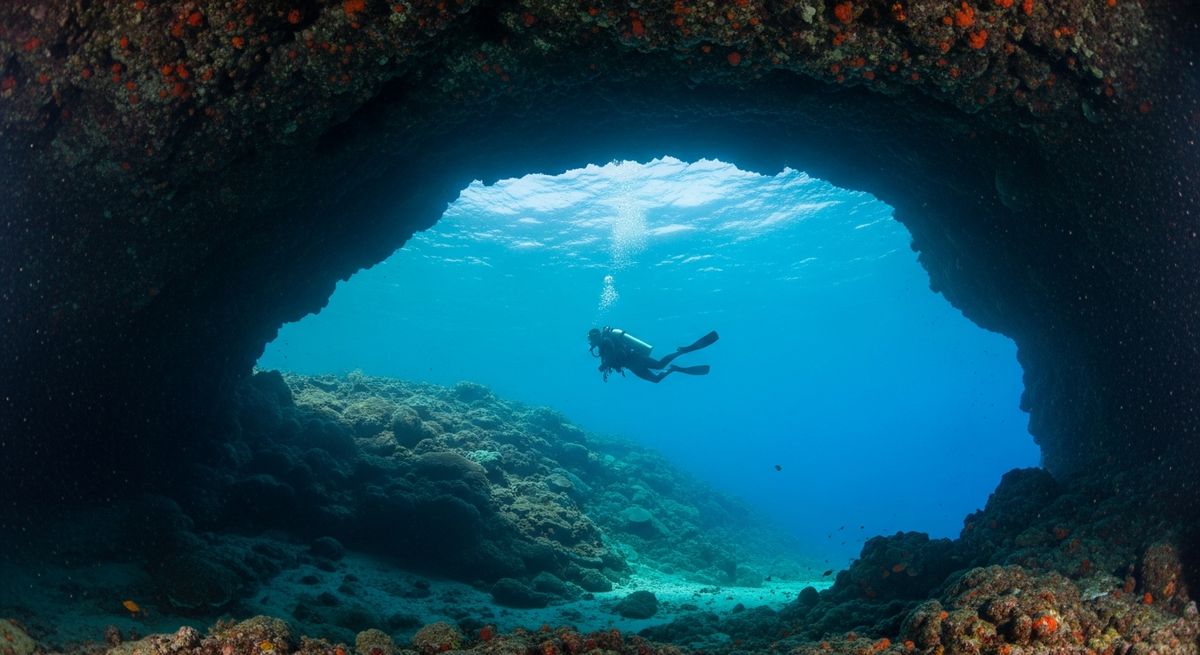
Cathedral Cave
Protected Area
Oke Bay
Why dive here
With 163+ marine species recorded in the area - including blue sharks, blue whales, dolphins, great white sharks and hammerhead sharks - Cathedral Cave offers some of Bay of Islands's richest cave diving. Water ranges 16-22°C, warmest January, February, March.
Cathedral Cave is one of those places that genuinely feels special, even if you’ve been in a hundred caves before. We love the way the light filters down through the surface opening, hitting the deeper walls in shifting beams. It’s a proper cathedral, just underwater. Drop down near the entrance and you’ll find the walls plunging to 22 metres, sometimes more if you venture a little further out. Visibility here averages around 14 metres, which is usually plenty to appreciate the scale. Our favourite moments are often spent in the quieter corners at the back, where you might spot a dark shape that resolves into a black stingray or a moray eel peering out. Keep an eye out for nudibranchs too; this place is absolutely crawling with them, a genuine delight for macro photographers. Out towards the mouth, reef fish gather, and if you’re lucky, a sleek pelagic might cruise by. It's a comfortable dive for most, and the real appeal is simply soaking in the atmosphere.
Safety Notes
Overhead environment - never enter without proper cave/cavern training, redundant equipment, and a guideline.
Nearest Dive Centres to Cathedral Cave
Dive shops near Cathedral Cave
View all dive centres in Bay of IslandsReviews for Cathedral Cave
Conditions
Ocean conditions, forecast and tides for Cathedral Cave
Cathedral Cave Ocean Conditions
Monthly averages for Cathedral Cave, sourced from Open-Meteo marine data - nearest station: Open-Meteo marine grid (-35.24, 174.22) (2km away)
October Averages
Sea Temperature
16°C
61°F · Range: 14.9–16.8°C
Air Temperature
16°C
60°F
Wind Speed
7.43 m/s
14.4 knots
Atmospheric Pressure
1019.1 hPa
Based on 4 years of monitoring data · Data sources: Open-Meteo marine data
Plan & book
Ways to dive Bay of Islands, from day trips to liveaboards.
Day trips & courses
via GetYourGuideGuided dives, courses and snorkel trips with instant booking.
Find dive trips in Bay of IslandsPlaces to stay
via Booking.comHotels and dive resorts near Bay of Islands.
Search stays in Bay of IslandsDive insurance
Most travel insurance excludes or limits scuba. Check what you need before you go.
Dive insurance explainedPartner links: we may earn a commission if you book, at no extra cost to you. How we make money
Where to Stay near Cathedral Cave
Prices from Booking.com. We may earn a commission at no extra cost to you.