Diving in Nassau & New Providence
Why dive here
Nassau & New Providence offers some of Bahamas's richest diving, with 531+ marine species recorded in the area - including barracuda, dolphins, dwarf minke whales, humpback whales and lemon sharks. Water ranges 25-30°C, warmest July, August, September.
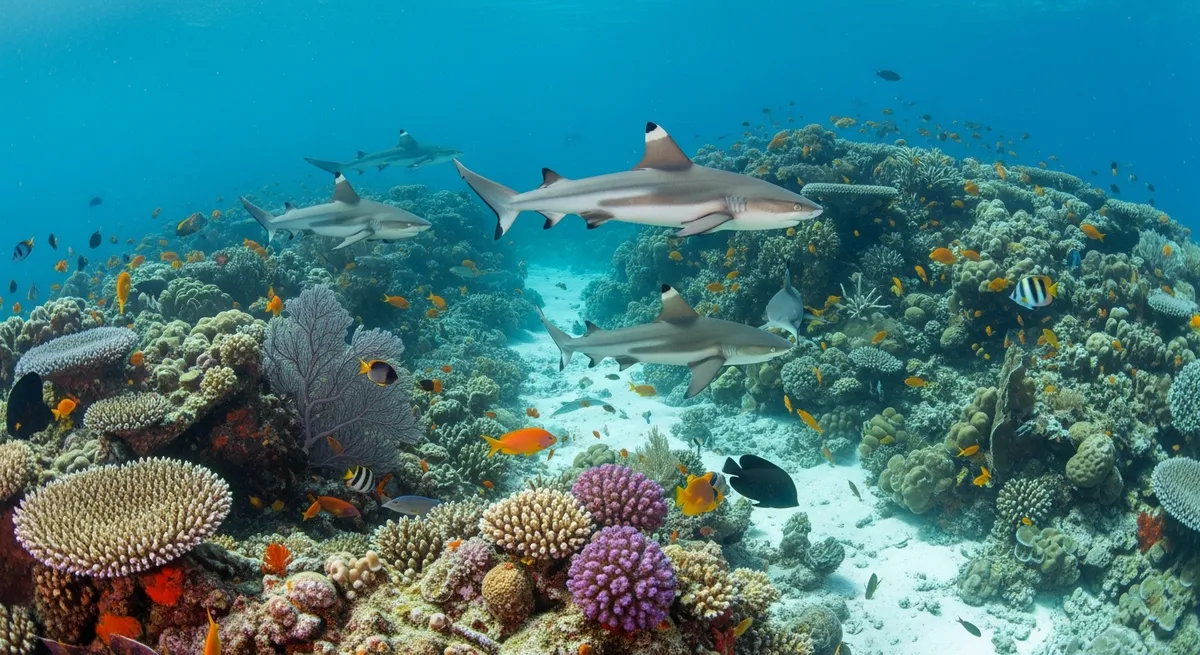
Nassau. Yeah, we know, it’s often your first stop in the Bahamas, maybe a bit bustling, but don’t sleep on the diving around New Providence. For us, the big draw here is the variety you can pack into a few days. You’ve got the *Thunderball* wreck, a proper film star, sitting around 12 metres. It’s been down there long enough to feel like a real wreck, encrusted and attracting plenty of resident fish. Schools of blennies dart in and out, and we’ve spotted frogfish camouflaged on the plating more than once. Then there are the shark dives. Stuart Cove’s is pretty famous for them. You're kneeling on the sand, surrounded by grey reef sharks. It’s exhilarating, maybe a bit intense for some, but it’s a controlled experience and a real adrenaline rush. Beyond the sharks and wrecks, the edge of the Tongue of the Ocean offers some lovely reef drifts. We've seen schools of fusiliers so thick they block the sun, and the occasional spotted eagle ray gliding past. The visibility usually holds up well, especially in the calmer summer months, though currents can pick up a bit on those outer reefs. Our favourite tip? Get on an early boat; you’ll have the sites pretty much to yourselves.
Nassau & New Providence Dive Site Map
Dive sites and dive centres in Nassau & New Providence
Nassau & New Providence Dive Sites
28 dive sites in Nassau & New Providence
Abaco
Abaco, while a bit of a trek from Nassau proper, offers a rewarding experience for divers who appreciate robust reef systems. You’ll find impressive stands of star and elkhorn corals here, forming a strong backbone for the reef. The currents, particularly around areas like Fowl Cay and Pelican Cay, have sculpted some interesting formations, creating a dynamic environment that’s great for drift dives. It's a healthy system, and you’ll often spot a good variety of the usual Caribbean suspects, from parrotfish to snapper, without feeling like you're in an aquarium. We’d suggest this for divers who enjoy a natural, less-frequented reef dive and don’t mind a bit of a boat ride to get there.
ARIMAR
The Arimar, a sizeable motor vessel that met its end in 1971, now rests in just six metres of water. We love a wreck that’s shallow enough for an extended bottom time, and the Arimar delivers. It’s perfect for newer wreck divers or those who just want to poke around without the pressure of deep stops. The ship ran aground after drifting, so you get a sense of that final struggle as you swim over the twisted metal. The wreck itself is well-broken, with plenty of openings to peek into. You’ll find schools of sergeant majors shimmering around the superstructure, and we’ve often spotted French grunts huddled in the darker sections. On one dive, a spotted moray peered out from a pipe, completely unfazed by our presence. The shallow depth means sunlight penetrates everywhere, painting the scene in blues and greens. It's a relaxed dive, a good spot to practice buoyancy in tighter spaces, and our pick for an afternoon excursion when you want something easy but still interesting.
Bahamas Divers
Alright, let's talk about Bahamas Divers, the site. It’s not about the dive shop, it’s a specific spot, and it’s one of those places we genuinely enjoy for its easygoing nature and consistent finds. We love dropping in here when we’re looking for a relaxed dive that still delivers on the small stuff, especially if we’ve spent the morning on a wrecks or drift. The reef here isn't a dramatic wall, but it's got character. Think gentle slopes and scattered coral heads providing perfect hideouts. We’ve had fantastic luck spotting Goldspot Gobies perched on sponges, their tiny eyes swiveling. Keep an eye on the sandy patches too; the Smoothlip Stargazers are masters of disguise, burying themselves until only their eyes and mouth show. Seeing one erupt from the sand is always a surprise. You’ll often find Spotted Trunkfish just idling along, looking completely unbothered, and schools of Cottonwick darting between the coral. It’s a great spot for macro enthusiasts, or anyone who just wants to slow down and really look. The visibility is usually pretty good, making it easy to scan the nooks and crannies. We’d suggest going in the mid-morning, after the initial rush, for a more tranquil experience.
Current Cut
Current Cut is exactly what it sounds like – a drift dive through a narrow channel. You're carried along by the incoming or outgoing tide, so picking your time is key for the best ride. Expect to see reef sharks, eagle rays, and schooling jacks using the current to their advantage. It's a fun, fast dive, best suited for those comfortable with moderate to strong currents.
Current Island
Current Island's "Current Cut" is exactly what the name suggests: a high-speed drift. When the tide pushes through the channel between North Eleuthera and Current Island, you're in for a ride, sometimes hitting 10 knots. It’s a rush, flying past the channel walls, feeling the power of the ocean. This dive is all about the adrenaline and the unique sensation of being propelled by such a strong flow, rather than lingering over small details. You need a boat and a guide who knows the tides inside out; there's a tight 20-minute window to catch it just right, and the dive itself is over in about 10-12 minutes. Definitely one for divers who love a good drift and don't mind a quick, intense experience.
Dean's Blue Hole
Okay, so Dean's Blue Hole in Nassau & New Providence. It's a proper blue hole, a big sinkhole plunging down. While the full depth is for freedivers doing the Vertical Blue competition, the upper section offers some interesting wall diving. We've explored down to about 35 meters there, finding a good mix of turtlegrass and manatee grass along the edges, and sometimes spotting Milk Conchs or Deltoid Rock Shells. The visibility is usually excellent, making it a good spot for divers comfortable with depth and a bit of open water feeling.
Dean's Blue Hole
Okay, so Dean's Blue Hole in Nassau & New Providence. It's a proper blue hole, a big sinkhole plunging down. While the full depth is for freedivers doing the Vertical Blue competition, the upper section offers some interesting wall diving. We've explored down to about 35 meters there, finding a good mix of turtlegrass and manatee grass along the edges, and sometimes spotting Milk Conchs or Deltoid Rock Shells. The visibility is usually excellent, making it a good spot for divers comfortable with depth and a bit of open water feeling.
De La Salle Wreck
The De La Salle Wreck often gets overshadowed by Nassau's other artificial reefs, but we think that’s a real shame. We love this site for its character. It’s an old cargo ship, sunk deliberately in the 1980s, and she’s settled upright in about 15 metres, making her perfect for divers who want some time to poke around. You can actually swim through the cargo holds, feeling the cool shadow as you pass from one end to the other, often bumping into a curious school of grunts hanging out. The structure is draped in gorgonian corals, swaying gently with the surge, and the deck beams are home to some surprisingly large parrotfish, crunching away. Keep an eye out for moray eels tucked into every nook. We often spot a nurse shark or two napping under the bow, completely unbothered by divers. Our favourite time to dive it is first thing in the morning; the light filtering through the water into the holds is just something else. For photographers, the silhouettes are fantastic.
DELIVERANCE (POSSIBLY)
Okay, so *Deliverance* is a funny one. We’re putting “possibly” in the name because, let’s be honest, finding this little 12-metre yacht wreck from 1973 can be a bit of a treasure hunt. It went down just off Nassau Harbour, and while it’s not the biggest wreck around, it’s got a real charm to it – a proper piece of local history resting on the sand. What we love about *Deliverance* is how completely it's been taken over by the reef. This isn’t a grand, intact vessel; it’s more like a skeleton, a series of ribs and hull plates encrusted with sponges and hard corals. You’ll be poking around rusted metal, noticing where the deck once was, and seeing schools of grunts and snapper dart in and out of the nooks. It’s a great spot for macro life, too – keep an eye out for cleaner shrimp and blennies tucked into crevices. This site suits divers who appreciate history, enjoy a good scavenger hunt, and don’t mind a shallower dive focused on atmosphere rather than penetration. It’s certainly a change of pace from some of the bigger, more popular wrecks nearby.
Devil s Backbone
The Devil's Backbone, off Nassau, is a decent option when you're looking for something a bit different than the usual reef dives. It's a shallow wreck dive, with depths often less than 15 meters, making it good for newer divers or those who prefer longer bottom times. Expect to see some schooling fish around the broken sections and perhaps a nurse shark tucked into a crevice. It’s a solid pick for a relaxed afternoon dive.
Dog Rocks Reef
Dog Rocks Reef is one of Nassau's reliable, easy-going dives, sitting right at that 25-meter sweet spot. It's a comfortable drift, usually, with the current guiding you gently past brain corals and barrel sponges. We often see southern stingrays resting on the sandy patches, and the resident schools of grunts and snapper are always around. It's a solid choice for newer divers getting comfortable with depth, or for anyone wanting a relaxed afternoon dive without too much fuss.
Egg Reef
Egg Reef off Nassau offers a solid Caribbean reef dive. You'll find a decent scattering of corals, home to plenty of familiar faces like angelfish, triggers, and the always-entertaining spotted goatfish rooting around in the sand. Keep an eye out for a cruising nurse shark or a hawksbill turtle munching on sponges – we’ve certainly had good luck spotting them here. It’s a comfortable dive, nothing too taxing, making it a good choice for newer divers or when you just want a relaxed immersion.
Nassau & New Providence Dive Centres
7 dive shops and operators in Nassau & New Providence
Ocean Wildlife in Nassau & New Providence
531 species recorded in Nassau & New Providence
Nassau & New Providence Daylight & Sunrise/Sunset
Sunrise and sunset times for Nassau & New Providence, calculated from coordinates
Today - Sunday 11 October
Sunrise
06:04
Sunset
17:46
Daylight
11h 42m
Golden Hour
17:16
First light (dawn) at 05:41 · Last light (dusk) at 18:09
Monthly Averages
| Month | Sunrise | Sunset | Daylight |
|---|---|---|---|
| Jan | 06:55 | 17:39 | 10h 44m |
| Feb | 06:44 | 18:01 | 11h 18m |
| Mar | 06:19 | 18:17 | 11h 58m |
| Apr | 05:47 | 18:30 | 12h 43m |
| May | 05:24 | 18:45 | 13h 21m |
| JunLongest | 05:18 | 18:59 | 13h 41m |
| Jul | 05:27 | 19:01 | 13h 34m |
| Aug | 05:42 | 18:45 | 13h 3m |
| Sep | 05:54 | 18:14 | 12h 20m |
| OctNow | 06:06 | 17:42 | 11h 37m |
| Nov | 06:25 | 17:21 | 10h 57m |
| DecShortest | 06:45 | 17:21 | 10h 35m |
Times are approximate local times based on longitude. Actual times may vary slightly depending on the exact timezone observed in Nassau & New Providence.
Where to Stay near Nassau & New Providence
Prices from Booking.com. We may earn a commission at no extra cost to you.
Marine Protected Areas near Nassau & New Providence
20 protected areas near Nassau & New Providence - please respect local regulations when diving
Westside National Park
Marls of Abaco National Park
Exuma Cays Land & Sea Park
East Grand Bahama National Park
Joulter Cays National Park
South Berry Islands Marine Reserve
South Abaco Blue Holes National Park
Southwest New Providence Marine Managed Area
Cross Harbour National Park
Andros Northern Marine Park
East Abaco Creeks - Cherokee
Andros Southern Marine Park
Showing 12 largest of 20
Getting to Nassau & New Providence
North Eleuthera
Nassau
Freeport
Plan & book
Ways to dive Nassau & New Providence, from day trips to liveaboards.
Day trips & courses
via GetYourGuideGuided dives, courses and snorkel trips with instant booking.
Find dive trips in Nassau & New ProvidencePlaces to stay
via Booking.comHotels and dive resorts near Nassau & New Providence.
Search stays in Nassau & New ProvidenceDive insurance
Most travel insurance excludes or limits scuba. Check what you need before you go.
Dive insurance explainedPartner links: we may earn a commission if you book, at no extra cost to you. How we make money