New Moon
Protected Area
Big Cay Wildlife Reserve
Why dive here
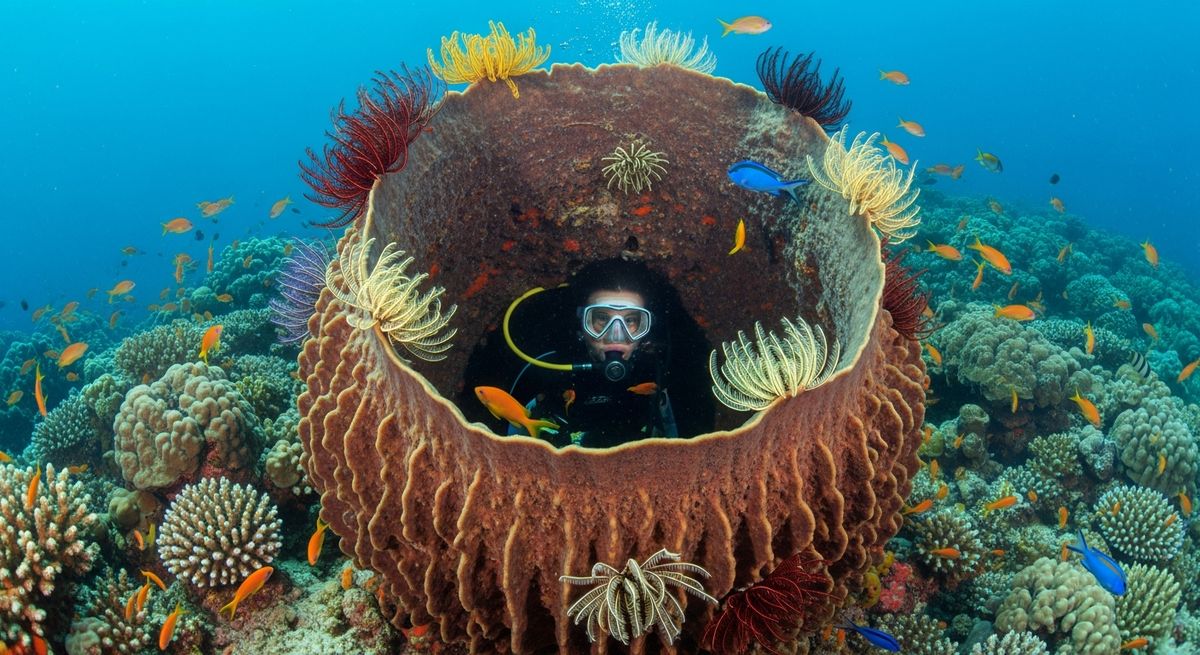
With 267+ marine species recorded in the area - including dolphins, humpback whales, nurse sharks, orcas and sea turtles - New Moon offers some of St. Vincent's richest reef diving. Water ranges 27-30°C, warmest August, September, October.
New Moon gives you that quintessential St. Vincent wall dive feel. We drop onto a sloping reef, really just a jumble of boulders at about eight metres, before the wall itself truly kicks in. It’s a proper sheer drop, heading down past our recreational limits, but we stick to the top section, usually around 15-20 metres, where the light still penetrates beautifully. You'll often find yourself drifting along with a gentle current, which makes for effortless viewing. Keep an eye out for mottled conger morays tucked into crevices and those big horse-eye jacks cruising past in the blue. This site is fantastic for divers who appreciate a good wall, but also love the hunt for smaller things. We've spotted everything from tiny dwarf wrasse darting between corals to the more unusual devilfish blending into the rock. It's an easy drift, so while there’s a wall, it’s not particularly demanding. We'd suggest it for anyone comfortable with a little depth, looking for a relaxed dive with plenty to see both big and small.
Typical New Moon Dive Profile
Illustrative profile based on site depth and type. Actual dive profiles vary - always follow your dive computer and training.
Nearest Dive Centres to New Moon
Dive shops near New Moon
View all dive centres in St. VincentReviews for New Moon
Conditions
Ocean conditions, forecast and tides for New Moon
New Moon Ocean Conditions
Monthly averages for New Moon, sourced from Open-Meteo marine data - nearest station: Open-Meteo marine grid (13.05, -61.21) (6km away)
October Averages
Sea Temperature
30°C
86°F · Range: 29–31.2°C
Air Temperature
28°C
82°F
Wind Speed
5.62 m/s
10.9 knots
Atmospheric Pressure
1012.3 hPa
Based on 4 years of monitoring data · Data sources: Open-Meteo marine data
Plan & book
Ways to dive St. Vincent, from day trips to liveaboards.
Day trips & courses
via GetYourGuideGuided dives, courses and snorkel trips with instant booking.
Find dive trips in St. VincentPlaces to stay
via Booking.comHotels and dive resorts near St. Vincent.
Search stays in St. VincentDive insurance
Most travel insurance excludes or limits scuba. Check what you need before you go.
Dive insurance explainedPartner links: we may earn a commission if you book, at no extra cost to you. How we make money
Where to Stay near New Moon
Prices from Booking.com. We may earn a commission at no extra cost to you.