Richmond Vale Coral Nursery
Protected Area
Chateaubelair Islet Wildlife Reserve
Why dive here
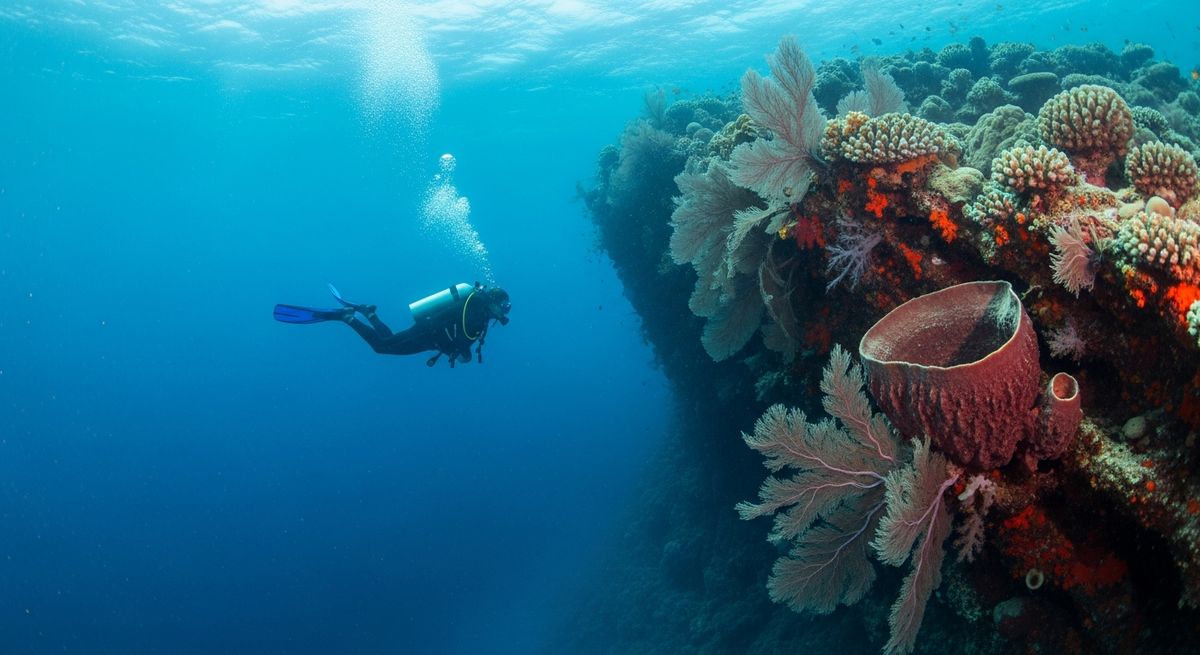
With 267+ marine species recorded in the area - including dolphins, humpback whales, nurse sharks, orcas and sea turtles - Richmond Vale Coral Nursery offers some of St. Vincent's richest wall diving. Water ranges 27-30°C, warmest August, September, October.
Richmond Vale Coral Nursery isn't about massive walls or drift dives; it's a quiet, hopeful spot, and we absolutely love it for that. Descending to about 13 metres, you're immediately struck by the rows of coral trees, each one a testament to the hard work of the Climate Compliance Team. We've watched those elkhorn fragments slowly but surely taking hold, and there’s a real satisfaction in seeing the future of the reef literally growing before your eyes. Visibility averages around 11 metres here, which is perfectly adequate for the scale of the site. It’s a shallow, relaxed dive, ideal for photographers wanting to capture the intricate details of the baby corals, or for anyone who appreciates the quieter side of marine conservation. Look closely among the branches; we’ve often spotted juvenile hogfish darting around, and once, a tiny collared eel peered out from a crevice. It’s a gentle reminder that even the smallest efforts can make a big difference, and we think that’s a powerful thing to witness underwater.
Nearest Dive Centres to Richmond Vale Coral Nursery
Dive shops near Richmond Vale Coral Nursery
View all dive centres in St. VincentReviews for Richmond Vale Coral Nursery
Conditions
Ocean conditions, forecast and tides for Richmond Vale Coral Nursery
Richmond Vale Coral Nursery Ocean Conditions
Monthly averages for Richmond Vale Coral Nursery, sourced from Open-Meteo marine data - nearest station: Open-Meteo marine grid (13.05, -61.21) (6km away)
October Averages
Sea Temperature
30°C
86°F · Range: 29–31.2°C
Air Temperature
28°C
82°F
Wind Speed
5.62 m/s
10.9 knots
Atmospheric Pressure
1012.3 hPa
Based on 4 years of monitoring data · Data sources: Open-Meteo marine data
Plan & book
Ways to dive St. Vincent, from day trips to liveaboards.
Day trips & courses
via GetYourGuideGuided dives, courses and snorkel trips with instant booking.
Find dive trips in St. VincentPlaces to stay
via Booking.comHotels and dive resorts near St. Vincent.
Search stays in St. VincentDive insurance
Most travel insurance excludes or limits scuba. Check what you need before you go.
Dive insurance explainedPartner links: we may earn a commission if you book, at no extra cost to you. How we make money
Where to Stay near Richmond Vale Coral Nursery
Prices from Booking.com. We may earn a commission at no extra cost to you.