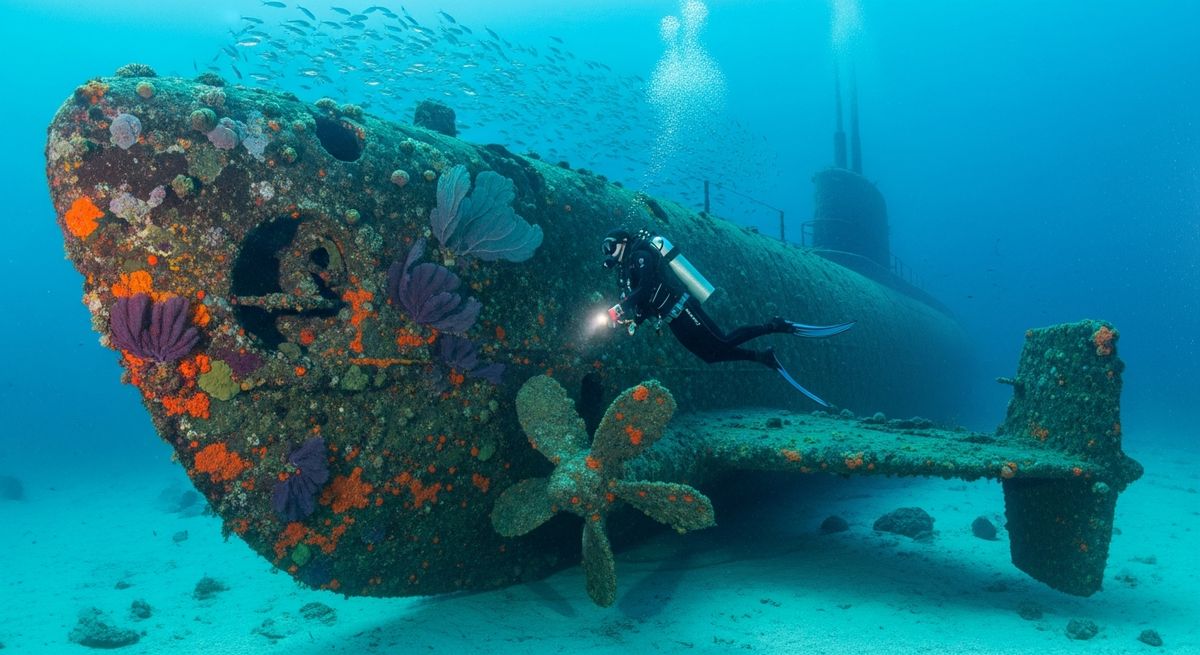
The Wall - West Cay
Protected Area
West Cay Wildlife Reserve
Why dive here
With 267+ marine species recorded in the area - including dolphins, humpback whales, nurse sharks, orcas and sea turtles - The Wall - West Cay offers some of St. Vincent's richest wreck diving. Water ranges 27-30°C, warmest August, September, October.
West Cay’s ‘The Wall’ is, in our opinion, the best wall dive in St. Vincent. We love the dramatic drop. You start on this shallow shelf, maybe 5 metres deep, and then it’s just blue. Proper blue. Like you’re floating out into nothing before the reef proper begins to unfold below you. We usually spend the first half of the dive drifting along with the wall on our right, keeping an eye out for nurse sharks in the deeper swim-throughs around 20 metres. Don’t rush this bit, the current often helps you along anyway. The reef structure itself is incredible, almost like a honeycomb in places, full of nooks and crannies. Look closely and you’ll spot gobies, blennies, and morays tucked away. The current can pick up towards the end, especially as you round the southernmost tip, where the currents tend to meet. That’s usually where we find the bigger schools of jacks and snappers hanging out, moving like a single silver organism. This site is a real treat for anyone who appreciates a good wall and isn’t afraid of a bit of current.
Safety Notes
Wreck site - avoid penetration without wreck diving certification. Watch for sharp metal and entanglement hazards.
The Wall - West Cay Wreck History
Year Sunk
-425
Vessel Type
cargo ship
Cause
storm
The Alonissos National Marine Park isn't a single wreck, but a protected underwater realm containing a treasure trove of maritime history. As Europe's largest marine protected area, it's a sanctuary for monk seals and dolphins, but for divers, its most famous jewel is the Peristera wreck. Discovered in the early 1990s, this isn't just any wreck; it's a massive Athenian merchant ship from the 5th century BC that went down in a storm, earning it the nickname the "Parthenon of Shipwrecks."
The vessel was carrying a cargo of some 4,000 wine amphorae, and the sight of them today is breathtaking. The ship's wooden hull has long since rotted away, but the enormous mound of ceramic jars remains, perfectly outlining the shape of the ship on the seabed. For years, this incredible site was off-limits to the public, but it has now been opened as Greece's first underwater museum. Certified divers can explore this astonishing piece of ancient history, swimming over a cargo that was last seen by human hands over 2,400 years ago.
Nearest Dive Centres to The Wall - West Cay
Dive shops near The Wall - West Cay
View all dive centres in St. VincentReviews for The Wall - West Cay
Conditions
Ocean conditions, forecast and tides for The Wall - West Cay
The Wall - West Cay Ocean Conditions
Monthly averages for The Wall - West Cay, sourced from Open-Meteo marine data - nearest station: Open-Meteo marine grid (13.05, -61.21) (6km away)
October Averages
Sea Temperature
30°C
86°F · Range: 29–31.2°C
Air Temperature
28°C
82°F
Wind Speed
5.62 m/s
10.9 knots
Atmospheric Pressure
1012.3 hPa
Based on 4 years of monitoring data · Data sources: Open-Meteo marine data
Plan & book
Ways to dive St. Vincent, from day trips to liveaboards.
Day trips & courses
via GetYourGuideGuided dives, courses and snorkel trips with instant booking.
Find dive trips in St. VincentPlaces to stay
via Booking.comHotels and dive resorts near St. Vincent.
Search stays in St. VincentDive insurance
Most travel insurance excludes or limits scuba. Check what you need before you go.
Dive insurance explainedPartner links: we may earn a commission if you book, at no extra cost to you. How we make money
Where to Stay near The Wall - West Cay
Prices from Booking.com. We may earn a commission at no extra cost to you.