Goldmine
Why dive here
With 134+ marine species recorded in the area - including humpback whales and pufferfish - Goldmine offers some of Rarotonga's richest wall diving. Water ranges 24-28°C, warmest February, March, April.
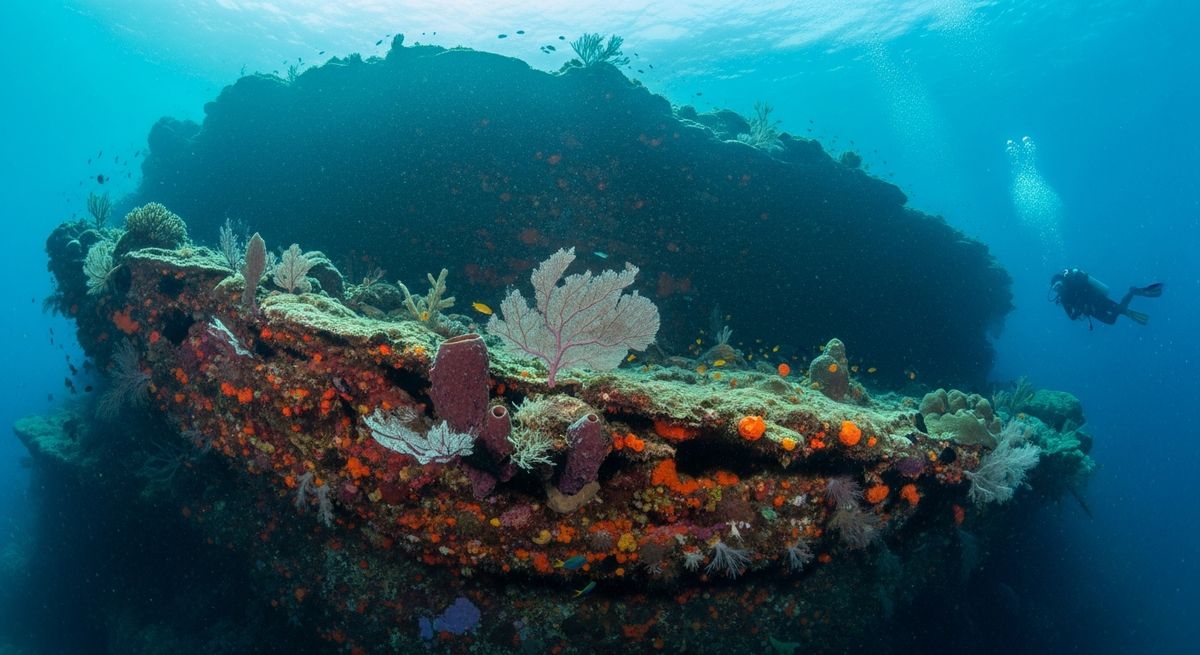
Goldmine often feels like a secret garden, tucked right in front of the namesake jewellery shop in Avarua. We love it for its intimate scale and how much detail you can pack into a single dive. Dropping down, you’re greeted by these chunky coral bommies, honeycombed with overhangs and little caves. We’ve spent whole safety stops just peeking into every nook, spotting Dew-drop Cowries tucked away and the flash of a Blue Spotted Wrasse darting through. The depth here sits comfortably around 15-20 metres, making it a relaxed dive where you can really slow down and observe. Keep an eye out for the Prickly Redfish, their camouflage is superb, but once you spot one, you’ll start seeing them everywhere. We've often found a Spotted Hawkfish perched on a coral head, patiently waiting. While it doesn't boast big pelagic action, Goldmine is our favourite pick for macro life and intricate reef exploration, perfect for photographers or anyone who enjoys a leisurely poke around. The visibility is usually excellent, around 30 metres, which makes those vibrant staghorn corals really pop.
Nearest Dive Centres to Goldmine
Dive shops near Goldmine
Cook Island Divers
Adventure Cook Islands
Pacific Divers
Chantal's Concierge on the Beach
Reviews for Goldmine
Conditions
Ocean conditions, forecast and tides for Goldmine
Goldmine Ocean Conditions
Monthly averages for Goldmine, sourced from Open-Meteo marine data - nearest station: Open-Meteo marine grid (-21.2, -159.82) (1km away)
October Averages
Sea Temperature
24°C
76°F · Range: 23.3–26°C
Air Temperature
22°C
72°F
Wind Speed
9.54 m/s
18.5 knots
Atmospheric Pressure
1016.5 hPa
Based on 4 years of monitoring data · Data sources: Open-Meteo marine data
Plan & book
Ways to dive Rarotonga, from day trips to liveaboards.
Day trips & courses
via GetYourGuideGuided dives, courses and snorkel trips with instant booking.
Find dive trips in RarotongaPlaces to stay
via Booking.comHotels and dive resorts near Rarotonga.
Search stays in RarotongaDive insurance
Most travel insurance excludes or limits scuba. Check what you need before you go.
Dive insurance explainedPartner links: we may earn a commission if you book, at no extra cost to you. How we make money
Where to Stay near Goldmine
Prices from Booking.com. We may earn a commission at no extra cost to you.