Les Gorgones
Protected Area
Fenua Aihere
Why dive here
With 135+ marine species recorded in the area - including humpback whales, sperm whales, spinner dolphins and pufferfish - Les Gorgones offers some of Moorea & Tahiti's richest drift diving. Water ranges 27-29°C, warmest February, March, April.
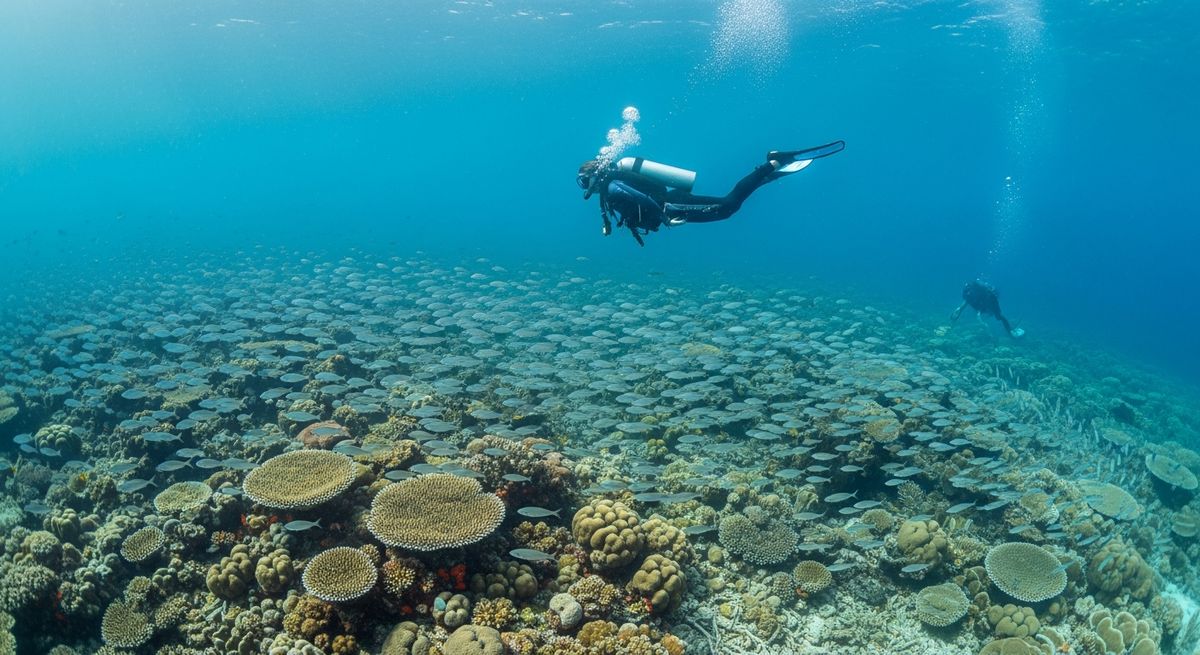
Les Gorgones on Moorea is where we send photographers, especially those who appreciate the smaller, more intricate scenes. Dropping down, you're immediately struck by the sheer density of growth on the wall. Think orange and violet gorgonians, so many they practically overlap, with black coral snaking around them. It's a busy, colourful tapestry, almost overwhelming at first glance. Spend some time here just drifting and looking closely. We've seen fat orbicular batfish hovering almost perfectly still in the slight current, and trumpetfish often hang vertically, blending into the coral. Our pick for a good encounter here is finding the blue parrotfish; their vibrant scales really pop against the deeper purples and oranges. Visibility often hits 30 metres, which gives the whole scene a really clear, crisp feel, even at 25 metres. We'd suggest aiming for a late morning dive when the light penetration really makes the colours sing.
Safety Notes
Drift dive - carry a surface marker buoy (SMB) and stay with your group. Brief the current direction before entry.
Nearest Dive Centres to Les Gorgones
Dive shops near Les Gorgones
TAHITI ITI DIVING
Mobydick Tahiti
Ecole de plongée de Tahiti
Dive and Sea
Tahiti nui diving center
Tahiti Plongee Passion
Reviews for Les Gorgones
Conditions
Ocean conditions, forecast and tides for Les Gorgones
Les Gorgones Ocean Conditions
Monthly averages for Les Gorgones, sourced from Open-Meteo marine data + Copernicus Marine (EU) - nearest station: Open-Meteo marine grid (-17.58, -149.62) (1km away)
October Averages
Sea Temperature
27°C
81°F · Range: 26.2–28.2°C
Current Speed
15 cm/s
Direction: SW (233.1°)
Chlorophyll-a
0.048 mg/m³
Very clear (oligotrophic)
Salinity
36.14 PSU
Based on 4 years of monitoring data · Data sources: Open-Meteo marine data + Copernicus Marine (EU)
Plan & book
Ways to dive Moorea & Tahiti, from day trips to liveaboards.
Day trips & courses
via GetYourGuideGuided dives, courses and snorkel trips with instant booking.
Find dive trips in Moorea & TahitiPlaces to stay
via Booking.comHotels and dive resorts near Moorea & Tahiti.
Search stays in Moorea & TahitiDive insurance
Most travel insurance excludes or limits scuba. Check what you need before you go.
Dive insurance explainedPartner links: we may earn a commission if you book, at no extra cost to you. How we make money
Where to Stay near Les Gorgones
Prices from Booking.com. We may earn a commission at no extra cost to you.