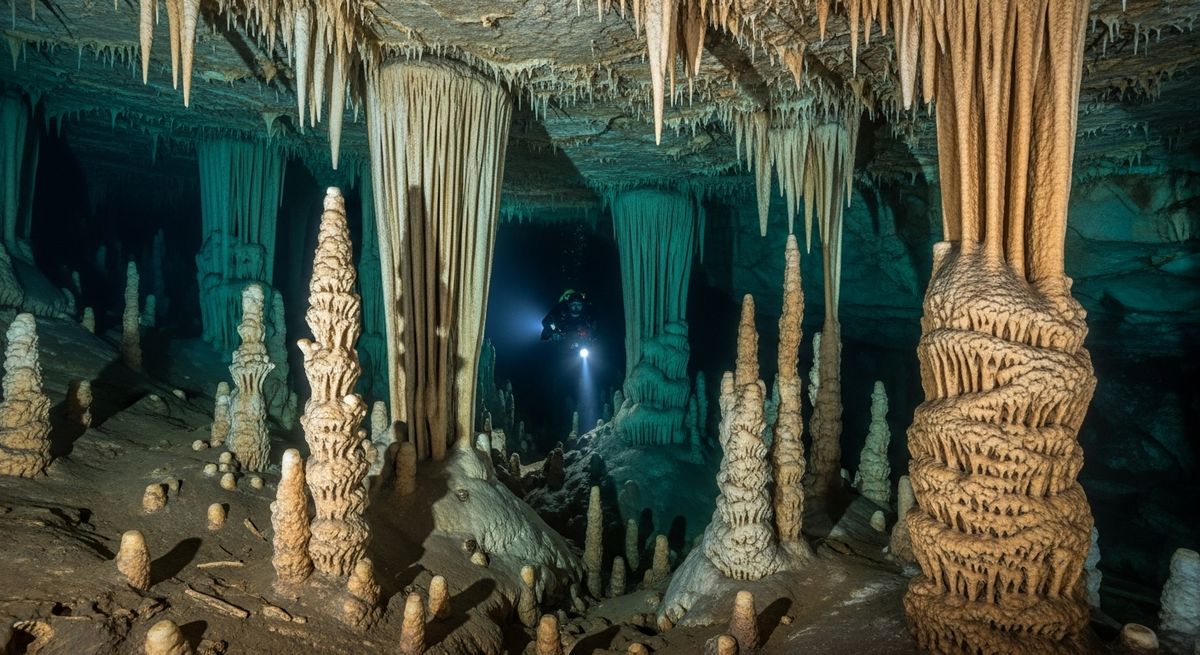
Deep Sponge - 2 Mile Reef
Protected Area
iSimangaliso Marine Protected Area
Why dive here
With 558+ marine species recorded in the area - including barracuda, blacktip reef sharks, blue sharks, blue-spotted stingrays and bull sharks - Deep Sponge - 2 Mile Reef offers some of Sodwana Bay's richest cave diving. Water ranges 23-28°C, warmest January, February, March.
Deep Sponge, sitting just off 2 Mile Reef, really earns its name. We love dropping onto a relatively flat top at 27 metres, then watching it gently slope down to its maximum of 29. It’s here that the wall truly starts, dropping another metre or two into the gloom, and that’s where you’ll find those enormous vase sponges. They are genuinely massive, some of the biggest we’ve seen, creating a lunar landscape of organic filters. The soft coral covering is beautiful, swaying gently with any surge, but it’s the scale of those sponges that will stick with you. We often spot strawberry groupers tucked into crevices, their iridescent scales a real treat, and the half-circled angelfish are always a splash of colour. Keep an eye out for larger pelagics too; we've had encounters with potato bass cruising the edges of the drop-off. Visibility averages around 16 metres, which is decent for the depth, allowing you to really appreciate the size of the reef structure. This is a solid dive for experienced deep divers looking for something a bit different, away from the busier sections of the reef.
Safety Notes
Overhead environment - never enter without proper cave/cavern training, redundant equipment, and a guideline.
Nearest Dive Centres to Deep Sponge - 2 Mile Reef
Dive shops near Deep Sponge - 2 Mile Reef
Pisces Diving Charter-Sodwana Bay
Scuba center
SeaXplore Dive Center
Occi Scuba
Coral Divers
Siso Dwana Lodge
Reviews for Deep Sponge - 2 Mile Reef
Conditions
Ocean conditions, forecast and tides for Deep Sponge - 2 Mile Reef
Deep Sponge - 2 Mile Reef Ocean Conditions
Monthly averages for Deep Sponge - 2 Mile Reef, sourced from Open-Meteo marine data - nearest station: Open-Meteo marine grid (-27.53, 32.7) (0km away)
October Averages
Sea Temperature
23°C
73°F · Range: 22.3–24.5°C
Air Temperature
22°C
71°F
Wind Speed
7.35 m/s
14.3 knots
Atmospheric Pressure
1017.9 hPa
Based on 4 years of monitoring data · Data sources: Open-Meteo marine data
Plan & book
Ways to dive Sodwana Bay, from day trips to liveaboards.
Day trips & courses
via GetYourGuideGuided dives, courses and snorkel trips with instant booking.
Find dive trips in Sodwana BayPlaces to stay
via Booking.comHotels and dive resorts near Sodwana Bay.
Search stays in Sodwana BayDive insurance
Most travel insurance excludes or limits scuba. Check what you need before you go.
Dive insurance explainedPartner links: we may earn a commission if you book, at no extra cost to you. How we make money
Where to Stay near Deep Sponge - 2 Mile Reef
Prices from Booking.com. We may earn a commission at no extra cost to you.