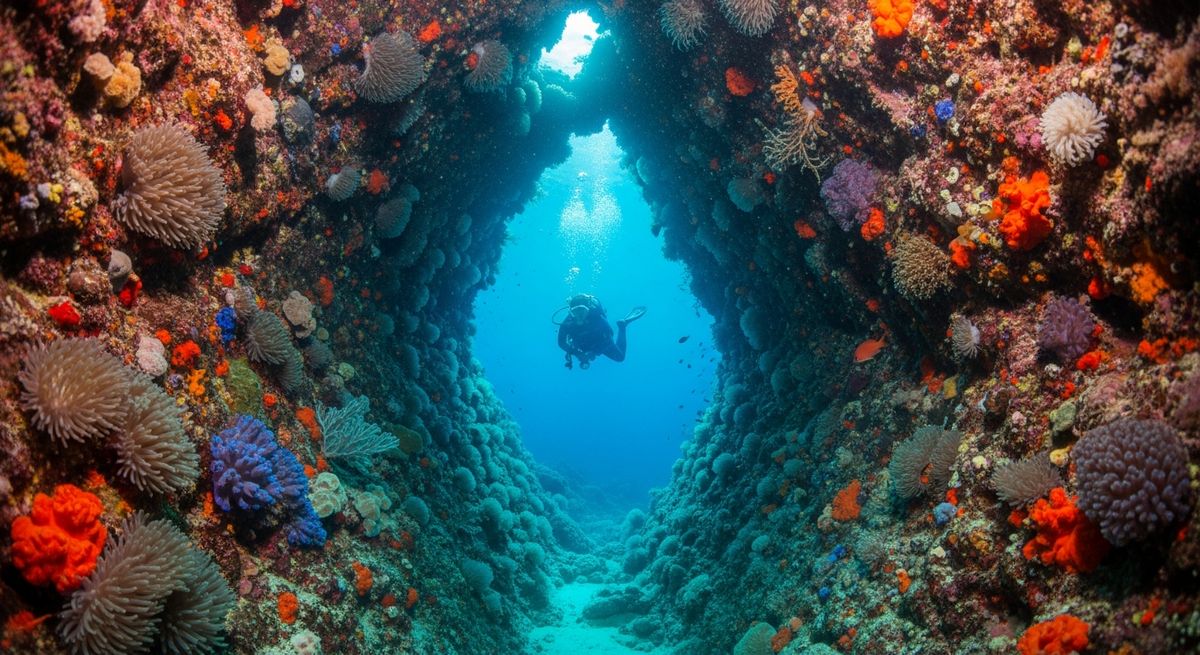
Jessor Canyon Cave
Protected Area
iSimangaliso Marine Protected Area
Why dive here
With 558+ marine species recorded in the area - including barracuda, blacktip reef sharks, blue sharks, blue-spotted stingrays and bull sharks - Jessor Canyon Cave offers some of Sodwana Bay's richest cave diving. Water ranges 23-28°C, warmest January, February, March.
Jessor Canyon Cave. Let’s be honest, you’re here for one reason: the Coelacanth. And while we’re not going to promise you a sighting, this is one of the best spots to try for that ancient fish. The dive itself is deep, dropping past 90 metres quickly, following the canyon’s edge. The entrance to the cave is around 107 metres, a dark, gaping maw in the reef. It’s a serious dive, not for the faint-hearted or those without proper tech training. When we’ve been down, the sheer scale of the canyon is impressive, almost overwhelming. We often see large jacks cruising the blue, and the deeper corals, though sparse, have a stark beauty. The cave itself is more of an overhang, a shelter where those ‘dino fish’ sometimes hang out. If you’re lucky enough to spot one, the silver-blue scales shimmer in your torch beam, an almost ghostly presence. We’d suggest going early in the morning; the conditions tend to be calmer, and we’ve heard whispers that the Coelacanths are more active then. Even without the big fish, it’s a dive that humbles you, a true expedition into the deep.
Safety Notes
Overhead environment - never enter without proper cave/cavern training, redundant equipment, and a guideline.
Nearest Dive Centres to Jessor Canyon Cave
Dive shops near Jessor Canyon Cave
Pisces Diving Charter-Sodwana Bay
Scuba center
Coral Divers
SeaXplore Dive Center
Occi Scuba
Siso Dwana Lodge
Reviews for Jessor Canyon Cave
Conditions
Ocean conditions, forecast and tides for Jessor Canyon Cave
Jessor Canyon Cave Ocean Conditions
Monthly averages for Jessor Canyon Cave, sourced from Open-Meteo marine data - nearest station: Open-Meteo marine grid (-27.53, 32.7) (0km away)
October Averages
Sea Temperature
23°C
73°F · Range: 22.3–24.5°C
Air Temperature
22°C
71°F
Wind Speed
7.35 m/s
14.3 knots
Atmospheric Pressure
1017.9 hPa
Based on 4 years of monitoring data · Data sources: Open-Meteo marine data
Plan & book
Ways to dive Sodwana Bay, from day trips to liveaboards.
Day trips & courses
via GetYourGuideGuided dives, courses and snorkel trips with instant booking.
Find dive trips in Sodwana BayPlaces to stay
via Booking.comHotels and dive resorts near Sodwana Bay.
Search stays in Sodwana BayDive insurance
Most travel insurance excludes or limits scuba. Check what you need before you go.
Dive insurance explainedPartner links: we may earn a commission if you book, at no extra cost to you. How we make money
Where to Stay near Jessor Canyon Cave
Prices from Booking.com. We may earn a commission at no extra cost to you.