101 (POSSIBLY)
Protected Area
T
Why dive here
With 95+ marine species recorded in the area - including seals & sea lions, sea turtles and jellyfish lake - 101 (POSSIBLY) offers some of North Sea Coast's richest wreck diving. Water ranges 3-19°C, warmest July, August, September.
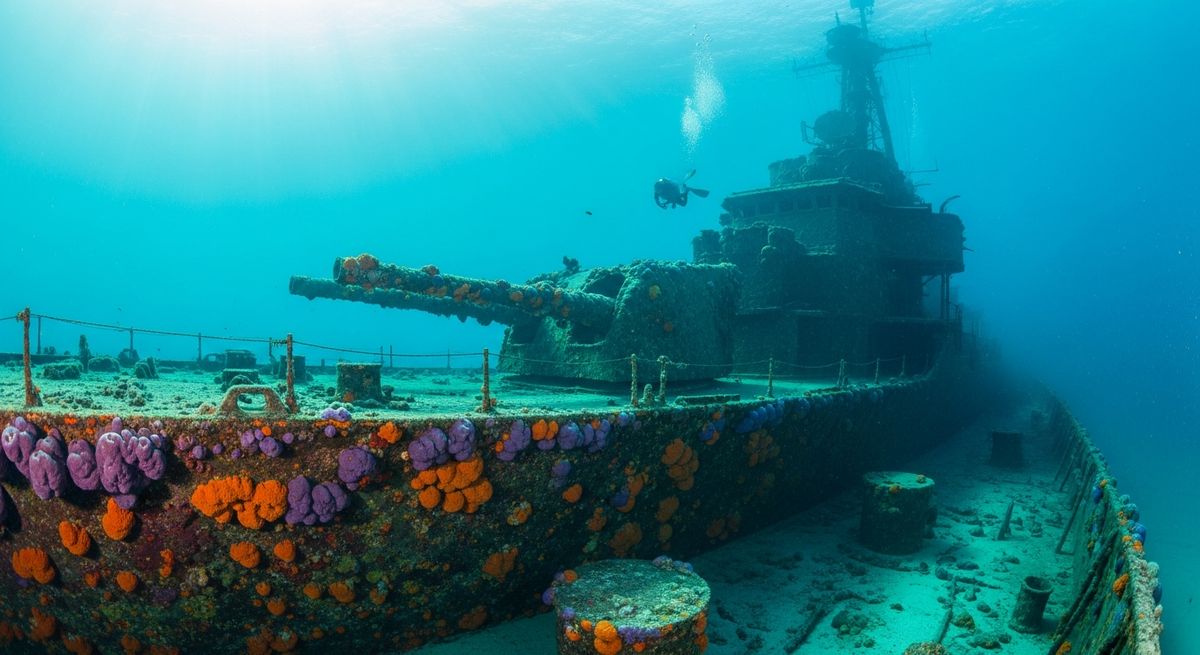
The 101, or as we like to call it, the ‘Possibility Wreck’ – because every dive here feels like an unearthing – is a blockship scuttled by the Germans in 1940. It’s sitting upright at 20 metres, a dark, hulking shape on the seabed, and honestly, it’s one of our favourite North Sea dives when the conditions align. You’re not getting vibrant coral here, but the sheer history is palpable, the steel beams and plates slowly succumbing to the cold water. We love how the resident cod and pollock weave through the superstructure, sometimes so many you’re finning through a wall of fish. It’s a proper penetration dive for those with the training – the cargo holds are surprisingly intact, offering dark, silty chambers to explore, just be mindful of the overhead environment. For those who prefer to stay outside, the bow and stern are fantastic for photography, especially when the light filters down through the murky green water, highlighting the anemones that have started to carpet the metal. Bring a powerful torch; it’s always darker than you expect down there, but that just adds to the atmosphere. This is a dive for experienced wreck enthusiasts who appreciate history and the rugged beauty of a Northern European site.
Typical 101 (POSSIBLY) Dive Profile
Illustrative profile based on site depth and type. Actual dive profiles vary - always follow your dive computer and training.
Safety Notes
Depth of 20m - Advanced Open Water certification recommended.
Wreck site - avoid penetration without wreck diving certification. Watch for sharp metal and entanglement hazards.
Cold water this month (avg 13°C). Drysuit or thick wetsuit (7mm+) recommended.
Always perform a 3-minute safety stop at 5m before surfacing.
101 (POSSIBLY) Wreck History
Year Sunk
1940
Vessel Type
cargo ship
Cause
scuttled
This unidentified vessel is a silent relic of a desperate time in world history. On May 6, 1940, during the initial stages of the German invasion of Denmark in World War II, this ship was deliberately sunk as a blockship. Its purpose was not to engage in combat, but to be sacrificed-scuttled in a strategic channel to obstruct the passage of enemy naval forces. Its identity remains uncertain, designated simply as wreck '101,' a testament to the chaotic and often unrecorded events of the war.
Today, the wreck lies at a depth of 20 meters (65 feet) in the cold, murky waters of the North Sea. It is classified as a 'dangerous wreck,' meaning divers should exercise extreme caution due to potential hazards like sharp, corroded metal, entanglement risks, and the possibility of unexploded ordnance. For the experienced and well-prepared wreck diver, it offers a poignant glimpse into the past. The vessel's decaying structure, now home to North Sea marine life, serves as a stark reminder of the strategic sacrifices made during the Second World War.
Nearest Dive Centres to 101 (POSSIBLY)
Dive shops near 101 (POSSIBLY)
View all dive centres in North Sea CoastReviews for 101 (POSSIBLY)
Conditions
Ocean conditions, forecast and tides for 101 (POSSIBLY)
101 (POSSIBLY) Ocean Conditions
Monthly averages for 101 (POSSIBLY), sourced from Open-Meteo marine data - nearest station: Open-Meteo marine grid (55.31, 9.86) (1km away)
October Averages
Sea Temperature
13°C
56°F · Range: 10.7–16.8°C
Air Temperature
11°C
52°F
Wind Speed
7.69 m/s
14.9 knots
Atmospheric Pressure
1010.5 hPa
Based on 4 years of monitoring data · Data sources: Open-Meteo marine data
Plan & book
Ways to dive North Sea Coast, from day trips to liveaboards.
Day trips & courses
via GetYourGuideGuided dives, courses and snorkel trips with instant booking.
Find dive trips in North Sea CoastPlaces to stay
via Booking.comHotels and dive resorts near North Sea Coast.
Search stays in North Sea CoastDive insurance
Most travel insurance excludes or limits scuba. Check what you need before you go.
Dive insurance explainedPartner links: we may earn a commission if you book, at no extra cost to you. How we make money
Where to Stay near 101 (POSSIBLY)
Prices from Booking.com. We may earn a commission at no extra cost to you.