Diving in North Sea Coast
Why dive here
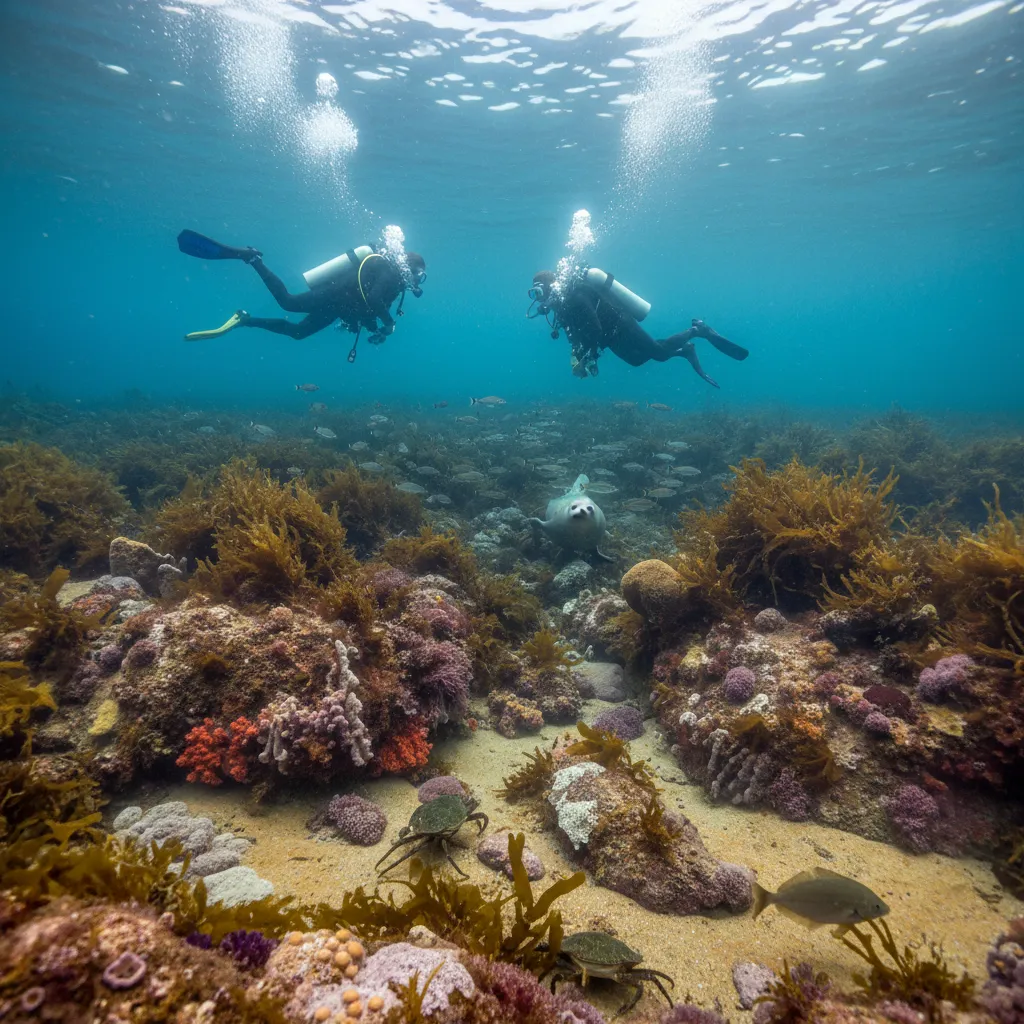
North Sea Coast offers some of Denmark's richest diving, with 95+ marine species recorded in the area - including seals & sea lions, sea turtles and jellyfish lake. Water ranges 3-19°C, warmest July, August, September.
Alright, let's talk about the North Sea Coast in Denmark. If you're coming here expecting colourful coral and balmy water, you've missed the brief. This isn't a tropical destination, it’s a rugged, often wild, coastline for divers who appreciate history and a bit of a challenge. We love the sheer grit of diving the North Sea, especially when you’re exploring the WWII wrecks off the Jutland peninsula. These aren't just submerged metal; they're time capsules, often encrusted with Wandering Mussels and home to Pollock and Rockling. Visibility can be a real mixed bag. Some days you get 15 metres and the wreck just appears out of the green, others it's more like three and you're navigating by touch and instinct. That's part of the adventure though, isn’t it? Keep an eye out for Northern Pipefish tucked into crevices and don't be surprised to see Scad schooling in the currents. Surface conditions are often rough, so you need to be comfortable with a bit of a swell, and we'd always recommend going with a local dive centre. They know the currents, which can be pretty feisty around these parts, and they know the wrecks intimately. Our favourite dives are always the ones where you get a good push from the current, drifting past parts of history. It’s a completely different kind of beauty down there, stark and real.
North Sea Coast Dive Site Map
Dive sites and dive centres in North Sea Coast
North Sea Coast Dive Sites
680 dive sites in North Sea Coast
101 (POSSIBLY)
The 101, or as we like to call it, the ‘Possibility Wreck’ – because every dive here feels like an unearthing – is a blockship scuttled by the Germans in 1940. It’s sitting upright at 20 metres, a dark, hulking shape on the seabed, and honestly, it’s one of our favourite North Sea dives when the conditions align. You’re not getting vibrant coral here, but the sheer history is palpable, the steel beams and plates slowly succumbing to the cold water. We love how the resident cod and pollock weave through the superstructure, sometimes so many you’re finning through a wall of fish. It’s a proper penetration dive for those with the training – the cargo holds are surprisingly intact, offering dark, silty chambers to explore, just be mindful of the overhead environment. For those who prefer to stay outside, the bow and stern are fantastic for photography, especially when the light filters down through the murky green water, highlighting the anemones that have started to carpet the metal. Bring a powerful torch; it’s always darker than you expect down there, but that just adds to the atmosphere. This is a dive for experienced wreck enthusiasts who appreciate history and the rugged beauty of a Northern European site.
Aalborg Sportsdykkerklub
Aalborg Sportsdykkerklub, on Denmark's North Sea Coast, offers a surprisingly solid shore dive for those willing to brave the chill. It’s a site where you’ll mostly be exploring the sandy and rocky bottom, keeping an eye out for common shore crabs scuttling amongst the rocks and plenty of edible periwinkles clinging to the shallows. We've seen good numbers of blue mussels and common cockles here too. Visibility can vary quite a bit with the weather, so we’d suggest aiming for calm days. It’s a great spot for an easy local dive, particularly if you’re keen on macro life or just getting in some bottom time without needing a boat.
AAROSUND
Aarøsund isn’t for everyone, but if you’re into history and the quiet drama of a forgotten wreck, this Danish fishing vessel is a real standout. Lying in just 10 metres, it’s an easy, relaxed dive, perfect for a long bottom time, letting you really soak it all in. We love how the hull has become a solid apartment block for everything from velvet crabs peeking out of every crevice to those surprisingly large cod that seem to patrol the deck. The current description calls it "dangerous," which, for us, just adds to the allure. It’s got that slightly spooky, well-preserved character, almost like you’ve stumbled upon it moments after it went down. You can spend ages poking around the superstructure, imagining the crew, and watching the blennies dart in and out of the rusted metalwork. Visibility can be hit or miss, typical for the North Sea, but on a good day, with a bit of sunlight filtering through, the wreck truly glows with an eerie beauty. Bring a good torch, even in the shallows, to really bring out the colours of the sponges and anemones that have colonised every surface.
ACTIV
The ACTIV, a sailing vessel, sits at 14 metres on the North Sea floor off Denmark's coast. It’s classified as a dangerous wreck, which means you need to exercise caution, but it also hints at its character. We've found the wreck relatively intact, providing some interesting structure to explore. Over time, the wreck has become a home for various smaller fish species and crabs, making it feel quite alive despite its history. Visibility here can be a bit of a gamble, but on a good day, it's a solid dive for those who appreciate the quiet history of a sunken ship and the marine life that has claimed it.
ADAMAR
Diving the *Adamar* out of the North Sea Coast, you’re in for a proper Danish wreck dive. She’s a cutter, sitting upright at 24m, and has become a dangerous wreck over the years, which for us means a truly atmospheric dive. The hull is largely intact, a dark silhouette on the sandy bottom, and the penetration opportunities here are what we love most – not for the faint of heart, mind you, but carefully done, it’s a real adventure. We've found the best time to dive her is on a slack tide, otherwise, the current can make things a bit challenging, kicking up the visibility. Inside, you’ll likely spot conger eels poking their heads from the gloom, and the deck is covered in dead man’s fingers and anemones, attracting plenty of smaller fish. It’s a dive for those who appreciate the history as much as the marine life, a quiet exploration of a vessel reclaimed by the sea.
AGNES
AGNES is a dangerous wreck in the North Sea, resting at 0m. This means it’s more of a historical landmark than a dive site, accessible only to very experienced wreck divers, or perhaps kayakers looking for a unique perspective. There isn't much to see beyond the remains of the vessel itself, which some divers might appreciate for its stark history. If you're looking for marine life or vibrant corals, this isn’t the spot.
AGNETE
The Agnete is one of those wrecks that just gets under your skin. We love it because it’s a proper piece of history, just sitting there at 5 metres in the North Sea. Forget deep, dark penetration dives, this is about sunlight filtering through the water, illuminating the remains of a schooner that went down back in 1913. You can explore the bow, the stern, and what’s left of the midsection, feeling the wood under your gloved hands. It's an easy dive, perfect for newer wreck divers or anyone who just wants a relaxed swim around a piece of maritime heritage. We’ve seen blennies darting in and out of the timbers, small crabs scuttling over the planks, and sometimes, if you’re lucky and the vis is good, a playful seal might even pop by. The Agnete is a real testament to how nature reclaims things, turning a tragedy into a living reef. Our best advice? Pick a calm day with minimal swell for the clearest view.
AGNETHE
Agnethe, a motor vessel lost in 1929, sits shallow enough at 12 metres that even new wreck divers can get a good look. We love how accessible she is. You’re not fighting depth limits here, which means more bottom time to really absorb the atmosphere. The wreck is broken but still substantial, with pieces of machinery and hull plating scattered across the seabed. It’s not one of those intact ship shapes, more like a dive through history’s debris field. We always find plenty to explore. Look for the small conger eels tucked into crevices, their heads poking out curiously. Flatfish often rest camouflaged against the sand nearby. The real charm of Agnethe is the way the North Sea has reclaimed it; a thin fuzz of marine growth covers everything, softening the sharp edges of the steel. We'd suggest checking local tides, as a slack current makes navigating the scattered parts much easier. It's a proper dive for those who enjoy poking around a historical relic, imagining the ship's final moments.
Albertus
A reef dive site in North Sea Coast, Denmark, Albertus is worth adding to your dive plan.
ALBIS
The Albis, a steamship that ran aground in 1922 and broke in two, sits in incredibly shallow water, just 2 meters deep. You’re essentially snorkeling over a wreck here, making it perfect for those new to diving or looking for a relaxed exploration. What you’ll find is the scattered remains of a substantial vessel, now thoroughly integrated with the seabed. We often see various small fish darting amongst the twisted metal, and the hull sections are coated in a surprising amount of green algae and barnacles. It's a unique chance to get up close with a piece of history without the need for deep diving gear.
ALEX
The schooner *Alex* sits upright at 15 metres, a well-preserved piece of maritime history off Denmark's North Sea coast. Sunk in 1906, she’s now well-colonised by life, a testament to how quickly the ocean reclaims its own. We’ve found her timbers draped in dead man's fingers and anemones, with schools of cod and pollock often circling the mast. It's a proper wreck dive, best suited for those comfortable navigating penetration in low visibility, especially on a day with a bit of a current. Expect an atmospheric dive, a real journey back in time.
Alholm Rev
Alholm Rev, for us, is a real surprise package in the often-overlooked Danish North Sea. Forget your tropical blues; here it’s about a different kind of beauty, a rugged, resilient ecosystem thriving in cooler water. We love the sheer density of life clinging to every surface of the reef, like the Hairy Sea-mats creating intricate tapestries, often completely covering the rocks. You'll find yourself searching for the subtle movements of specked sea-louse or admiring the robust architecture of acorn barnacles. It’s an excellent spot for macro enthusiasts, or anyone who appreciates the smaller details. Keep an eye out for the bull rout, often tucked into crevices, and the energetic common shore crabs scuttling about. Conditions can be challenging, so pick your day carefully; calmer seas make all the difference for enjoying the intricate bottom. We’d suggest going at slack tide if you can time it right. You might even catch a glimpse of a harbour porpoise patrolling the deeper sections, a truly special bonus. It’s a site that rewards patience and a keen eye, perfect for divers who prefer quiet observation over big pelagics.
Show all 680 dive sites in North Sea Coast
- ALLIANCE
- ALLIANCE H 156
- ALMA
- ALMA
- Almind so
- Alro pier
- ALRUNE
- Als Rev
- Alssundbroen
- ALTE WESER
- Amalie C. Ertel
- AMICA
- AMIGO
- Ammoniak Havn
- AMOR
- Anders Martin
- ANDERS MARTIN
- ANDRIOS
- ANE MAGRETHE
- ANNA
- ANNA
- ANNA
- ANNA-GRETHE
- ANNA VAN CHENZ
- ANNA VIOLETTE
- ANNE
- ANNE MARIE
- Anne Mildred Brövig
- ANN HELEN CLAUSEN
- ANNIE TRAMM
- ANO
- ANTRAX
- Arbeitsponton
- ARGUS (PROBABLY)
- ARKONA
- ARKONA
- Aschau
- Asnæs Rev
- ASTER
- ASTRAEA
- ASTRID DAHL
- AUCKLAND H 287
- AUGUSTA
- AUGUST LEONHARDT
- AVEGATTEN
- AXEL
- Badesee Halen
- BAEVEREN
- Bågø Flak
- B AND R-HM2
- Banter See - UWC Heim
- BARTHOL
- Bastholm Hage
- BB 1
- BEGITHE
- BERGLIOT
- Bergum
- BERNLEF
- BES
- BESS
- Betonschute
- Betonschute
- Birck
- BIRGITTE
- BIRGITTE THOMAS
- BIRGIT THOR
- BIRTHE
- Bjarkesgrund
- BJERKA (PROBABLY)
- BJORNO
- BJORN (POSSIBLY)
- BLACK STAR
- Blankenburger See - Nord
- Blankenburger See - Süd
- BLENDA
- BOBBY
- BODIL
- BOGANI
- BOOTHIA
- BOREAS
- Borfeld
- BORINGIA
- Borrebjerg
- BOSSANOVA
- BOUNTY
- BRAGE
- BRAM 2
- BRITANIC
- BRODRENE
- BRYNJE
- BUNDEKUH
- Burg
- BUS 104
- CAMILLA C
- CARL JOLLE
- CASPER
- CASTOR
- CATHRINE
- C.A. VIGMAN
- CERES
- CHARLOTTE
- CHRISTA
- CHRISTIAN IX
- Christiansminde
- Cimbria
- CLARA
- CLAUS BOGE
- COFFERO
- COLIN ARCHER
- CONJA
- CONNIE
- CONNIE VINTHER
- CORTINA
- DAN BRITT
- DANICA BLACK
- DANKBARHEIT
- Dankernsee
- Daugard Strand
- DEFENSOR
- DELPHIN IV
- DER KAISER
- DESDEMONA
- DE SEKS BRODRE
- DESIRE
- DE TO VENNER
- DISPONIBEL
- DORCAS
- DORELL
- DORPET
- DORTHEA
- Drabystrand
- Duikvereniging Aqua Nostra
- DUNGENESS
- Dykker-butikken.dk
- Dykkerklubben Nemo
- Dynte strand
- DZENES
- Ebeltoft Sportsdykkerklub
- Eckernförde - Hauptstrand: DLRG Station
- Eckernförde - Riff
- Eckernförde - Südstrand
- EDITH ALS
- EDMUND HUGO STINNES 1V
- EJDEREN (PROBABLY)
- ELAK
- Eldorado
- ELIEZER
- ELISABETH
- ELISE
- ELISE
- ELIZABETH
- ELLEN
- ELLEN BONNERUP
- ELLY
- ELMAKA
- ELSE
- ELSE
- ELSE
- ELSE MARIE
- ELSE VRIST
- ELSTORF
- EMANUEL (PART OF)
- EMAUS
- EMILIE
- EMMA
- ERICH OR ENRICH OHLROGGE
- ERLING
- ERNA
- ERNA
- ERNA
- ERNA GAULBE
- ESMERALDA
- ESTER
- EVERT
- Faeno Sund
- FALKE
- FALKE III
- Falkenstein
- Falkenstein
- FANNY
- FANNY
- Faros Wreck
- FELICIA
- FINGAL I
- FINN MELFI
- FJORDEN
- Flipper II
- FLOTTWEG
- Flydedok
- FORTUNA
- FORTUNEN
- FRAM III
- FRANZ HANIEL (PROBABLY)
- FRAYA
- FREJA
- FRI 16
- FRISIA
- FUSION - H10
- Galgerev
- Galsklint
- GAMMA
- Gammel Albo
- Gammelbrovej Arosund
- GARDA
- Gasevig Strand
- George H. Hastie
- GEORGE H. HASTIE
- GERD
- GERD
- GERDA OF SKIVE
- GERTRUD
- Gisela
- GITTE
- Gnome
- GOTTFRIED BUCKREN
- GOYA
- GRATIA
- GRAV
- GRETHE
- GRETHE A 623
- GRETHE KLITGARD
- GRIBBEN
- Grønnerevle
- Großer Plöner See - Bosau
- GUDRUN
- GUDRUN
- Guildford Castle
- Hagenor
- HANAU
- HANNA
- HANS PETER
- Hatter Rev
- HAVBOEN
- HAVET S.G. 189
- HAVFRAKT
- HAVORNEN
- HAY
- HAY
- HEBE
- HEDWIGSHUTTE
- Heike
- HEINZ BERND
- Hejsager Strandby
- HEKLA
- HEKLA
- HELAN
- HELENE B SCHUPP
- HELENE B SCHUPP
- HELLE
- HEMIA
- HENA
- HENNY
- HERA
- HERBART
- HERMA
- HERMAN
- HERMAN
- HERRENWYK
- Herta
- Hesteskoen
- HINRICH
- HJAELPEREN
- HMS Ardent
- HMS Defence
- HMS Defence
- HMS Indefatigable
- HMS Invincible
- HMS Lutine
- HMS M E 1016
- HMS Queen Mary
- HMS Seal
- HMS Starfish
- HMS St George
- HMS ST GEORGE
- HMS Sunfish
- HMS Warrior
- HOFFUNG
- HOGEN
- HOLGER
- HOLGER DANSKE
- HOLST NORDIA
- HOLZSCHIFF
- Hornbaek Plantage
- Horns Rev
- HUGO ZEYE
- HURIAIMIA
- IDA AMALIE
- IDEFIX
- ILSE
- IMANUEL
- Inderrevet
- INGEBORG
- INGEBORG
- Inger Klit
- Inger Klit
- INGER KLIT
- INGRID LEONHARDT
- INSTERBURG
- INTERESSENTEN
- IRENE
- IRIS
- ISLAND
- JAN
- JAN MARGRETHE
- JASON
- JENS ROHDE
- JOHANNE
- Johann Wessels
- JOHN BIRKE
- JOHNNY LISBETH
- JORGEN
- JORN
- JOSEPHINE E
- JOSSE
- Juelsminde havn
- JUPITER
- JUTTA
- KABELJAU
- Kaegnaes Faerge
- KAI
- KAJ
- KAJT
- KAKVA
- KALANCHOE
- KALUNDBORG
- KAMILLA (POSSIBLY)
- KAREN
- KAREN RONN
- KARIJAS
- KARIN AS-14
- Karlsminde
- Karrebaeksminde Bridge
- KATIAN
- Kattegatcentret Oceanariet
- KE 211
- KENNETH
- KETTY
- KIAN
- KIMIEL
- KIRSTEN
- KITTY
- Kitzeberg
- KLAUS ANKER
- Klørgrund
- KNUT WILLEMUS (?KNUD VILLEMOES)
- KOBENHAVN
- Kolen
- Kongebrogarden
- KONG HALFDAN
- KONGSMARK
- KON-TIKI
- KORESAND
- KR3
- Kragskov Rev
- KRISTA LYNG
- KRISTINE
- KUHWARDER
- KUNIGUNDE
- KURT
- Kyndby Rev
- Læsø Nordvest Rev
- Langholz
- LAURA
- LAURA M66
- Laursrev
- LIBRA
- LIDINGO
- LILL-ANN
- LIMA
- LIMFJORDEN
- LINA
- LINDHOLM
- LISAN HILL
- LISSE RUBY
- LISSI
- LIS SUSANNE
- LIZZIE
- LOFTEVERKET
- Løgstør Sportsdykkerklub
- LOLLI
- LOLLY
- Lønstrup Rødgrund
- LYKKENS PROVE
- LYNAES
- Lyngsbo
- lyngsodde
- LYSAKER III
- LYSTO
- M 14
- M 36 (POSSIBLY)
- M49
- M51
- MAJA
- MALENE SLOTO
- MARGARETHA
- MARGIT
- MARIA
- MARIANNE
- MARIE
- MARIE
- MARIE
- MARIE
- Marselisborg
- Marsvinet Diving Club
- MARTHA
- MARTINA
- MARTINA (NORTHERN PART)
- Mejlflak
- Mellemrevet
- MERCURIUS
- META MARIE
- METEOR
- METTE DAHL
- METTE MARIE
- METTY
- MIGNON
- MIKKEL
- MINDE 4
- MINNA
- MINNA
- MINNA II (POSSIBLY)
- MONGOLIA
- MONICA R
- MONIKA
- MOWE (?JOAHANNE)
- MTB1 motor torpedo boat
- Mulbjerg Grund
- Munkholmbroen
- MUSSE
- MYKO
- NANCY
- Natomolen
- NECKAR
- NEPTUN N85
- NEPTUNUS
- NEREUS
- NESTUN
- NF 399
- NINA NITU
- NO.1305
- NO 301 (POSSIBLY)
- Noer
- NORBERG
- NORDBORG
- NORDEN
- NORDFAHRT
- NORDLAND
- NORDMEER
- NORDSTJERNEN
- NORDSTRAND
- Nordvestrev
- Nordvestrev
- NORMA
- Nørresundby Sportsdykkerklub
- NUDDE
- NYBORG
- Nyborg old harbour wrak
- OCTA
- Oddesund
- OLGA
- OLNA
- OLYMPIA
- OMEGA
- ORION
- OSTERSJON
- Osterstrand
- Østmolen Dykkeplatform
- OTTENSEN OF ALTONA
- PADILLA
- PALLAS
- PAMPERO
- PAUL ROSENBERG
- PAX
- PELLA
- PERNILLE
- PETER
- PETER
- PETER MARIA
- PETER VENO
- PETIT FOLMAR
- P G HALVORSEN
- PHILIP
- POLARNA
- POMMERN
- PONTON
- POSEIDON
- POSEIDON
- POSEIDON
- Prammen
- PREGEL
- PRIME
- Quellental
- RAGNHILD
- Randers Sportsdykkerklub
- RASMINE
- REGNBUEN (POSSIBLY)
- RIGMOR
- RIKKELINE
- RIKKELINE
- RITA
- RITA IRENE
- Rødgrund
- ROLF
- Romsoe Rev
- Rosenvold
- ROSHOLM
- ROSNAES
- Røsnæs Puller
- ROTA
- RUSS
- RUTH
- Sælhage
- Salling Aqua Park
- SALOME
- SAMSO
- SAMSON
- Sandskaer Camping harbour
- Sandskaervej strand
- SANO-R
- SCHULAU
- SCT JORGEN
- SEEHEXE
- SELVIG
- SG 52
- SIDDNIA
- SIERRA CORDOBA
- SIG
- SIGNE MARIE
- SIGRID
- SILVERY SEA
- SIMA 3
- SI-SI
- SJAELLAND
- Sjaellands Oeje
- Sjællands Rev
- Skærebæk Rev
- Skagens Rev
- SKAGERRAK
- SKANSEN
- SKELDERVIG
- Skinfel
- SKJOLD
- SKJOLD
- SKJOLD
- SMILET
- Snoghoj
- Snorkel trail
- Sobadet
- SOFIE
- SO-kysten af Samso
- SOLOVEN (PART OF)
- SOLOVEN (PART OF)
- SONDERJYLLAND
- SONDRE NISSUM
- Sophie
- SOREN SANDHOLM
- SORSTRAND (PROBABLY)
- SOSTJERNAN
- Speicherbecken Geeste / Lingen
- Sportsdykkerklubben Ægir
- Sportsdykkerklubben KVAK
- SPRINE
- SS Hertfordshire Wreck
- STANDARD
- STANDARD
- Stationsgade
- STELLA
- STEN TRANS
- Strandby Rev
- Strib strand
- Studstrup
- SUMMA
- SUSANNE KLAUS
- SUSSI PETER
- SVALEN
- SVALEN
- SVEA
- Svendborgsund
- SVENDBORG SUND
- Svendborg Sundbroen
- SVEND DAHL
- Svinoe
- SWEDEN
- Sydøstrev
- SYLVANA
- T 67
- T 78
- TABOR
- TAIFUN
- TAT
- Tauchverein Delphin
- TENTO
- THERMIJ OR THERMIS
- THOMALI
- THORVALD
- TINA KRARUP
- TINNA BRUUS
- Tisvildeleje Strand
- TJALK
- TJALK
- TJALK
- TOMMY KRUSE
- TOMMY LAILA
- TONI VADSAGER
- TOPSY
- TORNADO
- TORO
- TOVE
- TRAFIK
- TRANSPORT
- TROMP
- TURISTEN
- U 20
- U-boat Wreck
- UC 30
- UHLAN (POSSIBLY)
- ULLA
- ULLA RU 116
- UNVERSAGT
- UPMEIER
- URANIA H 1011
- Ursten
- UTE FRESE
- UTVIKEN
- VALBORG
- VALENCIA
- VERKA
- VERTRAUEN
- VESPER
- VESTA
- VESTERBY
- Vesterhave
- VIKING
- VILJE
- VINDS GRAV N
- VIVIAN
- VOITJA
- Vollerup Rev
- V.P.6507
- V.S.54
- WEGA
- WEILBURG
- WESER
- WESSER II
- WILHELM
- WILHELM
- WILHELMINE
- WILHELMINE
- WILHELMINE FALKENBERG
- WINNIE
- WITUS
- WOSI
- WOTAN
- WOTAN
- Wreck of Alexander Nevsky
- Wreck of HDMS Niels Juel
- Wreck of Ondo
- Wreck of SMS Lützow
- Wreck of SMS Pommern
- Wreck of SMS Wiesbaden
- Wreck of U-1
- Wreck of U-8
- Wreck of Verona (1865)
- Wreck S103
- Y 340
- Ydermolen
- Yderrevet
- ZEUS
North Sea Coast Dive Centres
15 dive shops and operators in North Sea Coast
Aquatic Marine
Blivdykker.dk
Broagerlands Dykkercenter
Carlsens Dykkercenter A/S
Dieter's Tauchshop
Diving 2000 A/S
Dykkerbutikken
Helos VIP Diving
Show all 15 dive centres in North Sea Coast
Ocean Wildlife in North Sea Coast
95 species recorded in North Sea Coast
North Sea Coast Daylight & Sunrise/Sunset
Sunrise and sunset times for North Sea Coast, calculated from coordinates
Today - Sunday 11 October
Sunrise
06:43
Sunset
17:33
Daylight
10h 50m
Golden Hour
16:43
First light (dawn) at 06:06 · Last light (dusk) at 18:10
Monthly Averages
| Month | Sunrise | Sunset | Daylight |
|---|---|---|---|
| Jan | 08:41 | 16:19 | 7h 38m |
| Feb | 07:48 | 17:23 | 9h 35m |
| Mar | 06:40 | 18:22 | 11h 41m |
| Apr | 05:20 | 19:23 | 14h 3m |
| May | 04:13 | 20:22 | 16h 9m |
| JunLongest | 03:38 | 21:05 | 17h 27m |
| Jul | 03:57 | 20:57 | 16h 59m |
| Aug | 04:52 | 20:01 | 15h 9m |
| Sep | 05:51 | 18:44 | 12h 53m |
| OctNow | 06:49 | 17:26 | 10h 37m |
| Nov | 07:53 | 16:19 | 8h 25m |
| DecShortest | 08:42 | 15:50 | 7h 7m |
Times are approximate local times based on longitude. Actual times may vary slightly depending on the exact timezone observed in North Sea Coast.
Where to Stay near North Sea Coast
Prices from Booking.com. We may earn a commission at no extra cost to you.
Marine Protected Areas near North Sea Coast
238 protected areas near North Sea Coast - please respect local regulations when diving
Sydlige Nordsø
Nordvestlige Kattegat
A
Sydlige Nordsø
Sydlige Nordsø
Alborg Bugt, østlige de
Ålborg Bugt, østlige del
Vadehavet med Ribe Å, Tved Å og Varde Å vest for Varde
Vadehavet
Wadden Sea
Vadehavet med Ribe Å, Tved Å og Varde Å vest for Varde
O
Showing 12 largest of 238
Getting to North Sea Coast
Odense
Billund
Aarhus
Plan & book
Ways to dive North Sea Coast, from day trips to liveaboards.
Day trips & courses
via GetYourGuideGuided dives, courses and snorkel trips with instant booking.
Find dive trips in North Sea CoastPlaces to stay
via Booking.comHotels and dive resorts near North Sea Coast.
Search stays in North Sea CoastDive insurance
Most travel insurance excludes or limits scuba. Check what you need before you go.
Dive insurance explainedPartner links: we may earn a commission if you book, at no extra cost to you. How we make money