ALLIANCE H 156
Protected Area
Gilleleje Flak og Tragten
Why dive here
With 95+ marine species recorded in the area - including seals & sea lions, sea turtles and jellyfish lake - ALLIANCE H 156 offers some of North Sea Coast's richest wreck diving. Water ranges 3-19°C, warmest July, August, September.
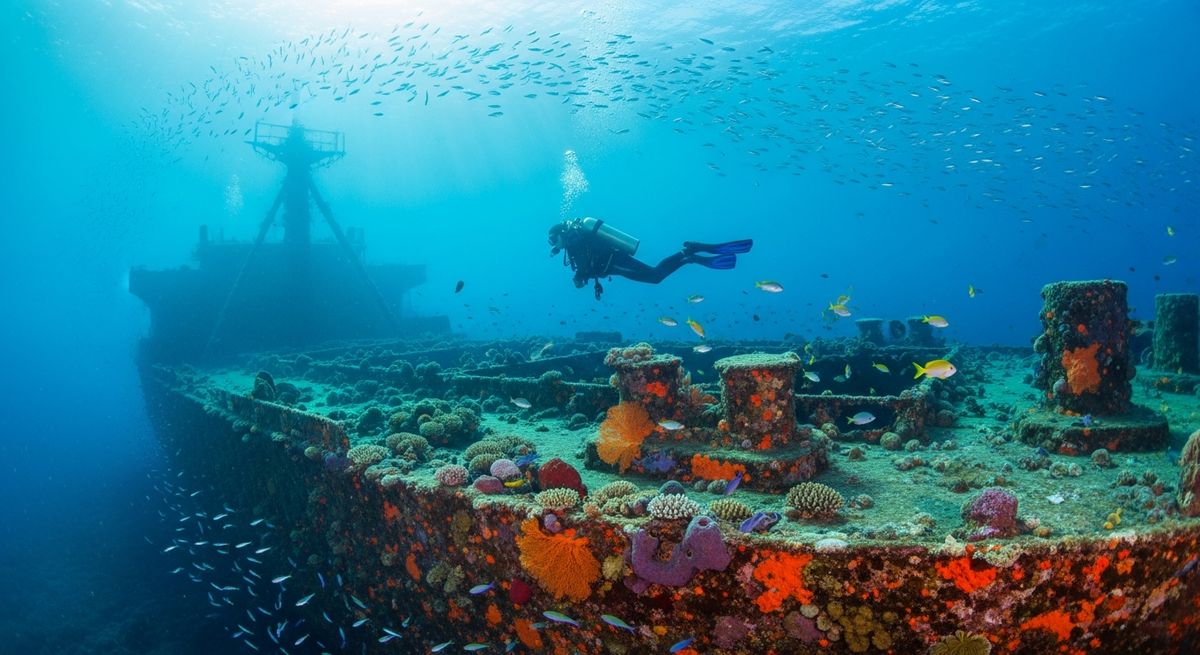
The *Alliance H 156* isn't your typical North Sea wreck. For starters, she’s largely intact, sitting upright in 22 metres of water. We love a wreck with a story, and this fishing vessel, sunk during WWII in 1942, certainly has one. Dropping down, the first thing you notice is the sheer scale. Her bow points east, a dark silhouette against the often-murky green water. We found her wheelhouse remarkably preserved, a real step back in time. You can peer through the windows, imagining the crew’s final moments. Our favourite part has to be the stern, where the propeller still sits proud, almost inviting a closer look. The wreck itself has become a haven. Schools of cod drift lazily through the interior, and we’ve seen some enormous ling tucked into crevices. The deck is carpeted with anemones and dead man’s fingers, adding splashes of colour to the metal. Visibility here can be tricky, so we always suggest picking a day with calm seas and diving on a slack tide for the best experience. It's a site that rewards multiple dives, revealing new details each time. If you enjoy exploring historical wrecks with a good degree of penetration potential, this one is for you.
Typical ALLIANCE H 156 Dive Profile
Illustrative profile based on site depth and type. Actual dive profiles vary - always follow your dive computer and training.
Safety Notes
Depth of 22m - Advanced Open Water certification recommended.
Wreck site - avoid penetration without wreck diving certification. Watch for sharp metal and entanglement hazards.
Cold water this month (avg 13°C). Drysuit or thick wetsuit (7mm+) recommended.
Always perform a 3-minute safety stop at 5m before surfacing.
ALLIANCE H 156 Wreck History
Year Sunk
1942
Vessel Type
fishing vessel
Cause
unknown
The fishing vessel Alliance H 156 met its end on November 26, 1942. While the specific cause of her sinking is not recorded, her loss during the height of World War II in the heavily patrolled North Sea points towards a wartime casualty. Fishing crews during this period faced immense danger, with their vessels often becoming targets of opportunity for submarines, aircraft, or striking one of the thousands of mines that littered the sea lanes. The Alliance H 156 is a silent monument to the civilian seafarers who risked, and often lost, their lives during the conflict.
Resting at a depth of 22 meters, this wreck is an accessible piece of history. Divers visiting the site are exploring a time capsule from one of the world's darkest periods. After more than 80 years on the seabed, the wooden elements of the hull have likely rotted away, leaving behind the more resilient engine, machinery, and scattered metallic components. The site is now a vibrant reef, attracting a variety of North Sea marine life. The designation as a "Dangerous Wreck" serves as a warning that nets or sharp, decaying structures may be present, requiring a careful and respectful exploration.
Reviews for ALLIANCE H 156
Conditions
Ocean conditions, forecast and tides for ALLIANCE H 156
ALLIANCE H 156 Ocean Conditions
Monthly averages for ALLIANCE H 156, sourced from Open-Meteo marine data - nearest station: Open-Meteo marine grid (55.31, 9.86) (1km away)
October Averages
Sea Temperature
13°C
56°F · Range: 10.7–16.8°C
Air Temperature
11°C
52°F
Wind Speed
7.69 m/s
14.9 knots
Atmospheric Pressure
1010.5 hPa
Based on 4 years of monitoring data · Data sources: Open-Meteo marine data
Plan & book
Ways to dive North Sea Coast, from day trips to liveaboards.
Day trips & courses
via GetYourGuideGuided dives, courses and snorkel trips with instant booking.
Find dive trips in North Sea CoastPlaces to stay
via Booking.comHotels and dive resorts near North Sea Coast.
Search stays in North Sea CoastDive insurance
Most travel insurance excludes or limits scuba. Check what you need before you go.
Dive insurance explainedPartner links: we may earn a commission if you book, at no extra cost to you. How we make money
Where to Stay near ALLIANCE H 156
Prices from Booking.com. We may earn a commission at no extra cost to you.