Diving in Budva & Bar
Why dive here
Budva & Bar offers some of Montenegro's richest diving, with 66+ marine species recorded in the area - including sea turtles and cuttlefish. Water ranges 14-27°C, warmest July, August, September.
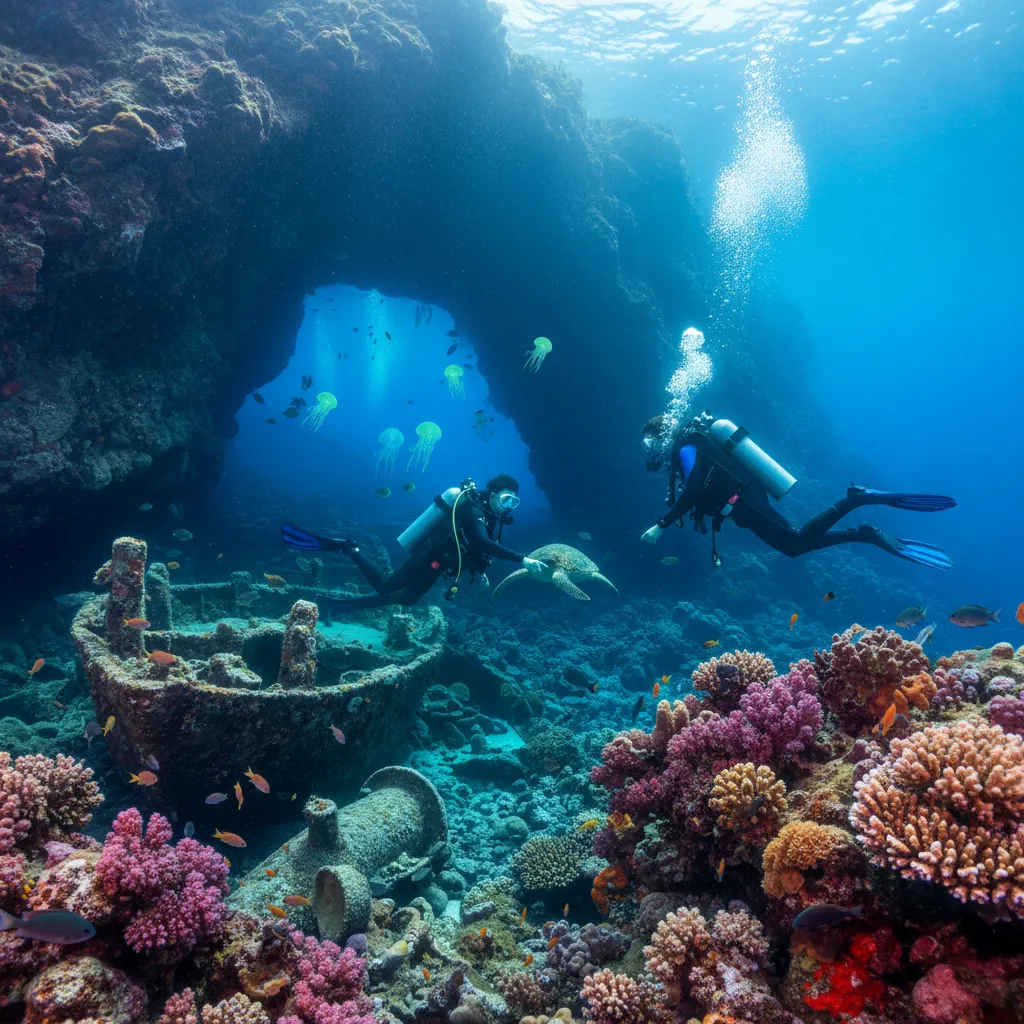
Budva and Bar give you the pick of Montenegro’s main dive coast. We’re talking a good spread of wrecks, plenty of caves, and some dramatic underwater cliffs that just drop away into the blue. It’s a solid choice for intermediate divers, though beginners will find plenty to keep them busy too. We especially like the feeling of diving into the historical side here. Our favourite dives often involve poking around the wrecks, where you’ll spot Streaked Gurnards and maybe a Starry Skate blending into the sand nearby. Keep an eye out for those delicate Mediterranean feather stars clinging to the rocks. Drop into the caves and you might surprise a Sea Horse or a shy Bastard Sole. The eelgrass beds are always worth a slow cruise, they’re surprisingly active with smaller species. If you’re lucky, you’ll catch the Lanternfish shimmering during a dusk dive - a truly cool sight. Currents can be present, but nothing too wild. It’s more of a gentle push on most days. We suggest going in late spring or early autumn; the water is warm, and the summer crowds have thinned out, making for a more peaceful experience.
Budva & Bar Dive Site Map
Dive sites and dive centres in Budva & Bar
Budva & Bar Dive Sites
24 dive sites in Budva & Bar
AGIP MARCHE (MIDSHIPS SECTION)
We love a good deep wreck, and the AGIP MARCHE’s midships section off Budva & Bar delivers exactly what we look for. Dropping down to 50 meters, this is strictly for experienced divers comfortable at depth, but the reward is a truly substantial piece of maritime history. The sheer scale of the tanker’s hull is immediately apparent; it’s a dark, imposing structure on the seafloor. We’ve always found the story behind its sinking, breaking from its tow in a storm, adds to its melancholic presence. Visibility can vary, but on a good day, the light plays beautifully across the massive plates of steel. You’ll see schools of sardine shimmering over the deck, and we've spotted some impressively large groupers taking shelter in the deeper recesses. Our favourite part is navigating around the twisted metal, imagining the immense forces that ripped this section free. The stern section is some way off, making this a focused dive on a single, dramatic piece of industrial architecture. Just be mindful of decompression limits; this isn't a dive to rush.
AURORA (PROBABLY)
Aurora. Or maybe not. Even the local dive centres aren’t entirely sure about this one’s identity, but we love it regardless. What we do know is that it’s a merchant vessel, sunk in 1992 after a collision near Dubrovnik. It sits upright, proud, and surprisingly intact at a comfortable 10 metres. The bow points seaward, and the stern, where the impact likely occurred, shows the most damage. Dropping down, the first thing you notice is the way the light filters through the clear Adriatic water, illuminating the main deck. It’s a shallow wreck, meaning plenty of bottom time to explore the cargo holds, now open to the sea. Schools of damselfish flutter in and out of the superstructure, and if you peek into some of the darker corners, you might spot a moray eel or a grumpy scorpionfish. We’ve even seen small octopuses tucked away in crevices on the hull. It’s a melancholy dive, knowing its history, but the life that has embraced it makes it an engaging site for anyone who enjoys easy wreck penetration and clear visibility.
Blue Grotto
The Blue Grotto, tucked into the coastline near Budva, is exactly what it sounds like – a sea cave where the light does something really special. We usually drop in shallow, around 3 meters, and then follow the light as it filters in through the cave’s opening, turning the water an incredible electric blue. The walls are soft with sponges, and we’ve spotted plenty of common brittlestars clinging on. It’s a gentle dive, topping out at 15 meters, perfect for newer divers or anyone looking for a relaxed, visually striking experience rather than big fish action.
BOLANA
We love a wreck with a story, and the Bolana has a cracker. This tugboat, sunk by the Allies in 1943, lies upright and relatively intact at 25 metres. It’s a proper dive for wreck enthusiasts, especially those with some buoyancy control under their belt – we’d suggest Advanced Open Water divers will get the most out of it. Dropping down, the Bolana slowly takes shape, dark against the blue. You’ll spend most of your bottom time circling the superstructure, peering into what were once doorways and windows. Big groupers often lurk in the shadows, and we’ve seen schools of damselfish flitting around the mast, which still stands proud. It’s not a massive wreck, but there’s enough here to explore for a good 30 minutes, picking out details like the davits or the outline of the funnel. Our favourite part is the stern, where you can often spot nudibranchs clinging to the metalwork. Go in the morning; the light then really highlights the wreck’s profile.
BRINDISI
The Brindisi wreck is a real treat, a shallow piece of history just waiting to be explored. We love how accessible it is, sitting at a comfortable 13 metres, perfect for divers who want to take their time and really soak in the atmosphere. This steamship met its end in 1916, a casualty of a mine near San Giovanni di Medua, and over a century later, it’s become an artificial reef bustling with activity. You’ll find the wreck spread out, an intriguing mix of corroded metal and the vibrant growth of marine life. Schools of damselfish shimmer around the fragmented hull, and we’ve often spotted scorpionfish camouflaged against the dark metal, waiting patiently. Look closely inside any openings you can safely peer into – octopuses are frequent residents, often tucked away in a shadowy corner. The historical context, knowing you’re gliding over a piece of World War I, really adds another layer to the experience. It’s a great dive for photographers, especially when the sun is high and filters through the water, illuminating the wreck’s skeletal remains. We’d suggest going early if you can, before any potential boat traffic kicks up the sediment.
Budva Diving
Budva Diving isn’t going to blow your mind, but it’s a solid spot for getting wet and shaking out the travel kinks. We often use it for a relaxed afternoon dip, a chance to spot some of the smaller residents of the Adriatic. Keep an eye out for the distinctive Soft Brittlestars clinging to rocks – they’re always a pleasure to find. It’s a pretty easy dive, good for stretching your legs or for divers getting back into the swing of things.
galiola
Galiola offers a pleasant dive for those exploring Montenegro's coast. We’ve found a decent collection of Mediterranean reef fish here, along with some interesting rock formations to poke around in. It’s a pretty relaxed spot, good for a second dive of the day or if you're looking for something calm. Expect clear visibility on most days.
Jezero Spajici
Jezero Spajici is a sheltered spot, making it a good choice for newer divers or those looking for an easy afternoon dip. The site doesn't go deeper than 15m, with much of the dive spent around 8-10m over a rocky seabed. You'll likely see a few crabs scuttling about and some smaller Mediterranean reef fish. It’s a relaxed dive, suitable for skills practice or just unwinding.
Kaiser Franz Joseph I, wreck
The Kaiser Franz Joseph I isn’t just a wreck; it’s a time capsule, sitting upright and surprisingly intact on the seabed off Bar. We love the way she looms out of the Mediterranean gloom, her stern still surprisingly grand at 27 metres. Dropping down, you’ll first notice the sheer size of her, especially if you get there before other boats. Our favourite part is finning along the deck, where schools of small damselfish flit in and out of the rusted superstructure. Penetration is possible into some of the cargo holds, though we’d suggest good buoyancy and a torch; it gets dark in there quickly. Keep an eye out for the resident moray eels peeking from crevices, and we’ve spotted plenty of scorpionfish camouflaged on the hull plates. Visibility here can sometimes be a bit green, but it adds to the eerie, historical feel rather than detracting from it. This wreck is perfect for intermediate divers keen on a proper exploration, rather than just a quick look-around. It’s a rewarding dive, offering a real sense of history.
Kolocep Bezdan Abyss
We’ve always found Kolocep Bezdan Abyss to be a solid spot for getting your fins wet in Montenegro. Dropping to a gentle 21 metres, it’s a friendly dive, perfect for those just getting comfortable with buoyancy or shaking off some rust. You’ll find some interesting rock formations here, little ledges and cracks that often shelter small wrasse and the occasional moray eel peeking out. It’s not a drift dive, so you can really take your time exploring the nooks. We’d suggest going early morning before any potential boat traffic picks up, as the light can be lovely then.
Mali Katic
Mali Katic offers a straightforward dive experience near Budva. We found it a decent spot for newer divers looking for a relaxed exploration, with gentle currents and generally good visibility. The site itself features a gentle slope, where you’ll find small groupers sheltering amongst rocks and occasional schools of damselfish flitting past. It’s a reliable choice if you want a calm dip without any major challenges.
PAGANINI
Paganini is a proper piece of history down there, a passenger steamer from the late 20s. We dive a lot of wrecks, and this one has a real story, sunk in 1940 carrying troops, a tragic end for so many. The wreck sits upright at 37 metres, stern damage evident from the fire that took her down. You can spend a whole dive just circling the main deck, imagining the chaos. We love exploring the fore and aft sections; the holds are fairly open, giving you a glimpse into what was once a bustling ship. Visibility here can vary, but on a good day, the light plays beautifully through the superstructure, illuminating schools of small schooling fish. Keep an eye out for resident scorpionfish camouflaged on the deck plates – they’re masters of disguise. This wreck suits divers comfortable at depth who appreciate a dive with a poignant narrative. It’s less about vibrant corals and more about the sombre beauty of a well-preserved piece of maritime past. We’d suggest going in late morning; the sun angle really helps penetrate the deeper sections.
Budva & Bar Dive Centres
6 dive shops and operators in Budva & Bar
Ocean Wildlife in Budva & Bar
66 species recorded in Budva & Bar
Budva & Bar Daylight & Sunrise/Sunset
Sunrise and sunset times for Budva & Bar, calculated from coordinates
Today - Sunday 11 October
Sunrise
05:53
Sunset
17:11
Daylight
11h 18m
Golden Hour
16:34
First light (dawn) at 05:25 · Last light (dusk) at 17:40
Monthly Averages
| Month | Sunrise | Sunset | Daylight |
|---|---|---|---|
| Jan | 07:13 | 16:37 | 9h 24m |
| Feb | 06:43 | 17:17 | 10h 34m |
| Mar | 05:58 | 17:51 | 11h 53m |
| Apr | 05:07 | 18:25 | 13h 19m |
| May | 04:25 | 18:59 | 14h 34m |
| JunLongest | 04:08 | 19:24 | 15h 16m |
| Jul | 04:21 | 19:22 | 15h 2m |
| Aug | 04:51 | 18:50 | 13h 59m |
| Sep | 05:24 | 17:59 | 12h 35m |
| OctNow | 05:57 | 17:06 | 11h 10m |
| Nov | 06:37 | 16:24 | 9h 48m |
| DecShortest | 07:08 | 16:13 | 9h 5m |
Times are approximate local times based on longitude. Actual times may vary slightly depending on the exact timezone observed in Budva & Bar.
Where to Stay near Budva & Bar
Prices from Booking.com. We may earn a commission at no extra cost to you.
Marine Protected Areas near Budva & Bar
18 protected areas near Budva & Bar - please respect local regulations when diving
Skadar Lake
Nacionalni park Skadarsko jezero
Park prirode Katič
Kotorsko risanski bay
Platamuni
Park prirode Platamuni
Park prirode Stari Ulcinj
Katici, Donkova and Velja seka islands
Spas, Budva
Tivatska solila
Posebni rezervat prirode Tivatska solila
Tivatska solila
Showing 12 largest of 18
Getting to Budva & Bar
Tivat
Dubrovnik
Podgorica
Plan & book
Ways to dive Budva & Bar, from day trips to liveaboards.
Day trips & courses
via GetYourGuideGuided dives, courses and snorkel trips with instant booking.
Find dive trips in Budva & BarPlaces to stay
via Booking.comHotels and dive resorts near Budva & Bar.
Search stays in Budva & BarDive insurance
Most travel insurance excludes or limits scuba. Check what you need before you go.
Dive insurance explainedPartner links: we may earn a commission if you book, at no extra cost to you. How we make money