BRABANT
Protected Area
Hartland Point to Tintagel
Why dive here
With 176+ marine species recorded in the area - including blue sharks, dolphins, dwarf minke whales, humpback whales and ocean sunfish (mola mola) - BRABANT offers some of Cornwall & Devon's richest wreck diving. Water ranges 10-18°C, warmest July, August, September.
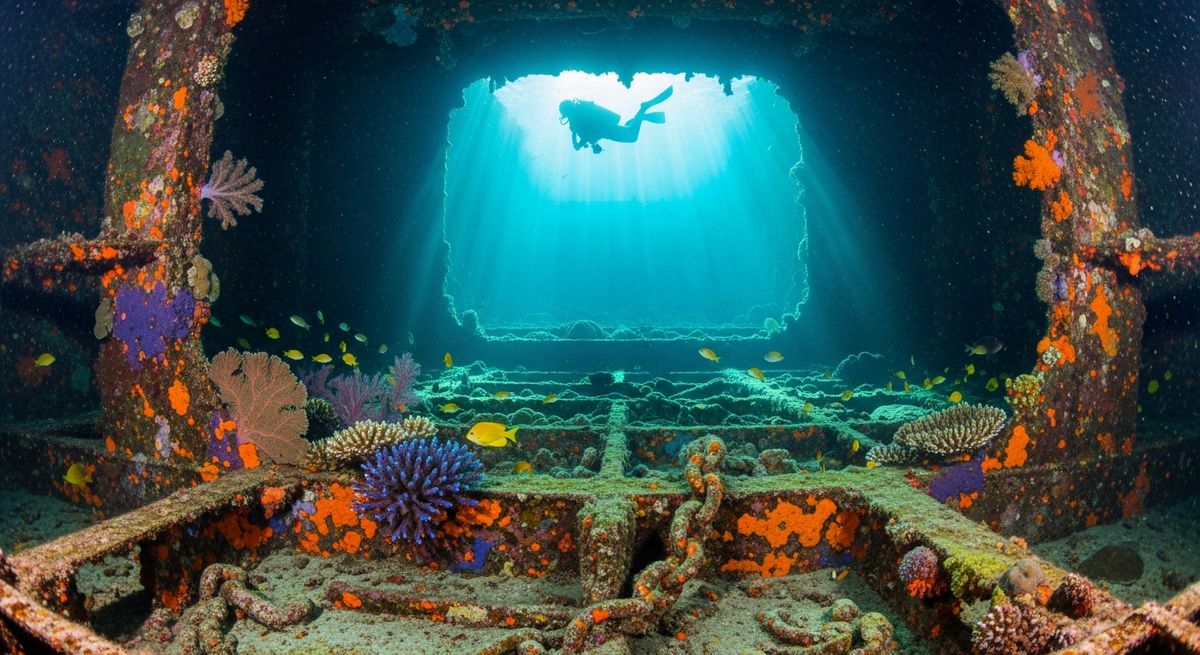
The Brabant, a merchant vessel bombed in 1942, now rests upright at 36m. She’s a decent sized wreck, about 45 metres long, offering some good penetration opportunities for trained divers if conditions are right. You’ll find her structures pretty well preserved, covered in plumose anemones and dead man's fingers, with conger eels often lurking in the darker corners. While the visibility in this part of Cornwall can be hit or miss, the Brabant is a rewarding dive, particularly for those who appreciate maritime history and the hardy marine life of the Channel.
Typical BRABANT Dive Profile
Illustrative profile based on site depth and type. Actual dive profiles vary - always follow your dive computer and training.
Safety Notes
Deep dive (36m) - monitor air consumption closely. Advanced certification recommended.
Wreck site - avoid penetration without wreck diving certification. Watch for sharp metal and entanglement hazards.
Always perform a 3-minute safety stop at 5m before surfacing.
Nearest Dive Centres to BRABANT
Dive shops near BRABANT
View all dive centres in Cornwall & DevonReviews for BRABANT
Conditions
Ocean conditions, forecast and tides for BRABANT
BRABANT Ocean Conditions
Monthly averages for BRABANT, sourced from Open-Meteo marine data - nearest station: Open-Meteo marine grid (50.44, -2.73) (3km away)
October Averages
Sea Temperature
17°C
62°F · Range: 15.1–17.5°C
Air Temperature
13°C
56°F
Wind Speed
8.14 m/s
15.8 knots
Atmospheric Pressure
1011 hPa
Based on 4 years of monitoring data · Data sources: Open-Meteo marine data
Plan & book
Ways to dive Cornwall & Devon, from day trips to liveaboards.
Day trips & courses
via GetYourGuideGuided dives, courses and snorkel trips with instant booking.
Find dive trips in Cornwall & DevonPlaces to stay
via Booking.comHotels and dive resorts near Cornwall & Devon.
Search stays in Cornwall & DevonDive insurance
Most travel insurance excludes or limits scuba. Check what you need before you go.
Dive insurance explainedPartner links: we may earn a commission if you book, at no extra cost to you. How we make money
Where to Stay near BRABANT
Prices from Booking.com. We may earn a commission at no extra cost to you.