CROMDALE
Protected Area
Lizard Point
Why dive here
With 176+ marine species recorded in the area - including blue sharks, dolphins, dwarf minke whales, humpback whales and ocean sunfish (mola mola) - CROMDALE offers some of Cornwall & Devon's richest wreck diving. Water ranges 10-18°C, warmest July, August, September.
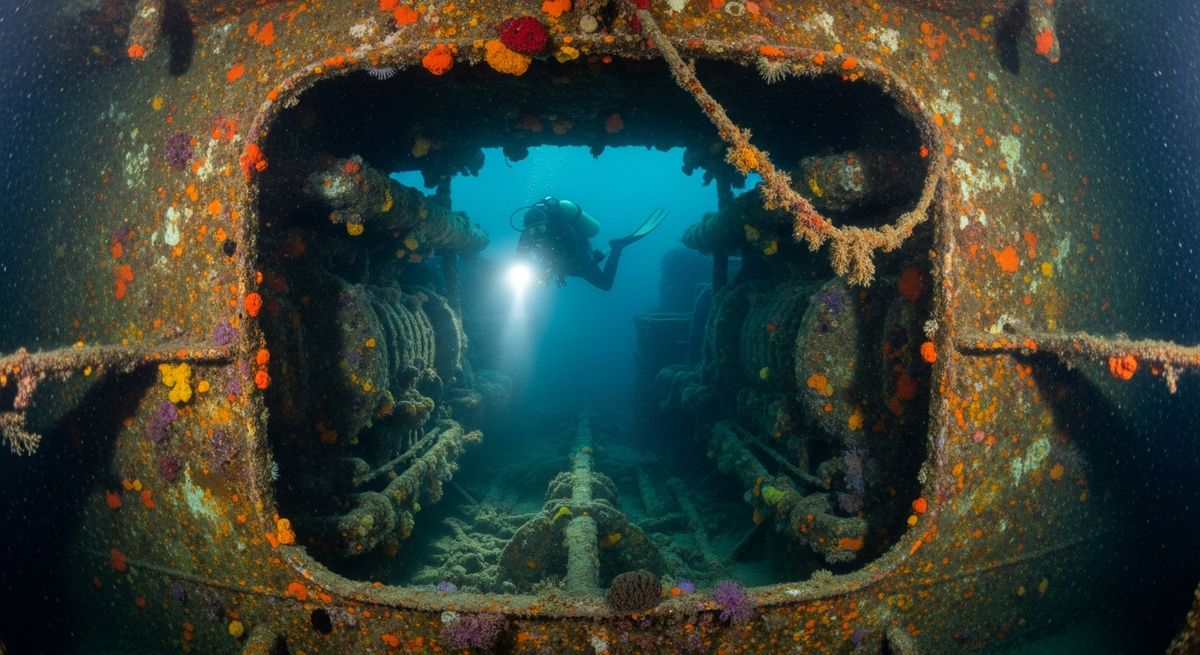
The Cromdale isn't deep, only 9m, but don't let that fool you. This sailing vessel, built in 1891, met its end in a dense fog in 1913, and what remains is a fantastic, sprawling wreck dive. We love that you can spend a whole dive just picking apart the different sections. You'll find ribs sticking up like skeletal fingers, massive hull plates, and plenty of smaller, unidentifiable pieces scattered across the seabed. Vis here can vary dramatically, but on a good day, when the sun penetrates the green, you can really appreciate the scale. We’d suggest going at slack tide to avoid fighting the current. Look closely amongst the plates; the Cromdale is home to a surprising number of critters. We often spot velvet swimming crabs clambering over the metal, dogfish resting in sandy patches, and colourful jewel anemones clinging to every available surface. It’s a site that really makes you feel connected to history, a proper old wreck you can explore without feeling rushed. It suits divers who appreciate history and enjoy a good rummage, rather than those chasing big pelagics.
Typical CROMDALE Dive Profile
Illustrative profile based on site depth and type. Actual dive profiles vary - always follow your dive computer and training.
Safety Notes
Wreck site - avoid penetration without wreck diving certification. Watch for sharp metal and entanglement hazards.
Nearest Dive Centres to CROMDALE
Dive shops near CROMDALE
Porthkerris Divers
DiveUK
Seaways Diving
Karleyth Diving Ltd.
Wavecrest Scuba
Viewpoint Diving Centre
Reviews for CROMDALE
Conditions
Ocean conditions, forecast and tides for CROMDALE
CROMDALE Ocean Conditions
Monthly averages for CROMDALE, sourced from Open-Meteo marine data - nearest station: Open-Meteo marine grid (50.44, -2.73) (3km away)
October Averages
Sea Temperature
17°C
62°F · Range: 15.1–17.5°C
Air Temperature
13°C
56°F
Wind Speed
8.14 m/s
15.8 knots
Atmospheric Pressure
1011 hPa
Based on 4 years of monitoring data · Data sources: Open-Meteo marine data
Plan & book
Ways to dive Cornwall & Devon, from day trips to liveaboards.
Day trips & courses
via GetYourGuideGuided dives, courses and snorkel trips with instant booking.
Find dive trips in Cornwall & DevonPlaces to stay
via Booking.comHotels and dive resorts near Cornwall & Devon.
Search stays in Cornwall & DevonDive insurance
Most travel insurance excludes or limits scuba. Check what you need before you go.
Dive insurance explainedPartner links: we may earn a commission if you book, at no extra cost to you. How we make money
Where to Stay near CROMDALE
Prices from Booking.com. We may earn a commission at no extra cost to you.