EMSSTROM
Protected Area
Hope's Nose to Wall's Hill
Why dive here
With 176+ marine species recorded in the area - including blue sharks, dolphins, dwarf minke whales, humpback whales and ocean sunfish (mola mola) - EMSSTROM offers some of Cornwall & Devon's richest wreck diving. Water ranges 10-18°C, warmest July, August, September.
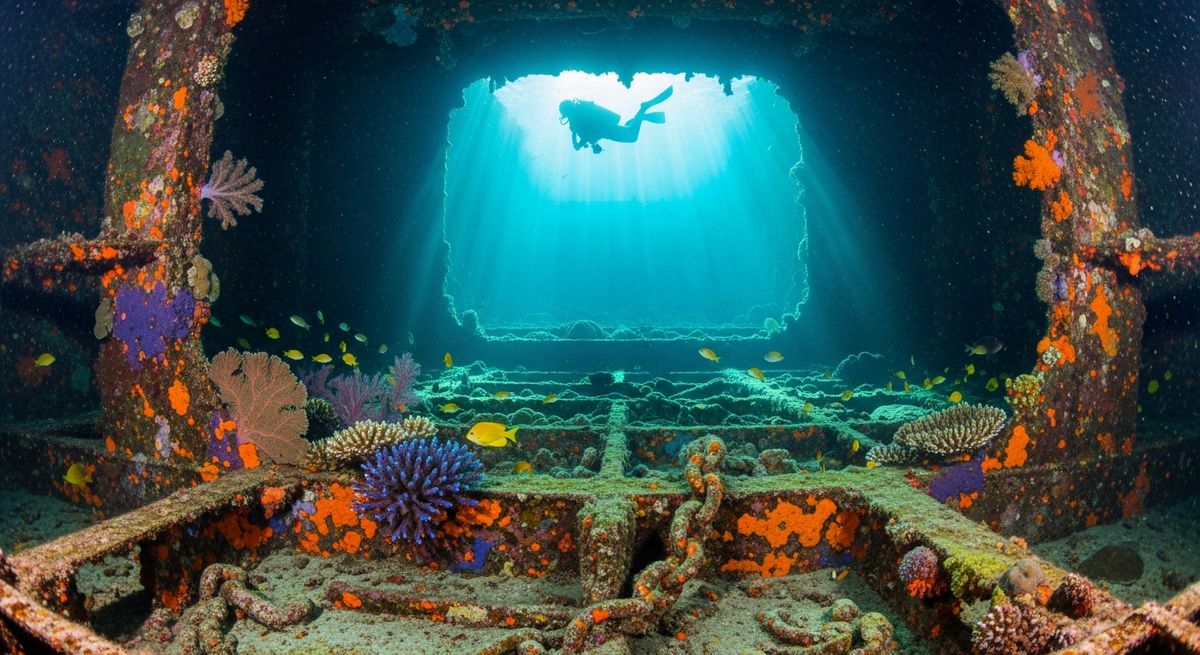
The EMSSTROM, formerly the Frithjof, is a big wreck sitting upright at 26 metres off the Devon coast. She’s a former fishery protection vessel, a serious piece of kit built in 1968, and her size, 76.7 metres long, is immediately apparent as you descend. We found the wheelhouse and bridge area particularly interesting, with some good penetration for those qualified and equipped, though always remember she’s classified as dangerous. Since sinking in 2013, the wreck has become a solid artificial reef, attracting lots of tompot blennies, dogfish nestled in the debris, and a good few conger eels peering from the darker corners. It's a great dive for experienced wreck enthusiasts looking for something substantial and relatively intact.
Typical EMSSTROM Dive Profile
Illustrative profile based on site depth and type. Actual dive profiles vary - always follow your dive computer and training.
Safety Notes
Depth of 26m - Advanced Open Water certification recommended.
Wreck site - avoid penetration without wreck diving certification. Watch for sharp metal and entanglement hazards.
Always perform a 3-minute safety stop at 5m before surfacing.
Nearest Dive Centres to EMSSTROM
Dive shops near EMSSTROM
View all dive centres in Cornwall & DevonReviews for EMSSTROM
Conditions
Ocean conditions, forecast and tides for EMSSTROM
EMSSTROM Ocean Conditions
Monthly averages for EMSSTROM, sourced from Open-Meteo marine data - nearest station: Open-Meteo marine grid (50.44, -2.73) (3km away)
October Averages
Sea Temperature
17°C
62°F · Range: 15.1–17.5°C
Air Temperature
13°C
56°F
Wind Speed
8.14 m/s
15.8 knots
Atmospheric Pressure
1011 hPa
Based on 4 years of monitoring data · Data sources: Open-Meteo marine data
Plan & book
Ways to dive Cornwall & Devon, from day trips to liveaboards.
Day trips & courses
via GetYourGuideGuided dives, courses and snorkel trips with instant booking.
Find dive trips in Cornwall & DevonPlaces to stay
via Booking.comHotels and dive resorts near Cornwall & Devon.
Search stays in Cornwall & DevonDive insurance
Most travel insurance excludes or limits scuba. Check what you need before you go.
Dive insurance explainedPartner links: we may earn a commission if you book, at no extra cost to you. How we make money
Where to Stay near EMSSTROM
Prices from Booking.com. We may earn a commission at no extra cost to you.