GLENARM HEAD (POSSIBLY)
Protected Area
Brighton to Newhaven Cliffs
Why dive here
With 176+ marine species recorded in the area - including blue sharks, dolphins, dwarf minke whales, humpback whales and ocean sunfish (mola mola) - GLENARM HEAD (POSSIBLY) offers some of Cornwall & Devon's richest wreck diving. Water ranges 10-18°C, warmest July, August, September.
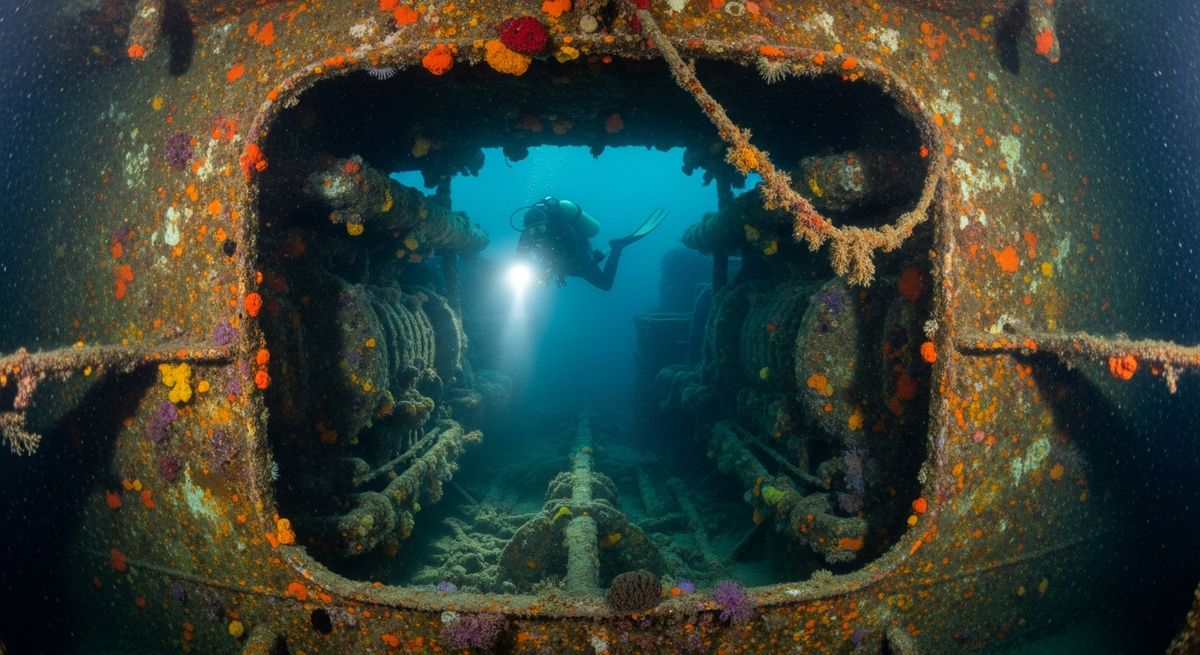
The *Glenarm Head*, or what we believe to be her, is a proper wreck dive, sitting deep off Brighton. You’re looking at 46 metres, so this is one for the technical crowd, or at least those comfortable with extended bottom times. She was torpedoed in 1918, a casualty of the U-boat war, and that history really seeps into the dive. What we love about this wreck is her sheer scale. At over 100 metres long, you could spend a dozen dives here and still find new nooks. We usually drop onto the bow, which is impressively intact, and then work our way aft. Keep an eye on the ambient light-it fades quickly down here, but the silhouettes of the structure against the green water are something else. The wreck itself is heavily encrusted, with plumose anemones waving like miniature feather dusters in the slight current. Conger eels are always lurking in the deeper holds, and we've had some memorable encounters with large ling slipping through the broken deck plating. It's a sombre, beautiful dive, a real piece of maritime history that demands respect and proper planning.
Typical GLENARM HEAD (POSSIBLY) Dive Profile
Illustrative profile based on site depth and type. Actual dive profiles vary - always follow your dive computer and training.
Safety Notes
Maximum depth 46m exceeds recreational limits (40m). Technical diving certification and equipment required.
Wreck site - avoid penetration without wreck diving certification. Watch for sharp metal and entanglement hazards.
Always perform a 3-minute safety stop at 5m before surfacing.
Nearest Dive Centres to GLENARM HEAD (POSSIBLY)
Dive shops near GLENARM HEAD (POSSIBLY)
Ocean View
Abyss Scuba School
Mulberry Marine Experiences CIC
Sussex Diving & Leisure
Reviews for GLENARM HEAD (POSSIBLY)
Conditions
Ocean conditions, forecast and tides for GLENARM HEAD (POSSIBLY)
GLENARM HEAD (POSSIBLY) Ocean Conditions
Monthly averages for GLENARM HEAD (POSSIBLY), sourced from Open-Meteo marine data - nearest station: Open-Meteo marine grid (50.44, -2.73) (3km away)
October Averages
Sea Temperature
17°C
62°F · Range: 15.1–17.5°C
Air Temperature
13°C
56°F
Wind Speed
8.14 m/s
15.8 knots
Atmospheric Pressure
1011 hPa
Based on 4 years of monitoring data · Data sources: Open-Meteo marine data
Plan & book
Ways to dive Cornwall & Devon, from day trips to liveaboards.
Day trips & courses
via GetYourGuideGuided dives, courses and snorkel trips with instant booking.
Find dive trips in Cornwall & DevonPlaces to stay
via Booking.comHotels and dive resorts near Cornwall & Devon.
Search stays in Cornwall & DevonDive insurance
Most travel insurance excludes or limits scuba. Check what you need before you go.
Dive insurance explainedPartner links: we may earn a commission if you book, at no extra cost to you. How we make money
Where to Stay near GLENARM HEAD (POSSIBLY)
Prices from Booking.com. We may earn a commission at no extra cost to you.