HMS MAROJAM
Protected Area
Castlemartin Coast
Why dive here
With 176+ marine species recorded in the area - including blue sharks, dolphins, dwarf minke whales, humpback whales and ocean sunfish (mola mola) - HMS MAROJAM offers some of Cornwall & Devon's richest wreck diving. Water ranges 10-18°C, warmest July, August, September.
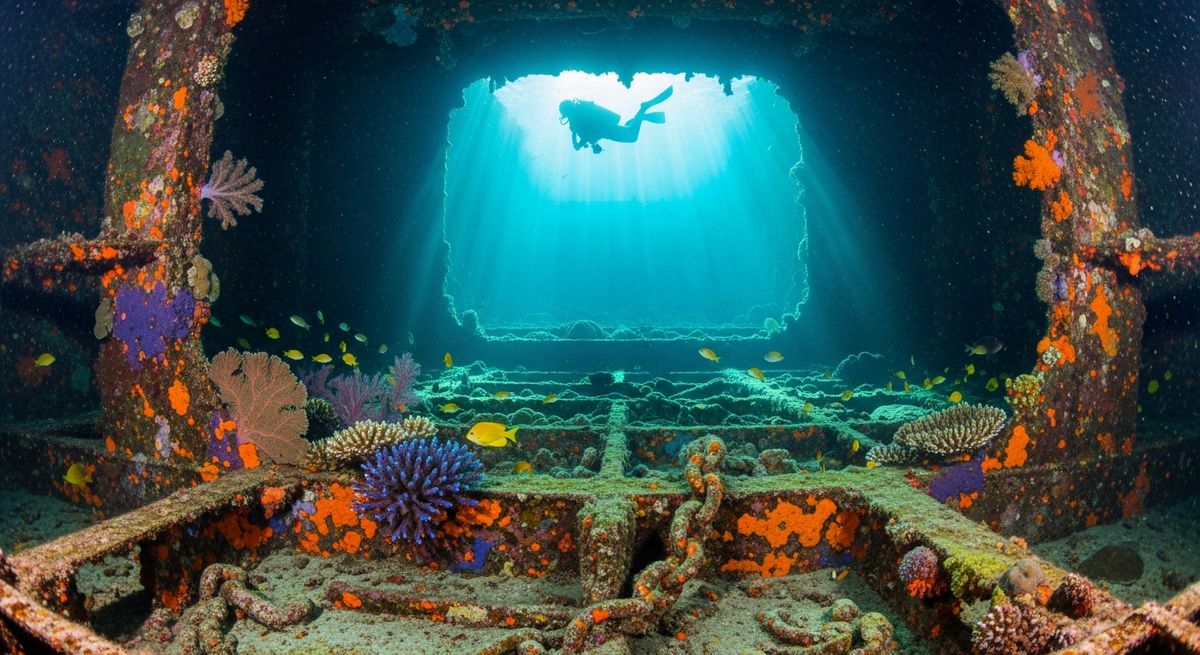
The HMS Marojam, or what’s left of her anyway, is a great dive for when the weather turns a bit frisky in Bigbury Bay. She was an Anchusa-class sloop, meant to be renamed the President and become a drill ship, but fate had other plans back in 1921. Now, she’s well broken up, scattered across the seabed at around 12 meters, but that’s precisely her charm. We love how accessible she is, even when there's a bit of swell. You’re not getting a grand, intact wreck, but you are getting a proper archaeological dive, exploring her ribs and plating that are now home to a surprising amount of life. Look closely among the twisted metal for the vibrant jewel anemones, they’re everywhere, adding splashes of orange and pink to the otherwise muted tones. You’ll often find dogfish tucked into the sand nearby, and sometimes a curious grey seal might even come to investigate. It’s a shallower dive, making for longer bottom times, and it’s a brilliant spot for honing wreck penetration skills on the smaller, more open sections without feeling too committing. Our pick for a slightly breezy afternoon.
Safety Notes
Wreck site - avoid penetration without wreck diving certification. Watch for sharp metal and entanglement hazards.
Nearest Dive Centres to HMS MAROJAM
Dive shops near HMS MAROJAM
View all dive centres in Cornwall & DevonReviews for HMS MAROJAM
Conditions
Ocean conditions, forecast and tides for HMS MAROJAM
HMS MAROJAM Ocean Conditions
Monthly averages for HMS MAROJAM, sourced from Open-Meteo marine data - nearest station: Open-Meteo marine grid (50.44, -2.73) (3km away)
October Averages
Sea Temperature
17°C
62°F · Range: 15.1–17.5°C
Air Temperature
13°C
56°F
Wind Speed
8.14 m/s
15.8 knots
Atmospheric Pressure
1011 hPa
Based on 4 years of monitoring data · Data sources: Open-Meteo marine data
Plan & book
Ways to dive Cornwall & Devon, from day trips to liveaboards.
Day trips & courses
via GetYourGuideGuided dives, courses and snorkel trips with instant booking.
Find dive trips in Cornwall & DevonPlaces to stay
via Booking.comHotels and dive resorts near Cornwall & Devon.
Search stays in Cornwall & DevonDive insurance
Most travel insurance excludes or limits scuba. Check what you need before you go.
Dive insurance explainedPartner links: we may earn a commission if you book, at no extra cost to you. How we make money
Where to Stay near HMS MAROJAM
Prices from Booking.com. We may earn a commission at no extra cost to you.