HMS MEDEA
Protected Area
Trebetherick Point
Why dive here
With 176+ marine species recorded in the area - including blue sharks, dolphins, dwarf minke whales, humpback whales and ocean sunfish (mola mola) - HMS MEDEA offers some of Cornwall & Devon's richest wreck diving. Water ranges 10-18°C, warmest July, August, September.
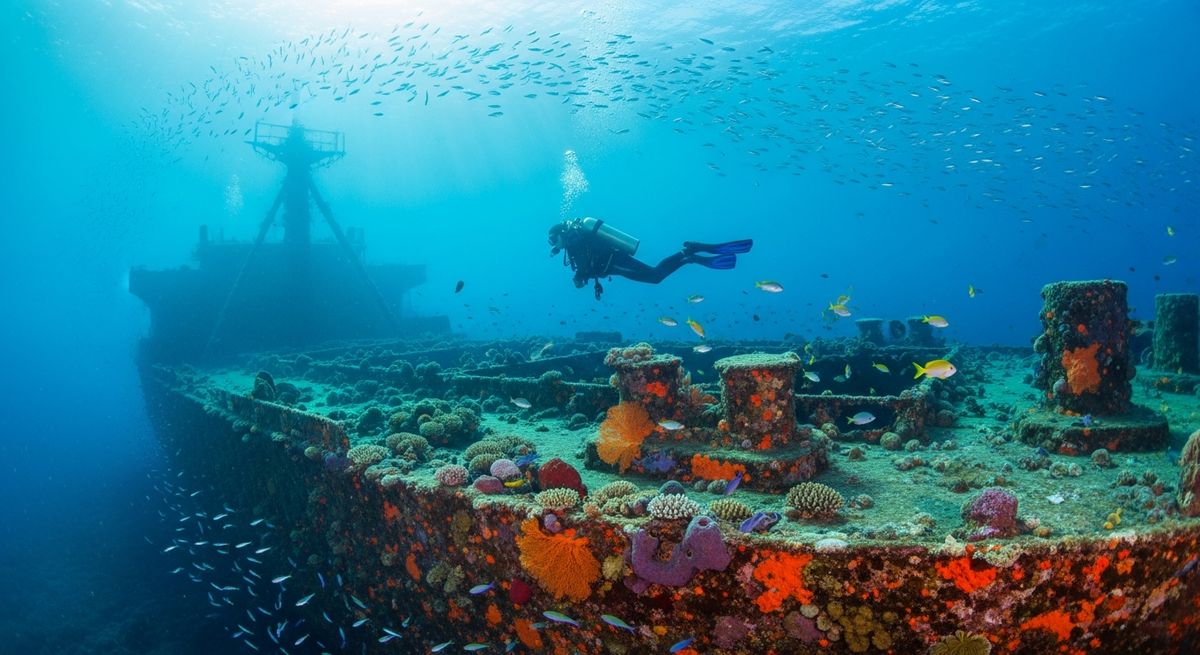
The HMS Medea, now residing off the coast of Cornwall, is a proper chunk of naval history, and we love a wreck with a story. Originally the Monitor M22, a WWI veteran, she finished her days as a minelaying tender before breaking tow and sinking in 1939. What’s left is a 51-metre-long hull, remarkably intact in places, lying in about 20-25 metres of water. We’d describe her as an absorbing dive, especially if you appreciate the engineering of these old ships. You can trace the deck lines, explore the remnants of her triple-expansion engines, and even poke around the stern where the minelaying gear once would have been. The structure itself is a haven for life – often you'll find conger eels peering out from gaps in the plating, dogfish resting on sandy patches nearby, and schools of bib darting through the interior spaces. Visibility can be a typical Cornish affair, anywhere from a murky five metres to a glorious 15, so pick your day carefully. We find the best conditions usually come with a slack tide around high water. It's a dive that suits those comfortable with deeper wrecks and who enjoy piecing together the past.
Safety Notes
Wreck site - avoid penetration without wreck diving certification. Watch for sharp metal and entanglement hazards.
Nearest Dive Centres to HMS MEDEA
Dive shops near HMS MEDEA
Harlyn Dive School
Dive Newquay
Scuba 2000
Wavecrest Scuba
Viewpoint Diving Centre
Karleyth Diving Ltd.
Reviews for HMS MEDEA
Conditions
Ocean conditions, forecast and tides for HMS MEDEA
HMS MEDEA Ocean Conditions
Monthly averages for HMS MEDEA, sourced from Open-Meteo marine data - nearest station: Open-Meteo marine grid (50.44, -2.73) (3km away)
October Averages
Sea Temperature
17°C
62°F · Range: 15.1–17.5°C
Air Temperature
13°C
56°F
Wind Speed
8.14 m/s
15.8 knots
Atmospheric Pressure
1011 hPa
Based on 4 years of monitoring data · Data sources: Open-Meteo marine data
Plan & book
Ways to dive Cornwall & Devon, from day trips to liveaboards.
Day trips & courses
via GetYourGuideGuided dives, courses and snorkel trips with instant booking.
Find dive trips in Cornwall & DevonPlaces to stay
via Booking.comHotels and dive resorts near Cornwall & Devon.
Search stays in Cornwall & DevonDive insurance
Most travel insurance excludes or limits scuba. Check what you need before you go.
Dive insurance explainedPartner links: we may earn a commission if you book, at no extra cost to you. How we make money
Where to Stay near HMS MEDEA
Prices from Booking.com. We may earn a commission at no extra cost to you.