LORD STEWART
Protected Area
Lyme Bay and Torbay
Why dive here
With 176+ marine species recorded in the area - including blue sharks, dolphins, dwarf minke whales, humpback whales and ocean sunfish (mola mola) - LORD STEWART offers some of Cornwall & Devon's richest wreck diving. Water ranges 10-18°C, warmest July, August, September.
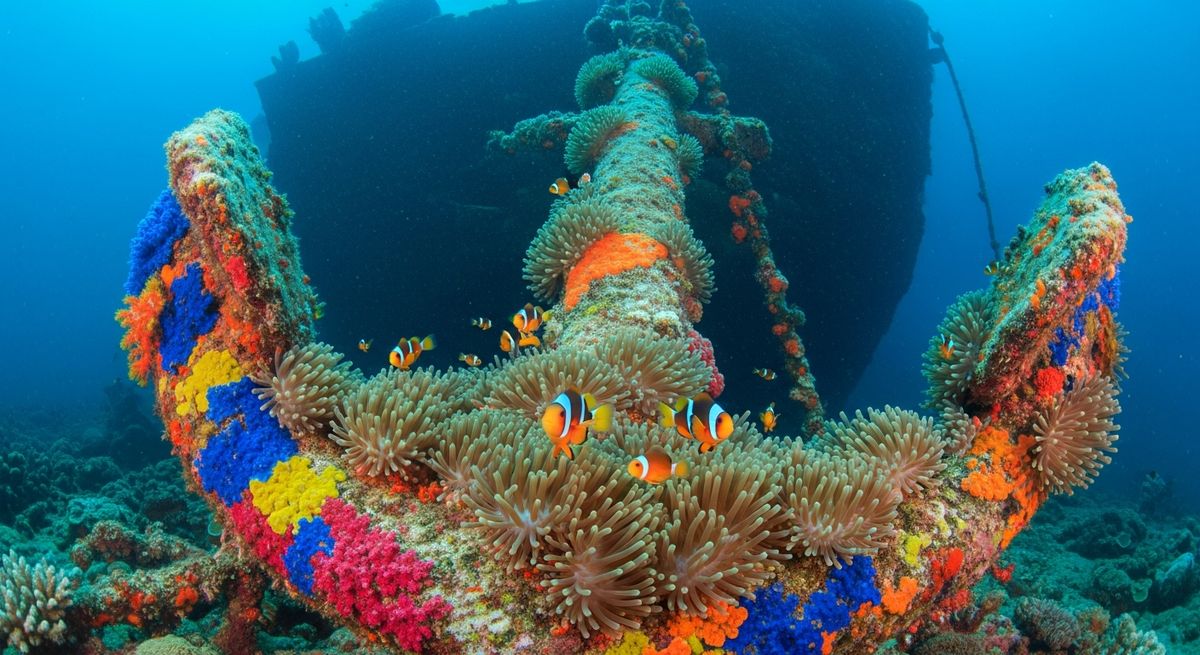
The *Lord Stewart* isn't one of those wrecks that jumps out at you with dramatic upright mast structures. No, she’s a scattered steamship, torpedoed in 1918 by UB-104. What we love about her is the history you can feel in the bent plates and the way she’s spread across the seabed. It’s a proper rummage dive, down at 21 metres, with various pieces of machinery and hull sections forming little reefs. Visibility here can be a bit hit or miss, typical for the UK, but on a good day, the green light filtering down really highlights the resident wrasse and pollock darting between the frames. Keep an eye out for conger eels too, they’re often tucked deep inside the more intact sections. Our pick for a dive here would be on a neap tide, giving you maximum bottom time to explore the debris field properly without fighting a current. It’s a fantastic site for those who enjoy piecing together a story from the scattered remains, rather than just admiring an intact structure.
Typical LORD STEWART Dive Profile
Illustrative profile based on site depth and type. Actual dive profiles vary - always follow your dive computer and training.
Safety Notes
Depth of 21m - Advanced Open Water certification recommended.
Wreck site - avoid penetration without wreck diving certification. Watch for sharp metal and entanglement hazards.
Always perform a 3-minute safety stop at 5m before surfacing.
Nearest Dive Centres to LORD STEWART
Dive shops near LORD STEWART
View all dive centres in Cornwall & DevonReviews for LORD STEWART
Conditions
Ocean conditions, forecast and tides for LORD STEWART
LORD STEWART Ocean Conditions
Monthly averages for LORD STEWART, sourced from Open-Meteo marine data - nearest station: Open-Meteo marine grid (50.44, -2.73) (3km away)
October Averages
Sea Temperature
17°C
62°F · Range: 15.1–17.5°C
Air Temperature
13°C
56°F
Wind Speed
8.14 m/s
15.8 knots
Atmospheric Pressure
1011 hPa
Based on 4 years of monitoring data · Data sources: Open-Meteo marine data
Plan & book
Ways to dive Cornwall & Devon, from day trips to liveaboards.
Day trips & courses
via GetYourGuideGuided dives, courses and snorkel trips with instant booking.
Find dive trips in Cornwall & DevonPlaces to stay
via Booking.comHotels and dive resorts near Cornwall & Devon.
Search stays in Cornwall & DevonDive insurance
Most travel insurance excludes or limits scuba. Check what you need before you go.
Dive insurance explainedPartner links: we may earn a commission if you book, at no extra cost to you. How we make money
Where to Stay near LORD STEWART
Prices from Booking.com. We may earn a commission at no extra cost to you.