ZEBRA - Cornwall & Devon

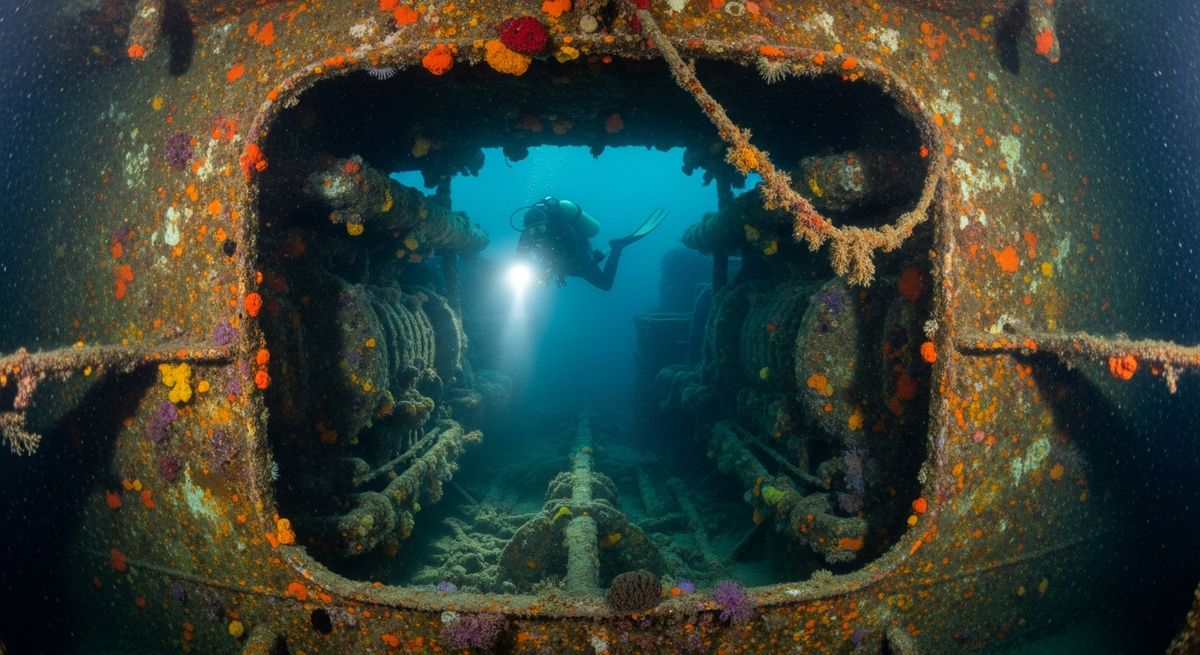
The Zebra, a steamship built in Glasgow, met its end in dense fog near Lizard Point back in 1856. Today, what’s left of her sits in shallow water, a scatter of wreckage draped over rocks. You'll find plates, ribs, and machinery parts, a real testament to her old steam engine. We like it for a gentle poke around, especially on a calm day. Look closely among the metalwork and you'll spot plenty of blennies darting about, with sea anemones adding splashes of colour to the rust. It’s a good spot for newer wreck divers or those looking for a relaxed second dive.

Location
Cornwall & Devon, United Kingdom, Mediterranean & Europe
Coordinates
49.966995, -5.183525
Type
wreck
Maximum Depth
0m

Marine Protected Area: Lizard Point

Best Time to Dive in Cornwall & Devon

The warmest water temperatures in Cornwall & Devon occur in January, averaging 9.6°C. The coolest conditions are in December at 9.6°C.

Monthly Water Temperatures

  • January: 9.6°C (air: 7.3°C)
  • February: 9.6°C (air: 8.4°C)
  • March: 9.6°C (air: 8.6°C)
  • April: 9.6°C (air: 10.1°C)
  • May: 9.6°C (air: 12.6°C)
  • June: 9.6°C (air: 15.2°C)
  • July: 9.6°C (air: 16.6°C)
  • August: 9.6°C (air: 17.1°C)
  • September: 9.6°C (air: 15.9°C)
  • October: 9.6°C (air: 13.5°C)
  • November: 9.6°C (air: 10.7°C)
  • December: 9.6°C (air: 8.7°C)

Nearby Dive Sites in Cornwall & Devon

Nearest Dive Centres to ZEBRA

Marine Life in Cornwall & Devon

Home to 192 recorded species including 93 reef fish, 18 sharks & rays, 13 whales & dolphins, 11 crabs & lobsters, 11 other, 10 seagrass & algae.

Notable Species

Recommended Packing List for ZEBRA

Based on average water temperature of 9.6°C.

  • Drysuit - water at 10°C demands a drysuit with thermal undergarments
  • Hood & Gloves (7mm+) - critical to prevent heat loss
  • Mask - essential for every dive
  • Fins
  • BCD - buoyancy compensator
  • Regulator - your most safety-critical piece of gear
  • Dive Computer - tracks depth, time, and NDL
  • Surface Marker Buoy (SMB) - essential for boat pickups
  • Dive Torch - useful for crevices and colour at depth
  • Underwater Camera - capture your diving memories

Frequently Asked Questions

What is the typical depth range for encountering zebra sharks at dive sites?
The provided data for the Zebra dive site in United Kingdom describes a historical steamship wreck and does not contain information regarding zebra sharks or their typical depth range. This specific site is a wreck dive, not a known location for marine life encounters like zebra sharks.
Beyond zebra sharks, what other marine life and underwater features can divers expect to see at a 'Zebra' dive site?
At the Zebra dive site in Cornwall & Devon, United Kingdom, divers can expect to explore a fascinating historical feature: a steam ship vessel that sank on July 22, 1856. This site is classified as a wreck, showcasing portions of its hull or superstructure. The Zebra wreck, built in 1853 in Glasgow, offers a glimpse into maritime history.
How challenging are 'Zebra' dive sites, and are they suitable for beginner divers?
The Zebra dive site is rated with an 'intermediate' difficulty, making it a moderately challenging dive. Due to this rating, it may not be suitable for absolute beginner divers who are still gaining experience. Divers should possess appropriate skills and comfort with wreck diving to fully enjoy this historical steamship.
What is the best time of year to dive at locations known for zebra sharks to maximize sightings and good conditions?
Information regarding the best time of year to dive for zebra sharks is not available in the provided context for the Zebra dive site. The data focuses on the details of a specific steamship wreck in Cornwall & Devon, not on marine life seasonality. For general information on dive seasons, you can visit DivePlnr's When to Dive section.
What scuba diving certifications are typically required to dive at sites where zebra sharks are commonly found?
The provided data for the Zebra dive site, a wreck in United Kingdom, does not specify certification requirements for encountering zebra sharks. For general wreck diving at an 'intermediate' difficulty site like Zebra, divers typically need at least an Advanced Open Water certification or equivalent, often with specialized wreck diving training.
What are the usual current and visibility conditions at dive sites known for zebra sharks?
The provided context for the Zebra dive site, a historical steamship wreck, does not include details on current or visibility conditions, nor does it pertain to locations known for zebra sharks. Divers planning to visit the Zebra wreck should consult local dive operators for up-to-date environmental conditions.