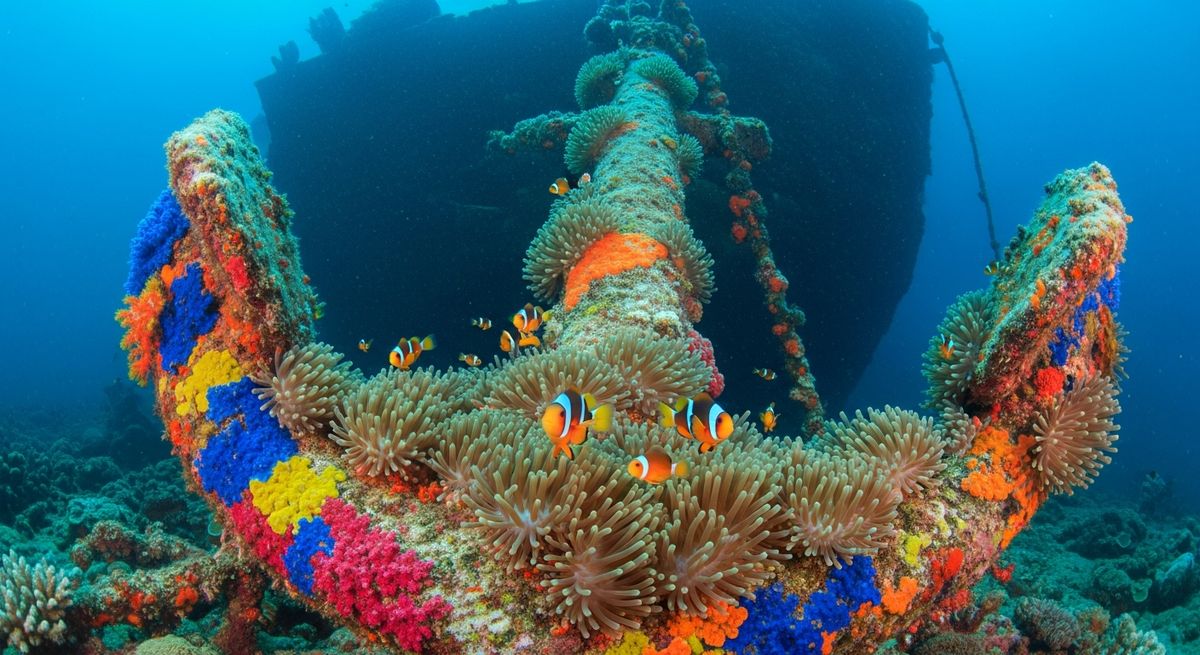
ISLAY - Scottish West Coast

Diving the Islay wreck, you're looking at the remains of a fishing vessel that met its end in rough weather back in '74. She’s broken up now, scattered at the base of some serious cliffs, which means you’re picking through pieces rather than exploring an intact hull. We find the machinery, the old oil engine, is often the most interesting part – it’s still recognisable and has created some decent crevices for critters. Ling and conger eels often lurk in the bigger sections, and you’ll spot plenty of wrasse darting between the metalwork. It's a good spot for those who enjoy a bit of history and don't mind a scattered wreck.

Location
Scottish West Coast, United Kingdom, Mediterranean & Europe
Coordinates
55.354984, -5.799917
Type
wreck
Maximum Depth
0m

Marine Protected Area: Sanda Islands

Nearby Dive Sites in Scottish West Coast

Nearest Dive Centres to ISLAY

Marine Life in Scottish West Coast

Home to 127 recorded species including 50 reef fish, 15 whales & dolphins, 10 seagrass & algae, 9 sharks & rays, 8 other, 7 crabs & lobsters.

Notable Species

Frequently Asked Questions

What are the typical depths for scuba diving around Islay, especially for wreck dives?
The specific wreck dive site at Islay is listed with a depth of 0m. This suggests the wreck of the fishing vessel may be very shallow, potentially intertidal, or partially exposed. Divers should be prepared for a shallow wreck experience in the waters of the Scottish West Coast.
What kind of marine life and shipwrecks can divers expect to encounter when diving in Islay's waters?
When diving in Islay, divers can expect to encounter the remains of a fishing vessel that sank on October 2, 1974. This wreck, classified as showing a portion of its hull or superstructure, broke up after being washed into the base of cliffs. Specific details on marine life are not provided for this particular site, but you can explore general marine life information in our wildlife database.
How challenging are the dive sites around Islay, particularly concerning currents and overall difficulty for different experience levels?
The dive site at Islay is classified as intermediate difficulty. The fishing vessel that became this wreck suffered water in its fuel during heavy weather, indicating that conditions in the area can be challenging. Divers should be prepared for potentially dynamic conditions typical of the Scottish West Coast.
What is the best time of year to go scuba diving in Islay for optimal weather and water conditions?
Information regarding the best time of year for optimal weather and water conditions for diving at Islay is not available in the provided data. For general guidance on seasonal diving, please refer to our when to dive section.
What scuba diving certifications are typically required or recommended for diving Islay's dive sites, especially for wreck or deeper dives?
Given the intermediate difficulty rating for the Islay wreck site, divers should possess a certification level appropriate for such conditions and have some experience. While specific certification requirements for wreck or deeper dives at this particular site are not detailed, a good understanding of wreck diving principles would be beneficial.
What are the typical water conditions, including currents and visibility, that divers should be prepared for when exploring Islay's dive sites?
Specific details on typical currents and visibility for diving at Islay are not provided in the data. However, the history of the wreck indicates that the area can experience heavy weather, which may lead to variable water conditions. Divers should always be prepared for changing conditions when exploring the Scottish West Coast.