MELDON
Protected Area
South Mull Coast
Why dive here
With 112+ marine species recorded in the area - including blue whales, dolphins, dwarf minke whales, humpback whales and ocean sunfish (mola mola) - MELDON offers some of Scottish West Coast's richest wreck diving.
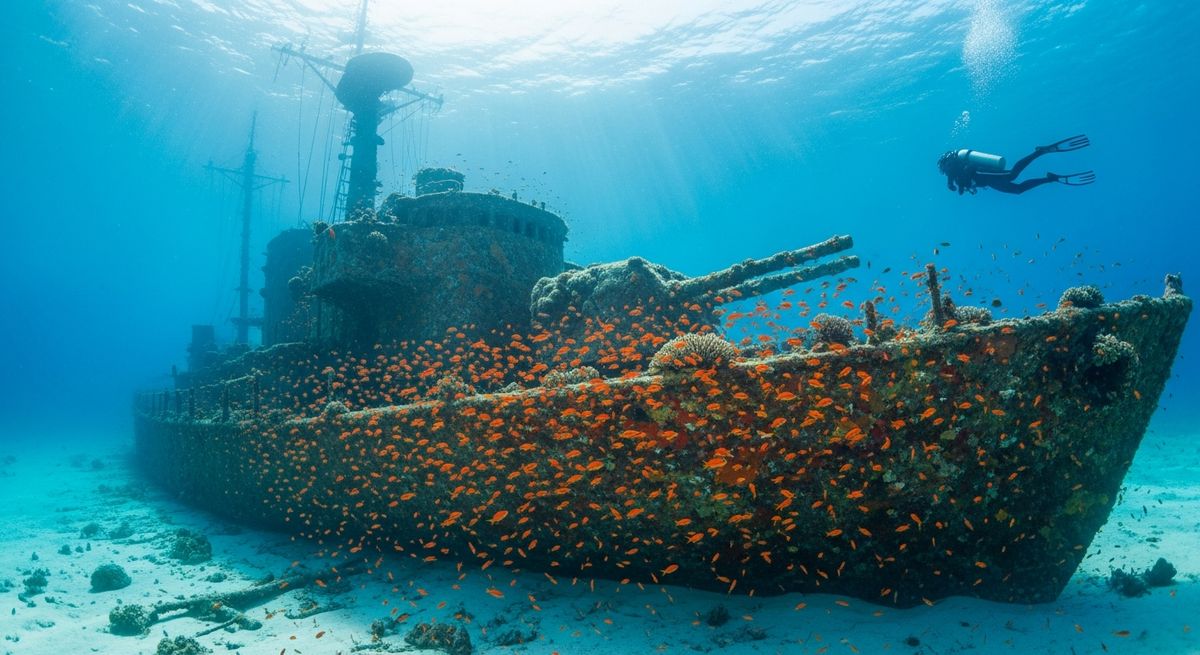
The Meldon holds a special place for us on the Scottish West Coast. It's a proper British wreck, shallow at just 9 metres, making it perfect for longer dives without the chill of deeper water. We love the way the light filters down through the kelp, illuminating sections of the 94.5-metre steamship. You'll find yourself gliding over the broken bow, then following the hull towards the impressive triple-expansion engine, which is still remarkably intact. It’s a site that tells a story, the outline of the decks visible, the cargo holds now home to butterfish darting between the plates and feathery jewel anemones clinging to every surface. Our favourite time to dive the Meldon is on a slack tide, when the water goes completely still and the visibility stretches out. Even on a grey day, the wreck has a certain majesty. It’s a fantastic site for newer wreck divers or those who just want to soak in the history without deep decompression stops. Just keep an eye on your depth; it's easy to spend an hour exploring without realising how much time has passed.
Typical MELDON Dive Profile
Illustrative profile based on site depth and type. Actual dive profiles vary - always follow your dive computer and training.
Safety Notes
Wreck site - avoid penetration without wreck diving certification. Watch for sharp metal and entanglement hazards.
Nearest Dive Centres to MELDON
Dive shops near MELDON
View all dive centres in Scottish West CoastReviews for MELDON
Conditions
Ocean conditions, forecast and tides for MELDON
Plan & book
Ways to dive Scottish West Coast, from day trips to liveaboards.
Day trips & courses
via GetYourGuideGuided dives, courses and snorkel trips with instant booking.
Find dive trips in Scottish West CoastPlaces to stay
via Booking.comHotels and dive resorts near Scottish West Coast.
Search stays in Scottish West CoastDive insurance
Most travel insurance excludes or limits scuba. Check what you need before you go.
Dive insurance explainedPartner links: we may earn a commission if you book, at no extra cost to you. How we make money
Where to Stay near MELDON
Prices from Booking.com. We may earn a commission at no extra cost to you.