Sarconphitum - Loyalty Islands

The Avenues is one of those places we keep coming back to in the Bay of Islands, especially if we’re looking for a relaxed dive with plenty to see. It’s not deep, topping out at around eight metres, but don't let that fool you. This is a network of shallow channels and guts, like an underwater maze carved into the reef. We love drifting through here, peering into every crevice. You’ll spot schools of butterfly perch and Indo-Pacific sergeants darting around, sometimes so thick they form a shimmering wall. Keep your eyes peeled for the smaller stuff, too. We’ve found frogfish tucked away in the sponges, and the little post horn squid are always a treat to watch as they zip about. Crayfish peek out from under ledges, and we’ve even come across the occasional bronze whaler shark cruising through the deeper sections of the channels. Visibility averages six metres, which, while not spectacular, feels right for this kind of intimate exploration – it keeps your focus close. It's a great spot for open water divers, or anyone who enjoys a slower pace and wants to spend time really looking.

Location
Loyalty Islands, New Caledonia, Australasia
Coordinates
-20.894000, 165.480200
Type
reef

Marine Protected Area: Povilla Forest Reserve

Best Time to Dive in Loyalty Islands

The warmest water temperatures in Loyalty Islands occur in February, averaging 28.2°C. The coolest conditions are in August at 24.2°C.

Monthly Water Temperatures

  • January: 27.9°C
  • February: 28.2°C
  • March: 28.1°C
  • April: 27.6°C
  • May: 26.3°C
  • June: 25.4°C
  • July: 24.7°C
  • August: 24.2°C
  • September: 24.5°C
  • October: 25.2°C
  • November: 26.4°C
  • December: 27.6°C

Nearby Dive Sites in Loyalty Islands

Nearest Dive Centres to Sarconphitum

Marine Life in Loyalty Islands

Home to 129 recorded species including 93 reef fish, 11 sea cucumbers, 9 sea snails & nudibranchs, 4 clams & mussels, 4 sharks & rays, 3 whales & dolphins.

Notable Species

Recommended Packing List for Sarconphitum

Based on average water temperature of 26.3°C, currents 10 cm/s.

  • Shorty or Rashguard - warm 26°C water needs minimal exposure protection
  • Mask - essential for every dive
  • Fins
  • BCD - buoyancy compensator
  • Regulator - your most safety-critical piece of gear
  • Dive Computer - tracks depth, time, and NDL
  • Surface Marker Buoy (SMB) - essential for boat pickups
  • Dive Torch - useful for crevices and colour at depth
  • Underwater Camera - capture your diving memories

Frequently Asked Questions

What is the typical depth range for diving at the Sarconphitum site in the BAYES lagoon?
The Sarconphitum dive site, located opposite the BAYES islet, features a drop-off. Divers can expect to explore depths up to a maximum of 22 meters. This allows for a good range of exploration along the reef.
What specific marine life and coral formations, including Sarconphitum and gorgonians, can divers expect to see at this dive site?
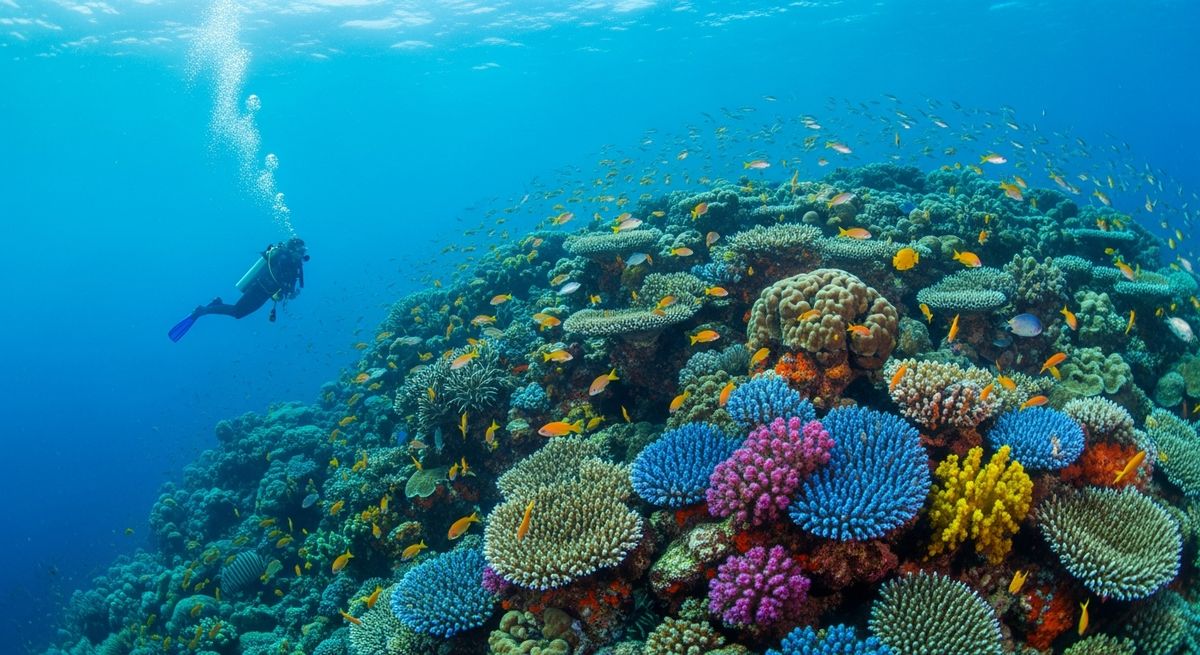
At the Sarconphitum dive site, divers will discover a vibrant reef covered with “mushrooms,” masses of mussels/shells, and beautiful coral flowers. Marine life sightings include garden eels, various shells, nudibranchs, sharks, thunas, blue fusillers, and egg cowries. You can also observe leather corals among the formations. For more details on species, visit our wildlife database.
How challenging are the diving conditions, particularly regarding currents, at the Sarconphitum dive site in the BAYES lagoon?
The Sarconphitum dive site is classified as intermediate difficulty. While specific details on currents are not provided, an intermediate rating often suggests that divers should be prepared for varying conditions, which may include moderate currents. Divers should always consult local dive operators for real-time conditions.
What is the best time of year to dive the Sarconphitum site in the BAYES lagoon for optimal conditions and marine life sightings?
The provided data does not specify the best time of year to dive the Sarconphitum site for optimal conditions or marine life sightings. For general guidance on diving in the Loyalty Islands, please refer to our When to Dive section. Local dive operators can also provide up-to-date seasonal information.
What scuba diving certifications are required or recommended to dive at the Sarconphitum site, considering its depth and potential currents?
Given the Sarconphitum dive site's maximum depth of 22 meters and its intermediate difficulty rating, an Open Water Diver certification is generally sufficient. However, an Advanced Open Water Diver certification or equivalent is recommended for increased comfort and experience, particularly if encountering moderate currents. Always ensure your equipment is suitable for the conditions.
What are the typical current conditions and visibility like at the Sarconphitum dive site in the BAYES lagoon?
The provided data does not offer specific details on typical current conditions or visibility at the Sarconphitum dive site. However, its classification as an intermediate dive suggests that divers should be prepared for potentially varying conditions, which might include moderate currents. It is always advisable to check with local dive centers for the most current information.