Key Hole
Protected Area
Oke Bay
Why dive here
With 163+ marine species recorded in the area - including blue sharks, blue whales, dolphins, great white sharks and hammerhead sharks - Key Hole offers some of Bay of Islands's richest diving. Water ranges 16-22°C, warmest January, February, March.
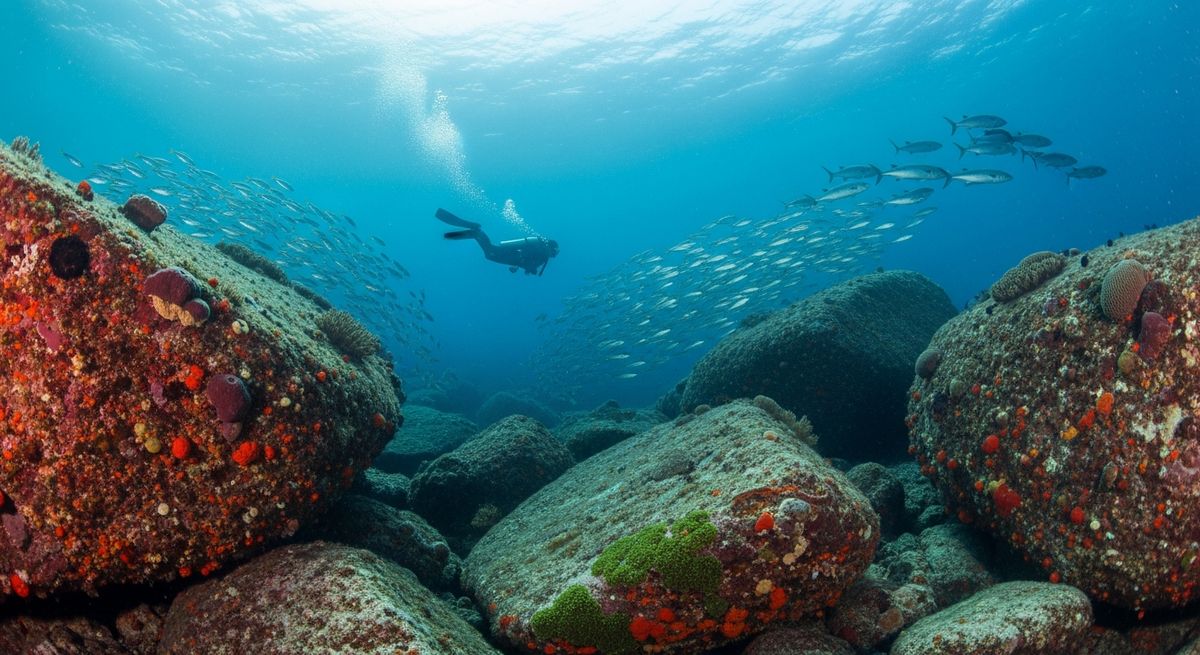
Key Hole gets its name from that distinctive rock formation poking out of the water, a natural archway that looks like it's waiting for a giant key. Below the surface, the site’s topography is really what we love here, a maze of colourful boulders and walls dropping from 5m down to 21m. It feels like exploring a submerged castle, with plenty of nooks and crannies to poke into. We always keep an eye out for blue dot triplefins, tiny flashes of colour against the kelp, and the banded morwong are usually cruising around the bigger rocks. Barracuda often hang in the bluer water just off the main structure. It’s a fantastic spot for macro photography, but also offers enough space and interesting features to keep a wider lens busy. Our favourite time to dive Key Hole is on an incoming tide when the water is clearest, letting you properly appreciate the deep greens of the kelp and the reds and oranges on the rock walls. It’s a dive that rewards slow exploration, taking your time to scan for blennies and shy moray eels tucked away.
Nearest Dive Centres to Key Hole
Dive shops near Key Hole
View all dive centres in Bay of IslandsReviews for Key Hole
Conditions
Ocean conditions, forecast and tides for Key Hole
Key Hole Ocean Conditions
Monthly averages for Key Hole, sourced from Open-Meteo marine data - nearest station: Open-Meteo marine grid (-35.24, 174.22) (2km away)
October Averages
Sea Temperature
16°C
61°F · Range: 14.9–16.8°C
Air Temperature
16°C
60°F
Wind Speed
7.43 m/s
14.4 knots
Atmospheric Pressure
1019.1 hPa
Based on 4 years of monitoring data · Data sources: Open-Meteo marine data
Plan & book
Ways to dive Bay of Islands, from day trips to liveaboards.
Day trips & courses
via GetYourGuideGuided dives, courses and snorkel trips with instant booking.
Find dive trips in Bay of IslandsPlaces to stay
via Booking.comHotels and dive resorts near Bay of Islands.
Search stays in Bay of IslandsDive insurance
Most travel insurance excludes or limits scuba. Check what you need before you go.
Dive insurance explainedPartner links: we may earn a commission if you book, at no extra cost to you. How we make money
Where to Stay near Key Hole
Prices from Booking.com. We may earn a commission at no extra cost to you.