White Reef
Protected Area
Oke Bay
Why dive here
With 163+ marine species recorded in the area - including blue sharks, blue whales, dolphins, great white sharks and hammerhead sharks - White Reef offers some of Bay of Islands's richest wreck diving. Water ranges 16-22°C, warmest January, February, March.
White Reef is one of our favourite spots in the Bay of Islands, especially if you’re looking for a relaxed dive that still feels alive. It's a short hop from Paihia, and frankly, a bit of a miracle story. What was once a pretty barren, kina-eaten rock has bounced back beautifully thanks to the Rahui. Now, you drop in, and the shallow depths, around 15 metres max, are just covered in life. We love drifting along here, keeping an eye out for the friendly Hiwihiwi kelp fish poking out of the fronds. The reef structure itself is interesting, a mix of rock and burgeoning coral growth, all interspersed with swaying kelp. You’ll see schools of snapper cruising by, and if you’re patient, a short-tail stingray might glide out from under a ledge. Visibility averages around 10 metres, sometimes more, giving you a good view of the transformations. It's a perfect dive for newer divers or anyone who just wants to slow down and really appreciate a thriving temperate reef.
Safety Notes
Wreck site - avoid penetration without wreck diving certification. Watch for sharp metal and entanglement hazards.
White Reef Wreck History
Year Sunk
1980
Vessel Type
warship
Cause
scuttled
Tonnage
385 tons
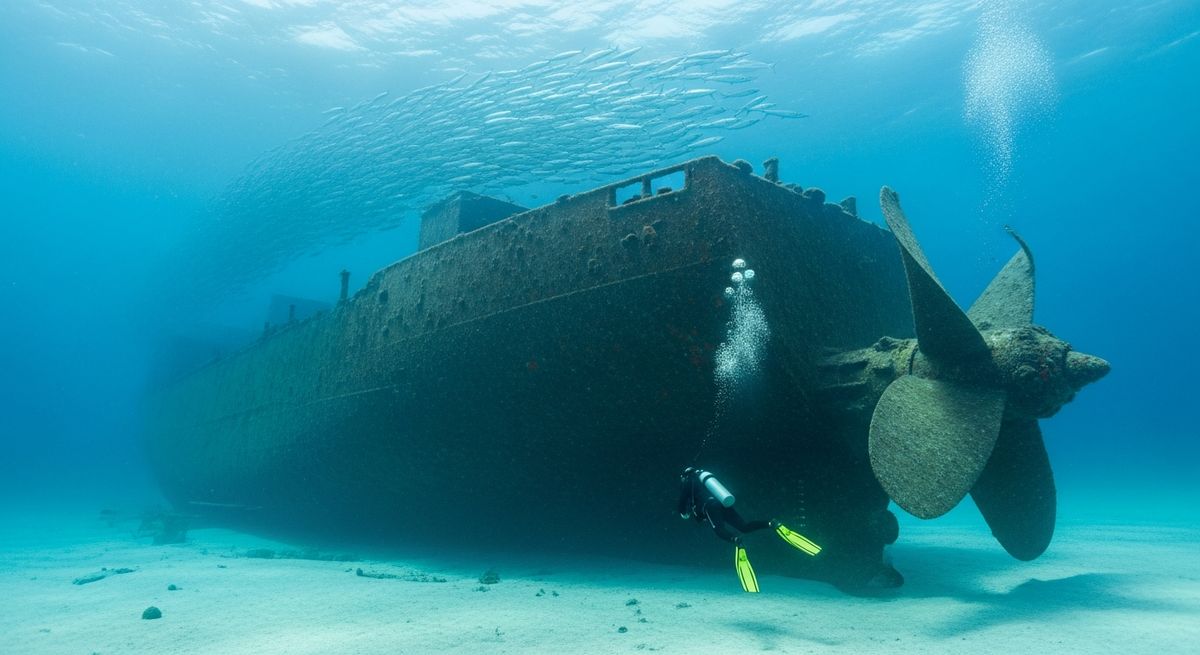
The LCU-1468 served a long career with the U.S. Navy as a Landing Craft Utility. These flat-bottomed workhorses were designed for a single, crucial purpose: to ferry troops, vehicles, and equipment from larger ships onto hostile shores. With its large, open cargo area and a bow ramp that could be lowered onto a beach, the LCU-1468 was a vital link in amphibious military operations for decades.
After being decommissioned, the vessel was given a new mission. In 1980, it was cleaned and purposefully sunk off the coast of North Carolina to become part of the Onslow Bay Reef, designated as artificial reef site AR-145. Today, the LCU-1468 sits upright and intact on the seabed, its military past still clearly visible in its distinctive shape. The open well deck creates a fantastic swim-through for certified divers, and the entire structure is heavily encrusted with marine growth.
As part of the famed 'Graveyard of the Atlantic,' this wreck attracts an incredible amount of marine life. It is a favorite haunt for schools of amberjack and is frequently visited by sand tiger sharks, sea turtles, and goliath groupers. The LCU-1468 is a superb wreck dive, offering a piece of military history that has been fully reclaimed by the sea.
Nearest Dive Centres to White Reef
Dive shops near White Reef
View all dive centres in Bay of IslandsReviews for White Reef
Conditions
Ocean conditions, forecast and tides for White Reef
White Reef Ocean Conditions
Monthly averages for White Reef, sourced from Open-Meteo marine data - nearest station: Open-Meteo marine grid (-35.24, 174.22) (2km away)
October Averages
Sea Temperature
16°C
61°F · Range: 14.9–16.8°C
Air Temperature
16°C
60°F
Wind Speed
7.43 m/s
14.4 knots
Atmospheric Pressure
1019.1 hPa
Based on 4 years of monitoring data · Data sources: Open-Meteo marine data
Plan & book
Ways to dive Bay of Islands, from day trips to liveaboards.
Day trips & courses
via GetYourGuideGuided dives, courses and snorkel trips with instant booking.
Find dive trips in Bay of IslandsPlaces to stay
via Booking.comHotels and dive resorts near Bay of Islands.
Search stays in Bay of IslandsDive insurance
Most travel insurance excludes or limits scuba. Check what you need before you go.
Dive insurance explainedPartner links: we may earn a commission if you book, at no extra cost to you. How we make money
Where to Stay near White Reef
Prices from Booking.com. We may earn a commission at no extra cost to you.