Larikai Point - St. Vincent

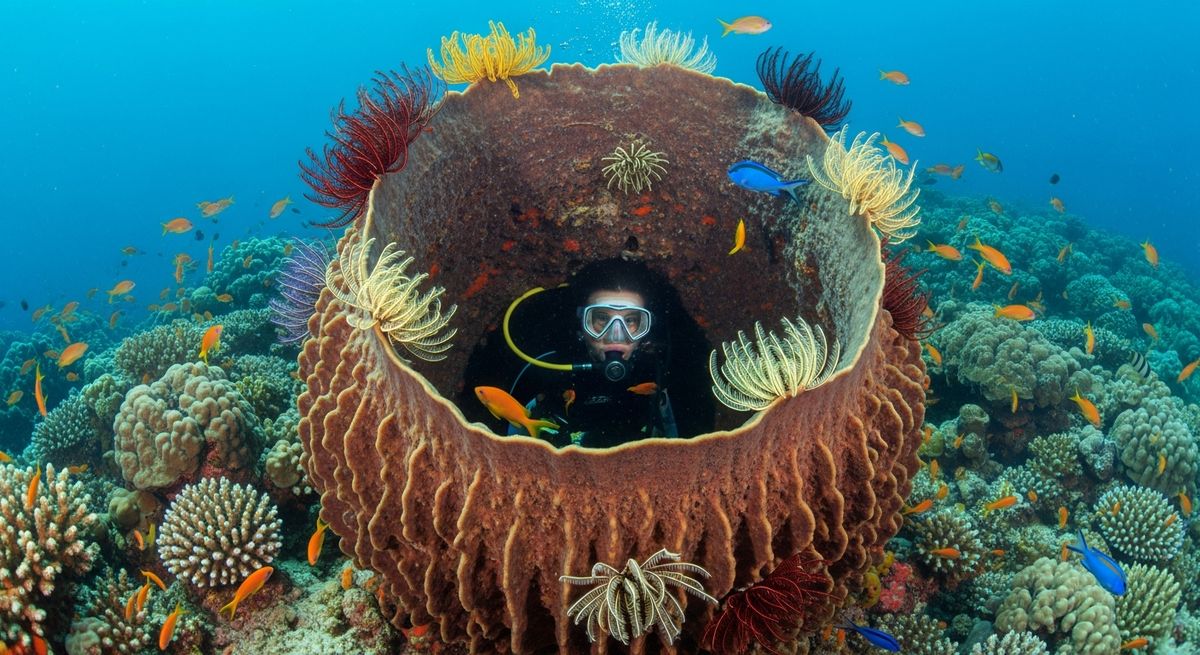
Netz, often overshadowed by Komodo’s more famous drift dives, is one of our quiet favourites. It’s a gorgeous limestone wall, dropping to a modest 22 metres, where we’ve spent many a no-rush dive just soaking it all in. The wall itself is riddled with overhangs, draped in gorgonian seafans, and coated in a mix of hard and soft corals – lots of those wavy leather corals and robust mushroom corals. Keep your eyes peeled for pygmy seahorses here; they love to cling to the gorgonians, tiny specks in the wide blue. We’ve seen Napoleon wrasse cruising the reef edge and once spotted a leatherback sea turtle lazily finning past the deeper sections. The current is usually mild, making it a dream for photographers or anyone who wants to take their time exploring the nooks and crannies. You’ll find schools of fusiliers here, not always in massive, light-blocking clouds, but enough to add a dynamic shimmer. This site is perfect for those who appreciate detailed wall diving without the intense workout of Komodo’s stronger currents. It’s a wonderful place to slow down, really look, and find those smaller, often overlooked creatures.

Location
St. Vincent, St. Vincent & the Grenadines, Caribbean
Coordinates
13.349800, -61.211500
Type
reef

Marine Protected Area: Chateaubelair Islet Wildlife Reserve

Best Time to Dive in St. Vincent

The warmest water temperatures in St. Vincent occur in January, averaging 27.8°C. The coolest conditions are in December at 27.8°C.

Monthly Water Temperatures

  • January: 27.8°C (air: 25.7°C)
  • February: 27.8°C (air: 25.8°C)
  • March: 27.8°C (air: 26.1°C)
  • April: 27.8°C (air: 26.8°C)
  • May: 27.8°C (air: 27.5°C)
  • June: 27.8°C (air: 27.4°C)
  • July: 27.8°C (air: 27.3°C)
  • August: 27.8°C (air: 27.6°C)
  • September: 27.8°C (air: 28.2°C)
  • October: 27.8°C (air: 27.9°C)
  • November: 27.8°C (air: 27.0°C)
  • December: 27.8°C (air: 26.4°C)

Nearby Dive Sites in St. Vincent

Nearest Dive Centres to Larikai Point

Marine Life in St. Vincent

Home to 271 recorded species including 237 reef fish, 10 hard corals, 7 whales & dolphins, 4 sea snails & nudibranchs, 3 seagrass & algae, 3 sharks & rays.

Notable Species

Recommended Packing List for Larikai Point

Based on average water temperature of 27.8°C.

  • Shorty or Rashguard - warm 28°C water needs minimal exposure protection
  • Mask - essential for every dive
  • Fins
  • BCD - buoyancy compensator
  • Regulator - your most safety-critical piece of gear
  • Dive Computer - tracks depth, time, and NDL
  • Surface Marker Buoy (SMB) - essential for boat pickups
  • Dive Torch - useful for crevices and colour at depth
  • Underwater Camera - capture your diving memories

Frequently Asked Questions

What is the typical depth range for diving at Larikai Point (USS Lanikai)?
The dive at Larikai Point is a wall dive that begins in shallow waters and continues down a shelving slope. Divers can expect a maximum depth of 14m, making it accessible for various certification levels. This allows for ample exploration of the beautiful coral formations.
What kind of marine life and underwater features can divers expect to see at Larikai Point (USS Lanikai)?
Larikai Point offers a stunning wall dive featuring a shelving slope covered in gorgonians and colourful mosaics of hard and soft corals in shallow patch reefs. Divers can expect to see a great variety of fish, including French Angelfish, Queen Angelfish, Barracudas, Parrotfish, Spotted Scorpionfish, and both Spotted and Green Moray. Explore more about marine species in our wildlife database.
How difficult is the diving at Larikai Point (USS Lanikai), and is it suitable for beginners?
Diving at Larikai Point is rated as intermediate difficulty. While it is considered one of St. Vincent's prettiest sites, its intermediate rating suggests it may not be ideal for absolute beginners. Divers with some experience will best enjoy this beautiful wall dive.
What are the best months or times of year to dive at Larikai Point (USS Lanikai)?
The provided data does not specify the best months or times of year to dive at Larikai Point. For general information on optimal diving seasons in the region, you might consult our When to Dive guide. Always check local conditions before planning your trip.
What diving certifications are required or recommended for Larikai Point (USS Lanikai)?
Given the intermediate difficulty rating and a maximum depth of 14m, a PADI Open Water Diver certification or equivalent is generally recommended for Larikai Point. This ensures divers have the necessary skills and experience to safely enjoy the site's features. Always dive within your certification limits.
What are the usual current and visibility conditions at Larikai Point (USS Lanikai)?
Divers at Larikai Point can expect an average visibility of 5m, offering clear views of the vibrant corals and marine life. The provided data does not specify typical current conditions for this site. It's always advisable to consult with local dive operators for the most up-to-date conditions.