Robyn’s Reef
Protected Area
Bequia Marine Conservation Area
Why dive here
With 267+ marine species recorded in the area - including dolphins, humpback whales, nurse sharks, orcas and sea turtles - Robyn’s Reef offers some of St. Vincent's richest reef diving. Water ranges 27-30°C, warmest August, September, October.
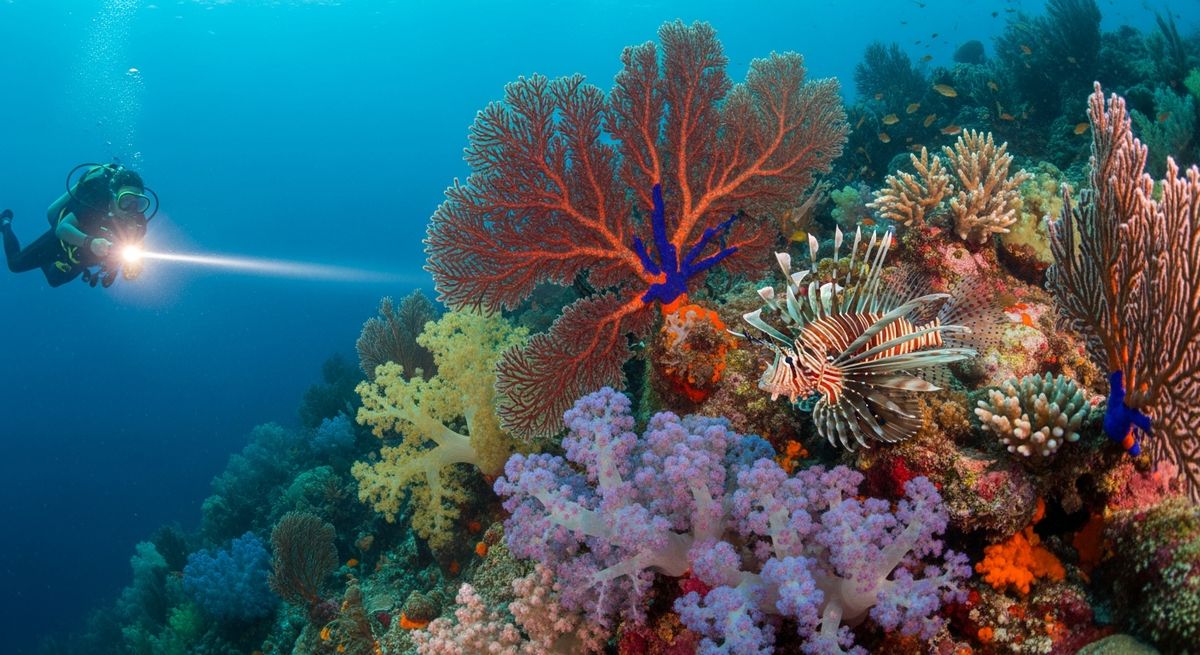
Robyn’s Reef on St. Vincent is a reliable drift dive, the kind you settle into easily. We often start at Flat Rock, which, as the name suggests, is a good spot to scan for frogfish if you’re patient. From there, it's a gentle ride down the slope. It’s not a frenetic dive, more a slow reveal. The reef here has some pretty substantial azure vase corals, really eye-catching against the sponges. We've seen good numbers of French grunts and blue creole wrasse. Keep an eye out for queen triggerfish too, they’re usually patrolling the deeper sections. While the drift is relaxing, there’s enough action with the Jacks and Snappers to keep things interesting. It maxes out around 23 metres, so it’s a good one for intermediate divers. The visibility averages 16 metres, which is decent enough for wide views of the corals and schooling fish. It’s a good choice if you're looking for a comfortable dive with consistent marine life, especially in the late morning when the light hits the reef just right.
Nearest Dive Centres to Robyn’s Reef
Dive shops near Robyn’s Reef
View all dive centres in St. VincentReviews for Robyn’s Reef
Conditions
Ocean conditions, forecast and tides for Robyn’s Reef
Robyn’s Reef Ocean Conditions
Monthly averages for Robyn’s Reef, sourced from Open-Meteo marine data - nearest station: Open-Meteo marine grid (13.05, -61.21) (6km away)
October Averages
Sea Temperature
30°C
86°F · Range: 29–31.2°C
Air Temperature
28°C
82°F
Wind Speed
5.62 m/s
10.9 knots
Atmospheric Pressure
1012.3 hPa
Based on 4 years of monitoring data · Data sources: Open-Meteo marine data
Plan & book
Ways to dive St. Vincent, from day trips to liveaboards.
Day trips & courses
via GetYourGuideGuided dives, courses and snorkel trips with instant booking.
Find dive trips in St. VincentPlaces to stay
via Booking.comHotels and dive resorts near St. Vincent.
Search stays in St. VincentDive insurance
Most travel insurance excludes or limits scuba. Check what you need before you go.
Dive insurance explainedPartner links: we may earn a commission if you book, at no extra cost to you. How we make money
Where to Stay near Robyn’s Reef
Prices from Booking.com. We may earn a commission at no extra cost to you.