Rocky Bay
Protected Area
Bequia Marine Conservation Area
Why dive here
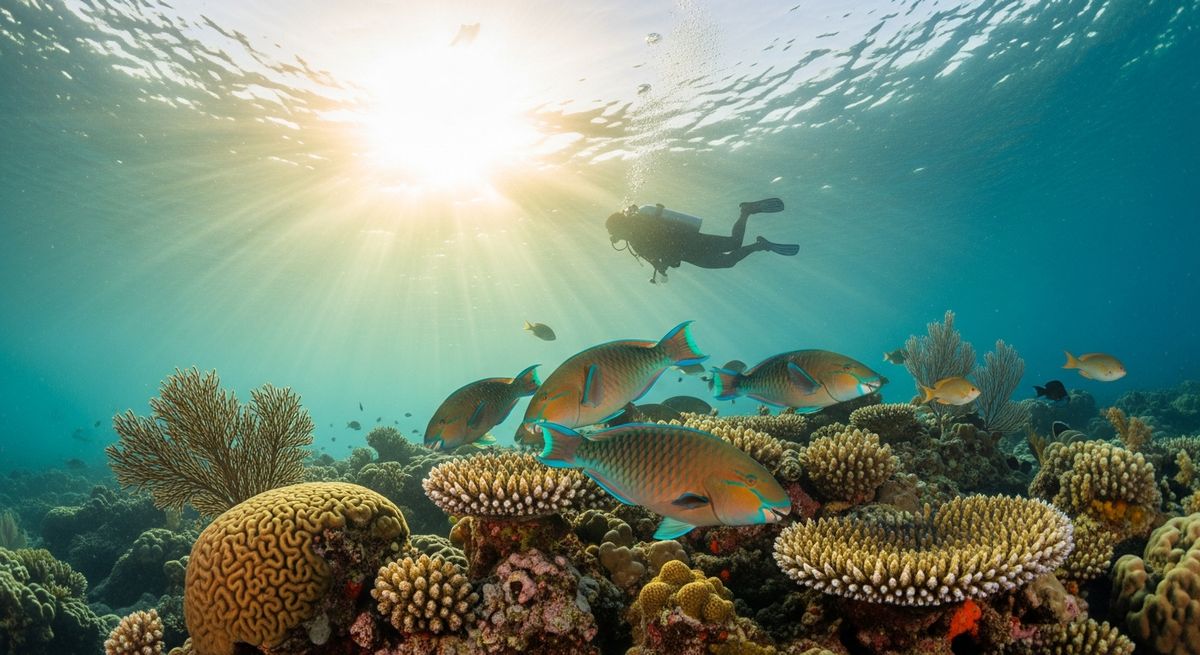
With 267+ marine species recorded in the area - including dolphins, humpback whales, nurse sharks, orcas and sea turtles - Rocky Bay offers some of St. Vincent's richest reef diving. Water ranges 27-30°C, warmest August, September, October.
Rocky Bay is shallow, rarely pushing past 11 metres, but don't let that fool you into thinking it's not worth your time. This spot is a macro photographer's dream, a genuine treasure chest of tiny wonders. We love to take it slow here, letting our eyes adjust to the intricate details. You'll find it’s a brilliant place to spot those often-overlooked critters like the Emerald Clingfish tucked into coral heads or the shy Dwarf Wrasse darting between the rocks. The reef itself is a mix of rock formations and coral, creating plenty of nooks and crannies for things to hide. We've often seen Common False Morays peering out from crevices, their small heads almost imperceptible until you’re right on top of them. Keep an eye out for Blackberry Drupes moving along the substrate, or the delicate Slender Filefish swaying gently in the slight surge. The visibility is consistently good, averaging around 17 metres, which makes finding these miniature marvels even easier. Our favourite tip for Rocky Bay is to dive it late afternoon; the changing light brings out different hues in the corals and can make some of the more reclusive creatures a bit bolder. It’s perfect for beginners wanting to hone their buoyancy and for seasoned divers who appreciate the finer points of a reef.
Nearest Dive Centres to Rocky Bay
Dive shops near Rocky Bay
View all dive centres in St. VincentReviews for Rocky Bay
Conditions
Ocean conditions, forecast and tides for Rocky Bay
Rocky Bay Ocean Conditions
Monthly averages for Rocky Bay, sourced from Open-Meteo marine data - nearest station: Open-Meteo marine grid (13.05, -61.21) (6km away)
October Averages
Sea Temperature
30°C
86°F · Range: 29–31.2°C
Air Temperature
28°C
82°F
Wind Speed
5.62 m/s
10.9 knots
Atmospheric Pressure
1012.3 hPa
Based on 4 years of monitoring data · Data sources: Open-Meteo marine data
Plan & book
Ways to dive St. Vincent, from day trips to liveaboards.
Day trips & courses
via GetYourGuideGuided dives, courses and snorkel trips with instant booking.
Find dive trips in St. VincentPlaces to stay
via Booking.comHotels and dive resorts near St. Vincent.
Search stays in St. VincentDive insurance
Most travel insurance excludes or limits scuba. Check what you need before you go.
Dive insurance explainedPartner links: we may earn a commission if you book, at no extra cost to you. How we make money
Where to Stay near Rocky Bay
Prices from Booking.com. We may earn a commission at no extra cost to you.