Diving in Nosy Be
Why dive here
Nosy Be offers 21 dive sites in Madagascar. Water ranges 27-31°C, warmest March, April, December.
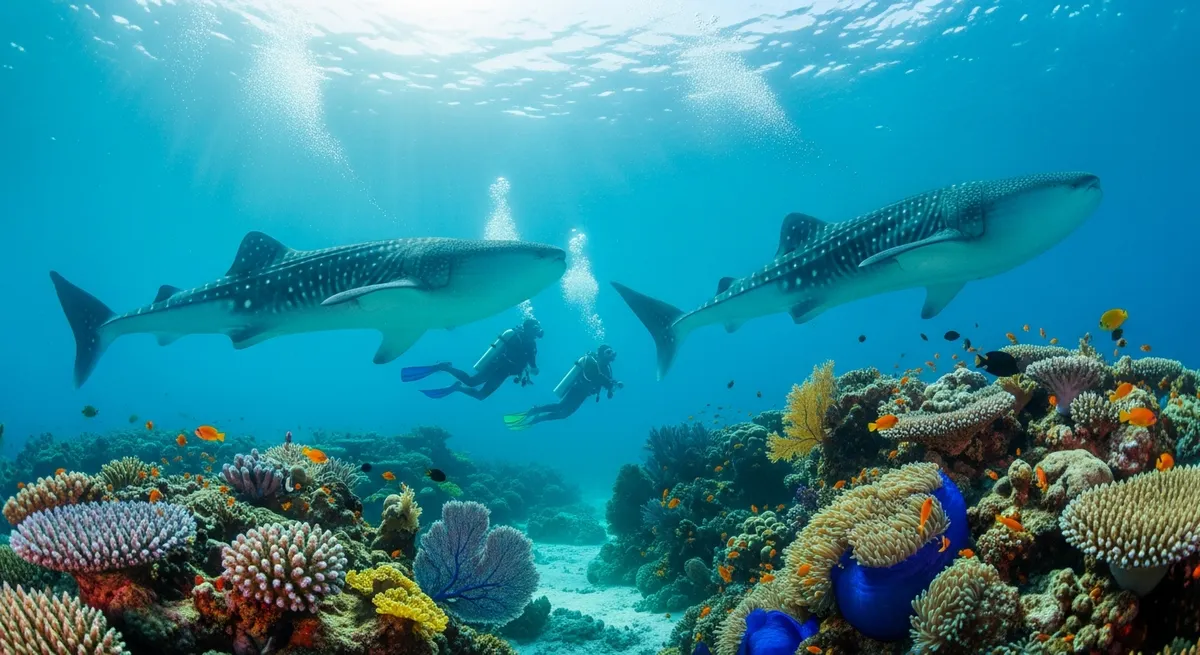
Nosy Be sits as Madagascar's most developed dive spot, and for good reason. We’ve found the reefs here offer a solid mix of wall and fringing reef dives, with a handful of wrecks thrown in for good measure. Keep your eyes peeled for those local specialties like the Carnelian Cowry, often tucked away in crevices, or the Madagascar Sea Catfish, a real treat to spot. Seasonal whale shark encounters are a big draw, typically from October through December, making those months a lively time to visit. While currents can pick up, most sites are manageable, giving you plenty of time to explore.
Nosy Be Dive Site Map
Dive sites and dive centres in Nosy Be
Nosy Be Dive Sites
21 dive sites in Nosy Be
Atimo Plongée
Atimo Plongée, just off Nosy Be, offers a solid dive without a lot of fuss. We've found ourselves drifting past schools of coastal trevally, their silvery flanks catching the light as they dart about. Keep an eye on the sand for Natal electric rays, often partially buried, and the occasional spiny blaasop puffing itself up if you get too close. It’s a comfortable dive for most levels, delivering some classic Indian Ocean encounters.
Balala Diving
Balala isn’t a deep dive, but it’s one of those spots we love for its sheer density of unusual critters. We often spend a whole hour just in the first ten metres. The topography is a mix of coral bommies and rubble patches, which is exactly what the macro life here seems to prefer. You’ll want to move slowly, really slowly, because the star of the show often blends right in. We’ve found multiple Snakehead Cowries tucked into crevices, their mantles a marvel of camouflage. Keep your eyes peeled for the Indo-Pacific Hairy Hermit Crab scuttling amongst the debris, it’s a bizarre-looking little thing. This site also delivers on nudibranchs, though they’re not in the data, we’ve found some beauties here. The corals, like the Bottleneck Sea Cucumber and Starflower, add texture to the landscape, creating little hideouts. Balala is perfect for photographers, especially those with a macro lens. It’s also our pick for a second dive of the day when you want to unwind and just hunt for the small stuff.
Chameau
Chameau always feels like a bit of a gamble, but when it pays off, it *really* pays off. We’ve had days here where it felt like just another reef, and then others where it absolutely blew us away. Our favourite memory is drifting along a wall blanketed in thin birdsnest coral, the kind that looks like delicate pink lace, with so many tropical silversides schooling around us that they actually filtered the light. It was a dizzying, shimmering curtain. You’ll want to look closely here, not just at the big picture. We’ve spotted some truly bizarre nudibranchs, the bicolor kind, and once a cloth-of-gold cone snail inching its way across a closed brain coral. The reef system here is a fascinating mix of hard corals, from largebrain root coral to dense stands of staghorn. While there's no guarantee, if you’re lucky enough to hit it during whale shark season, this spot is one of their known haunts. We’d suggest going early in the morning for the best chance at calmer conditions and fewer boats. It’s a site that rewards patience and a keen eye, perfect for divers who appreciate intricate reef ecosystems and aren’t solely focused on pelagics.
Fifi Diving
Fifi Diving, a spot off Nosy Be, often offers a straightforward drift. We’ve seen Natal electric rays here, hunkered down, along with spiny blaasops and the occasional Cape shark cruising by. Look closely for eroded cowries tucked into the substrate. It’s a pretty easy dive, good for getting your bearings in the area, and usually has a reasonable current to carry you along.
HMS Serapis
The HMS Serapis is a dive that always leaves us feeling a little... reflective. It’s not one of those pristine wrecks; it’s genuinely broken up, scattered across the seafloor after its demise in 1841. What you get here is less a grand ship to penetrate and more an archaeological site, a historical footprint. We love picking through the debris, seeing the individual timbers and plating, imagining the chaos. The depth is around 20-25 metres, and it’s a fairly easy dive, though currents can pick up a bit, so keep an eye on the tide charts. Visibility can vary, but on a good day, you’ll see the structure extending out, a dark skeletal outline. It’s particularly good for macro. We’ve spotted countless bicolor nudibranchs tucked into crevices and the occasional cloth-of-gold cone snail crawling across the older timbers. Look closely in the nooks and crannies for eroded cowries and the Mozambique mouth-breeder, they’re often camouflaged. It’s a dive for those who appreciate history and don't mind a bit of a treasure hunt for the smaller stuff. Not a vibrant coral garden, but a moody, atmospheric dive that tells a story.
Il Balenottero
Il Balenottero, off Nosy Be, is a dive we often visit when we're looking for something a little different. It’s not about huge pelagics here, but rather a more intimate experience. We’ve logged forty-six species, and it’s a site where you really want to slow down and scour the reef. Keep an eye out for the shy Mozambique mouth-breeder and the vibrant Bicolor nudibranch. The cowries, like the Carnelian and Eroded varieties, are also regulars. It's a relaxed dive, perfect for photographers or anyone who enjoys patient macro hunting.
Le Grand Bleu
Le Grand Bleu, just off Nosy Be, is a good pick for a relaxed afternoon dive, especially if you're keen on the smaller stuff. We've seen a surprising number of cowries tucked into the crevices here, and it's a reliable spot for Natal Electric Rays resting on the sand. Look closely for Sharptooth Snapper darting among the halodule seagrass. It's not a site that will blow your mind with huge pelagics, but for macro enthusiasts and divers who appreciate a quieter experience, it often delivers.
Manta divesite
Manta divesite. The name alone tells you what everyone’s hoping for here. And while we’ve certainly had incredible manta encounters, what we really love about this site is its dynamic energy. Drop in, and you’re immediately part of a bustling reef scene. We’ve seen schools of fusiliers so thick they practically block out the sun, silver walls moving as one. The reef structure itself is impressive, a mix of robust staghorn and large brain corals, providing plenty of nooks and crannies for macro life if you can tear your eyes away from the blue. Keep an eye out for the big boys, but don't forget to scan the coral heads for things like variable strombs or reticulated venus shells. The currents here can be unpredictable; sometimes it’s a gentle drift, other times you’re really moving, which is often when the mantas decide to cruise through. For us, the best dives have been in the late morning, just as the sun gets high, illuminating the reef and drawing out the fish. This spot really shines for those who appreciate a lively, often fast-paced dive with the potential for something truly special.
Mora Mora
Mora Mora gives you a real feel for Nosy Be's volcanic origins. We usually drop onto a sloped reef of rubble and coral, often spotting big schools of fusiliers and snapper hanging around. Keep an eye out for Natal electric rays tucked into the sand flats and eroded cowries clinging to the rocks. It’s a good spot for a relaxed drift, particularly when the current picks up a little, carrying you past the small pinnacles and bommies where the sharper-toothed snappers like to lurk. We find it’s a site that rewards a slow pace, true to its name, letting you appreciate the details rather than big dramatic features.
Nosy Be - Black Coral Garden
Drop down to Nosy Be's Black Coral Garden and you're entering a different world, darker and more mysterious than some of the shallower sites. We found ourselves navigating impressive thickets of black coral, their intricate branches creating a habitat for all sorts of reef dwellers. Keep an eye out for the resident groupers and snappers that patrol the deeper sections here, they’re often quite large. This site is a solid pick for those comfortable with depths down to 40 meters, looking for something a bit more dramatic.
Nosy Be - Manta Point
Manta Point, off Nosy Be, is exactly what it sounds like, a known hangout for manta rays. We've found the mantas show up most reliably between September and December, usually cruising in for a clean or a feed. It’s mostly a sandy bottom around 10 to 25 meters, with scattered coral heads where the smaller reef fish gather. If you’re lucky, you’ll see the mantas gracefully circling, sometimes quite close. It’s a good spot for divers hoping to tick off a manta encounter without needing extreme conditions.
Nosy Be - The Pinnacles
The Pinnacles off Nosy Be offer a solid drift dive, where we’ve often found ourselves gliding past schools of barracuda and trevally. These seamounts rise from around 35 metres, topping out at 15 metres, so you get a good range of depths to explore. Keep an eye out for reef sharks patrolling the deeper sections; they’re pretty reliably there. It’s a good spot for divers who enjoy some current and aren’t afraid of a bit of open water, as the action tends to be in the blue rather than tucked into crevices.
Nosy Be Dive Centres
19 dive shops and operators in Nosy Be
Ocean Wildlife in Nosy Be
1 species recorded in Nosy Be
Nosy Be Daylight & Sunrise/Sunset
Sunrise and sunset times for Nosy Be, calculated from coordinates
Today - Sunday 11 October
Sunrise
05:26
Sunset
17:49
Daylight
12h 22m
Golden Hour
17:20
First light (dawn) at 05:05 · Last light (dusk) at 18:11
Monthly Averages
| Month | Sunrise | Sunset | Daylight |
|---|---|---|---|
| Jan | 05:32 | 18:29 | 12h 57m |
| Feb | 05:47 | 18:23 | 12h 36m |
| Mar | 05:54 | 18:06 | 12h 12m |
| Apr | 05:58 | 17:44 | 11h 45m |
| May | 06:06 | 17:29 | 11h 24m |
| JunShortest | 06:15 | 17:28 | 11h 12m |
| Jul | 06:18 | 17:35 | 11h 17m |
| Aug | 06:08 | 17:43 | 11h 35m |
| Sep | 05:47 | 17:46 | 12h 0m |
| OctNow | 05:24 | 17:50 | 12h 26m |
| Nov | 05:11 | 18:01 | 12h 50m |
| DecLongest | 05:15 | 18:17 | 13h 3m |
Times are approximate local times based on longitude. Actual times may vary slightly depending on the exact timezone observed in Nosy Be.
Where to Stay near Nosy Be
Prices from Booking.com. We may earn a commission at no extra cost to you.
Marine Protected Areas near Nosy Be
6 protected areas near Nosy Be - please respect local regulations when diving
Complexe Zones Humides Mahavavy Kinkony
Bombetoka Beloboka
Sahamalaza Iles Radama
Zones Humides de Sahamalaza
Ankingabe
Sahamalaza - Iles Radama
Getting to Nosy Be
Antsohihy
Mahajanga
Toamasina
Plan & book
Ways to dive Nosy Be, from day trips to liveaboards.
Day trips & courses
via GetYourGuideGuided dives, courses and snorkel trips with instant booking.
Find dive trips in Nosy BePlaces to stay
via Booking.comHotels and dive resorts near Nosy Be.
Search stays in Nosy BeDive insurance
Most travel insurance excludes or limits scuba. Check what you need before you go.
Dive insurance explainedPartner links: we may earn a commission if you book, at no extra cost to you. How we make money