Hogwarts / Outback
Why dive here
With 95+ marine species recorded in the area - including blue sharks, bull sharks, humpback whales, manta rays and mobula rays (devil rays) - Hogwarts / Outback offers some of Bazaruto Archipelago's richest reef diving. Water ranges 24-29°C, warmest January, February, March.
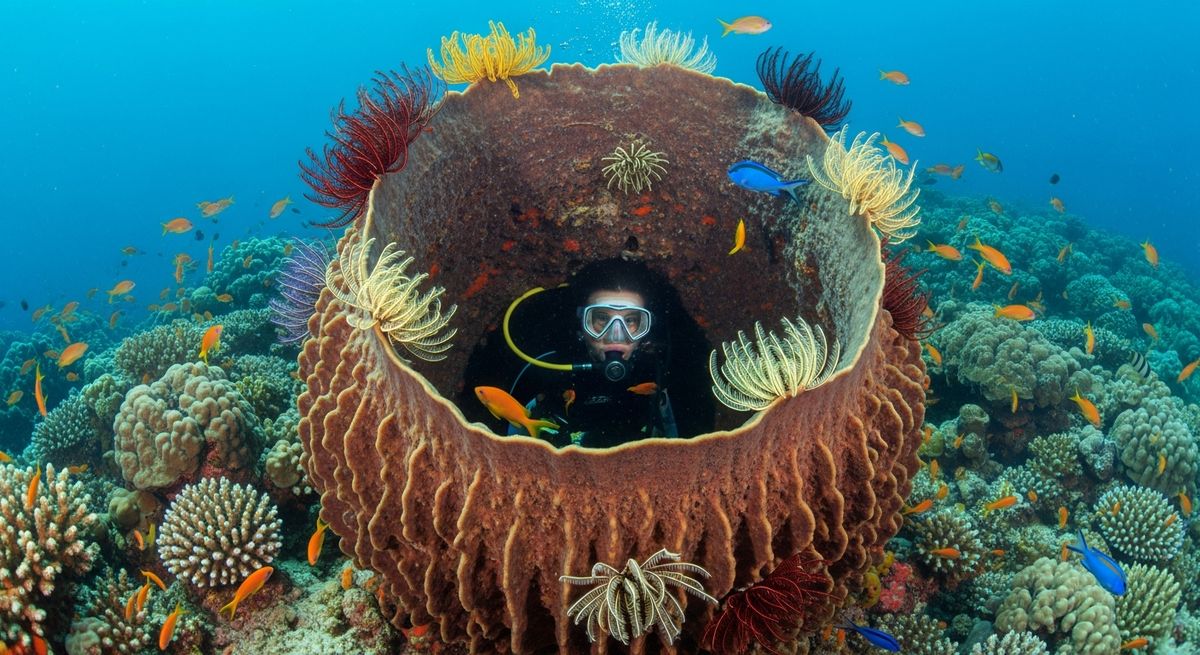
Hogwarts, or Outback as some call it, is a proper drift dive, way out from the Bazaruto main islands, about a 45-minute boat ride. We’ve found the average visibility to be around 12 metres, so it’s not always gin-clear, but that just adds to the atmosphere. The reef top sits around 22 metres, dropping to a maximum of 26 metres, so it's one for those comfortable with a bit more depth. What makes Hogwarts special are the cleaning stations. We’ve had incredible encounters watching both giant and reef mantas circle through, patiently waiting their turn. It’s a hypnotic display; you really feel like you’re observing something intimate. Beyond the mantas, keep an eye out for green turtles gliding past, and if you’re lucky, a frogfish or two hunkered down on the coral. The garden eels are a fun watch, always retracting back into the sand as you drift by. Then, at the end of the drift, you’re treated to some big swim-throughs – always a good way to finish a dive. This site suits divers who appreciate a good current, are comfortable at depth, and crave those larger pelagic interactions, especially the mantas.
Nearest Dive Centres to Hogwarts / Outback
Dive shops near Hogwarts / Outback
Peri-Peri Divers
Tofo Scuba
Liquid Dive Adventures
Diversity Scuba
Barra Reef Divers
Guinjata Dive Centre
Reviews for Hogwarts / Outback
Conditions
Ocean conditions, forecast and tides for Hogwarts / Outback
Hogwarts / Outback Ocean Conditions
Monthly averages for Hogwarts / Outback, sourced from Open-Meteo marine data + Copernicus Marine (EU) - nearest station: Open-Meteo marine grid (-21.65, 35.55) (0km away)
October Averages
Sea Temperature
26°C
78°F · Range: 24.7–27.4°C
Current Speed
14.76 cm/s
Direction: SW (208.3°)
Chlorophyll-a
0.09 mg/m³
Very clear (oligotrophic)
Salinity
35.09 PSU
Based on 4 years of monitoring data · Data sources: Open-Meteo marine data + Copernicus Marine (EU)
Plan & book
Ways to dive Bazaruto Archipelago, from day trips to liveaboards.
Day trips & courses
via GetYourGuideGuided dives, courses and snorkel trips with instant booking.
Find dive trips in Bazaruto ArchipelagoPlaces to stay
via Booking.comHotels and dive resorts near Bazaruto Archipelago.
Search stays in Bazaruto ArchipelagoDive insurance
Most travel insurance excludes or limits scuba. Check what you need before you go.
Dive insurance explainedPartner links: we may earn a commission if you book, at no extra cost to you. How we make money
Where to Stay near Hogwarts / Outback
Prices from Booking.com. We may earn a commission at no extra cost to you.