Diving in Bazaruto Archipelago
Why dive here
Bazaruto Archipelago offers some of Mozambique's richest diving, with 95+ marine species recorded in the area - including blue sharks, bull sharks, humpback whales, manta rays and mobula rays (devil rays). Water ranges 24-29°C, warmest January, February, March.
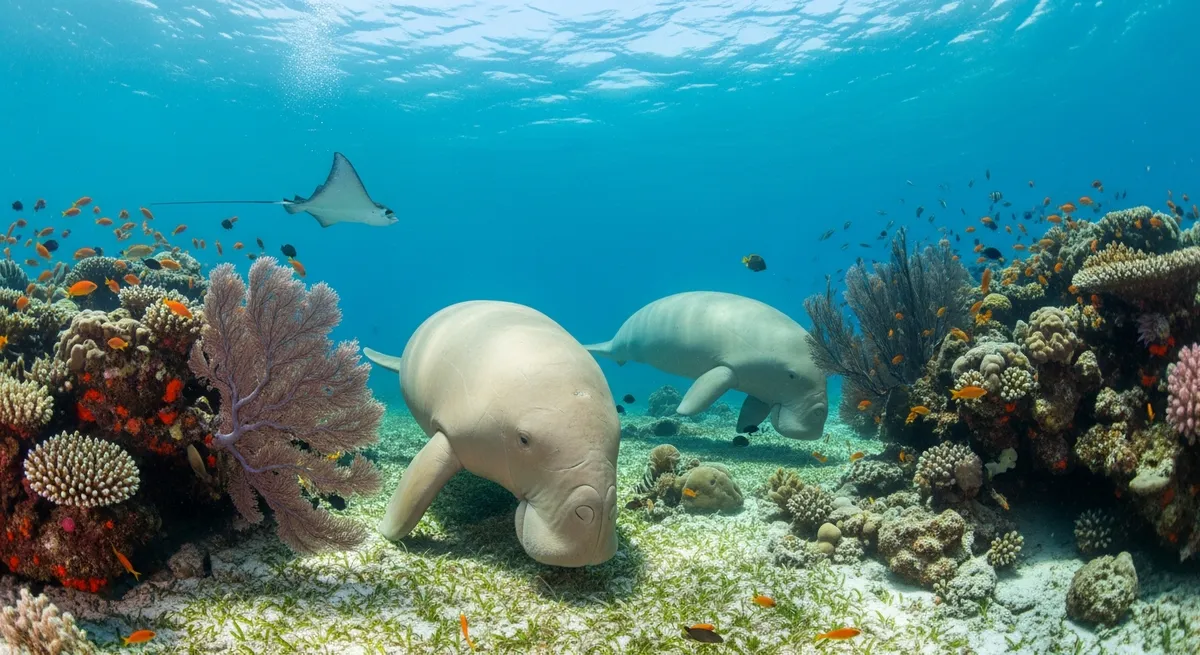
Bazaruto feels wild, a proper expedition. We love the sheer scale of the reefs here; they just stretch on. You’ll drift past enormous bommies, home to shoals of fusiliers so thick they block the light, then drop into canyons where the current picks up. Our favourite sites are further out, places like Two Mile Reef, where the coral formations are massive and the chances of seeing something big, like a Bull Shark, really climb. The dugongs are, of course, a huge draw, and spotting one of those gentle giants grazing in the seagrass beds is pure magic - a quiet, surreal encounter. We’d suggest going early in the morning for the best chance, before the boat traffic picks up. Visibility here can vary, but on a good day, it’s 25 metres plus, that clear, warm Indian Ocean water. The currents can be serious, particularly on the outer reefs, so this isn't a place for absolute beginners. We often find ourselves just hanging in the blue, watching eagle rays glide past, or keeping an eye out for a Boxer Snipe Eel tucked into a crevice. It’s rugged, remote, and absolutely worth the journey.
Bazaruto Archipelago Dive Site Map
Dive sites and dive centres in Bazaruto Archipelago
Bazaruto Archipelago Dive Sites
27 dive sites in Bazaruto Archipelago
AFRICA SHELL
Africa Shell is a proper historical dive, sitting at 29 metres, sunk by the Graf Spee back in 1939. We love that it’s still largely intact, a real testament to its build and the relatively calm currents down there. Dropping onto the deck, you’ll find the bow and stern sections are still clearly defined, though the midship superstructure is well collapsed now. Look closely at the metalwork, we’ve found some impressive nudibranchs tucked into the crevices, particularly along the railings. Our favourite part is exploring the cargo holds, where you can still fin through sections. Sunlight filters down, illuminating schools of snapper that dart through the shadows. It’s a photographer’s dream, that light play. On a good day, visibility can hit 20 metres, really letting you appreciate the scale of the old tanker. Keep an eye out for potato groupers, they seem to consider the wreck their personal hunting ground. It’s a dive that rewards slow exploration, perfect for those who appreciate a bit of history with their marine life.
Amazon
Amazon is one of our absolute favourite sites in Bazaruto, precisely because it feels so far out, so untouched. It’s a proper expedition to get there, but the reward is immense. We’ve had dives here where the visibility seemed to stretch forever, sometimes pushing 25 metres, giving you a proper sense of the reef’s scale. The C-shape of the reef, with its two distinct ledges, means there are always new corners to explore, craters to peek into, and those lovely, wide swim-throughs that just beg you to glide through them. What we really love about Amazon is the feeling of being in a truly wild place. You’ll often be the only boat out here, and the reef responds in kind. Schools of redtail scad and rainbowfish stream past, sometimes so thick they create a shimmering wall. Keep a keen eye out in the blue, because this is one of the better spots for those bigger pelagics. We’ve seen whitetips cruising the perimeter, and on a good day, the silhouette of a leopard shark is a real treat. It’s a site that rewards patience and a willingness to just drift and watch the ocean unfold around you. Definitely one for the more experienced divers who appreciate a proper offshore adventure.
Amazon
Amazon is one of our absolute favourite sites in Bazaruto, precisely because it feels so far out, so untouched. It’s a proper expedition to get there, but the reward is immense. We’ve had dives here where the visibility seemed to stretch forever, sometimes pushing 25 metres, giving you a proper sense of the reef’s scale. The C-shape of the reef, with its two distinct ledges, means there are always new corners to explore, craters to peek into, and those lovely, wide swim-throughs that just beg you to glide through them. What we really love about Amazon is the feeling of being in a truly wild place. You’ll often be the only boat out here, and the reef responds in kind. Schools of redtail scad and rainbowfish stream past, sometimes so thick they create a shimmering wall. Keep a keen eye out in the blue, because this is one of the better spots for those bigger pelagics. We’ve seen whitetips cruising the perimeter, and on a good day, the silhouette of a leopard shark is a real treat. It’s a site that rewards patience and a willingness to just drift and watch the ocean unfold around you. Definitely one for the more experienced divers who appreciate a proper offshore adventure.
Amphitheater
Amphitheater, near the famous Marble Arch, is one of our favourite spots for a relaxed morning dive. It’s a gentle introduction to Bazaruto, maxing out at 18m, making it ideal for shaking off any travel rust or for those newer to diving before tackling deeper sites. What we really love about Amphitheater is how the light plays on the sand patches, making everything feel open and bright. You’ll find a sandy basin rimmed by reef, creating a natural stage for the reef fish. We’ve had some great encounters with big schools of scad here, swirling in the blue, and the Blotched Fantail Rays often settle in the sand, sometimes almost disappearing until you’re right on top of them. Keep an eye out for Tawny nurse sharks tucked under ledges; they’re pretty chill. For macro lovers, there’s plenty to keep you busy amongst the corals: we’ve spotted Spitlure Frogfish hiding in plain sight and the occasional Blenny peeking out. Visibility averages 16m, which is usually more than enough to appreciate the coral colours and the activity across the sand. It’s a genuinely pretty dive, especially when the sun is high.
Amphitheater
Amphitheater, near the famous Marble Arch, is one of our favourite spots for a relaxed morning dive. It’s a gentle introduction to Bazaruto, maxing out at 18m, making it ideal for shaking off any travel rust or for those newer to diving before tackling deeper sites. What we really love about Amphitheater is how the light plays on the sand patches, making everything feel open and bright. You’ll find a sandy basin rimmed by reef, creating a natural stage for the reef fish. We’ve had some great encounters with big schools of scad here, swirling in the blue, and the Blotched Fantail Rays often settle in the sand, sometimes almost disappearing until you’re right on top of them. Keep an eye out for Tawny nurse sharks tucked under ledges; they’re pretty chill. For macro lovers, there’s plenty to keep you busy amongst the corals: we’ve spotted Spitlure Frogfish hiding in plain sight and the occasional Blenny peeking out. Visibility averages 16m, which is usually more than enough to appreciate the coral colours and the activity across the sand. It’s a genuinely pretty dive, especially when the sun is high.
Clownfish
Forget the name, we’ve never really paid much attention to the clownfish here. Clownfish, in Bazaruto, is a site we return to for the unexpected. It’s shallow, capping out at 13m, which means decent bottom time and plenty of light for spotting the smaller stuff. We’ve had some cracking dives just drifting over the sandy patches between coral heads, eyes peeled for a Stargazer peeking out or a camouflaged Spitlure Frogfish doing its best impression of a rock. It’s a site for the patient observer, not the pelagic hunter. You'll often find us hovering over the coral, watching the Half-circled Angelfish pick through polyps, or tracking a shy Blenny darting in and out of its crevice. Visibility averages around 12m, but on a good day, it stretches further and the colours really pop. We’d suggest a morning dive, before the wind picks up, for the calmest conditions and the best chance to spot the more elusive creatures. It’s an easy, relaxed dive, perfect for a long session of macro photography or just soaking in the details.
Coliseum / Hospital
Coliseum / Hospital gives you a solid feel for Bazaruto’s deeper coral reef ecosystems. We’ve found the top of the reef starts around 21 metres, dropping to a maximum of 24 metres, which means careful bottom time management, especially on air. Visibility often hangs around 12 metres here, so keep an eye out for the bigger stuff that cruises through: we’ve had good luck spotting whitetip reef sharks and the occasional grey reef shark making their rounds. It’s a site for divers comfortable with depth and looking for those classic Indian Ocean reef encounters rather than shallow, colourful gardens.
Diversity Scuba
Diversity Scuba just feels right. It’s a site that gives you a little bit of everything, without ever feeling chaotic. We love the gentle slope of the reef here, a really comfortable drift that allows you to properly take in the details without fighting the current. You'll often find yourself eye-level with curious Natal Sergeants, who patrol their territory with an almost comical seriousness. It’s the sheer variety that stands out. One minute you’re watching a Blue Trim Parrotfish meticulously grazing, the next a graceful Diana’s Hogfish is gliding past. Keep an eye out for the Basketfish tucked into crevices and those elegant Clown Tangs moving in unison. We’ve had some truly memorable encounters here, including a surprise visit from a Southern Right Whale on one surface interval-a moment that still gives us chills. Our top tip? Go early. The morning light really brings out the colours of the corals and the fish life seems to be more active. It’s a site that rewards a slow, observant dive.
EN1
EN1 is one of those sites we always recommend to newer divers who want a taste of Bazaruto without the sometimes intense currents of Two-Mile. Don't let the 13-meter max depth fool you; there's plenty to get excited about here. We love the way the reef top is just a gentle slope, making it easy to cruise along at your own pace, keeping an eye out for the resident honeycomb whiprays. These aren’t small fish, often five meters across, gliding over the sand flats between the coral bommies. Our favourite time to dive EN1 is first thing in the morning when the light hits the reef just right, illuminating the yellow and blue groupers hiding in the crevices. You’ll find plenty of smaller life too – the African butterflyfish are everywhere, and we’ve spotted loggerhead turtles munching on seagrass more than once. Keep an eye on the sandy patches; that’s where you'll often find torpedo rays buried, and we've even seen a whale shark cruise by in deeper water, though that’s definitely a lucky encounter. Visibility averages around 10 meters, which is perfectly good for spotting the abundant macro life, like the intricate patterns on a Savigny's brittle star or a camouflaged scorpionfish. This site is perfect for photographers, or anyone who enjoys a relaxed dive with a good chance of seeing something substantial.
EVRIDIS
Evridis is our pick for a unique wreck experience in Bazaruto. This old carrier, 115 metres long, went down hard on the rocks back in '68, and it’s a proper historical dive. You'll find it fairly shallow, which means long bottom times and great light penetration on sunny days. What we love about Evridis is how the wreck itself has become part of the reef. The bow section is particularly impressive, with huge groupers lurking in the shadows of the twisted metal. Look closely and you’ll spot crocodile fish camouflaged on the deck plates, and we’ve seen schools of snapper so thick you can barely make out the hull beneath them. It’s an easy dive, really, with plenty to explore even if you're just hovering above. For photographers, the way the light filters through the superstructure, illuminating the soft corals, offers some fantastic wide-angle opportunities. We’d suggest going at high tide for the calmest surface conditions.
Fingers
We love Fingers for a relaxed second dive, especially after a deeper morning out. It’s got a maximum depth of 15 metres and the name really describes it – finger-like coral extensions reaching out from the main reef. This structure creates these lovely little gulleys and overhangs, perfect for spotting the smaller stuff. We’ve had great luck finding banded boxer shrimp tucked away, and you need to keep your eyes peeled for leaf fish and the always-entertaining frogfish. They just sit there, perfectly camouflaged. Visibility averages around 10 metres, so it’s not always about grand vistas, but more about the details. Look closely for nudibranchs crawling along the coral. There’s a good chance you’ll see torpedo rays gliding over the sand patches, or a Kuhl’s stingray half-buried. On one particularly memorable dive, we watched a Jenkins ray cruise past, its tail trailing. It’s a site that rewards a slow, observant pace, ideal for macro lovers or anyone wanting a chill dive with plenty to discover without the pressure of depth.
Giants Castle
Giants Castle is one of those spots that just sticks with you. Dropping down to 26 meters, you immediately feel the scale of the place. It’s huge, a colossal reef stretching for hundreds of meters. We love drifting along the eastern ledge, where the reef face just plummets another seven meters to the sandy bottom at 35 meters. That vertical drop is where we’ve had some truly magic encounters. Visibility averages around 12 meters, sometimes a little less, but it often concentrates the action, pulling in rays like magnets. Keep an eye out for small-eyed stingrays gliding over the sand, and we’ve seen eagle rays and even devil rays schooling here. The cleaning stations along that ledge are busy with bannerfish and surgeonfish, and if you’re patient, a manta might just cruise in. It’s a site that rewards slow, observant diving, especially along that deep wall. Giants Castle is perfect for experienced divers who appreciate the grandeur of a large reef and the potential for big pelagic encounters. It’s not about flashy colours, but the sheer presence of the place and the incredible density of fish life.
Show all 27 dive sites in Bazaruto Archipelago
Bazaruto Archipelago Dive Centres
10 dive shops and operators in Bazaruto Archipelago
Barra Reef Divers
Dive Bazaruto
Diversity Scuba
Guinjata Dive Centre
Liquid Dive Adventures
Mozdivers
Odyssea
Odyssea Dive Centre
Show all 10 dive centres in Bazaruto Archipelago
Ocean Wildlife in Bazaruto Archipelago
95 species recorded in Bazaruto Archipelago
Bazaruto Archipelago Daylight & Sunrise/Sunset
Sunrise and sunset times for Bazaruto Archipelago, calculated from coordinates
Today - Sunday 11 October
Sunrise
05:10
Sunset
17:42
Daylight
12h 32m
Golden Hour
17:12
First light (dawn) at 04:47 · Last light (dusk) at 18:05
Monthly Averages
| Month | Sunrise | Sunset | Daylight |
|---|---|---|---|
| Jan | 05:04 | 18:32 | 13h 27m |
| Feb | 05:26 | 18:20 | 12h 54m |
| Mar | 05:40 | 17:56 | 12h 15m |
| Apr | 05:53 | 17:25 | 11h 33m |
| May | 06:06 | 17:04 | 10h 58m |
| JunShortest | 06:20 | 16:59 | 10h 40m |
| Jul | 06:21 | 17:08 | 10h 47m |
| Aug | 06:06 | 17:22 | 11h 16m |
| Sep | 05:36 | 17:32 | 11h 56m |
| OctNow | 05:06 | 17:43 | 12h 38m |
| Nov | 04:46 | 18:02 | 13h 16m |
| DecLongest | 04:46 | 18:22 | 13h 36m |
Times are approximate local times based on longitude. Actual times may vary slightly depending on the exact timezone observed in Bazaruto Archipelago.
Where to Stay near Bazaruto Archipelago
Prices from Booking.com. We may earn a commission at no extra cost to you.
Marine Protected Areas near Bazaruto Archipelago
1 protected area near Bazaruto Archipelago - please respect local regulations when diving
Cabo de São Sebastião
Getting to Bazaruto Archipelago
Inhambane
Maputo
Mpaka
Plan & book
Ways to dive Bazaruto Archipelago, from day trips to liveaboards.
Day trips & courses
via GetYourGuideGuided dives, courses and snorkel trips with instant booking.
Find dive trips in Bazaruto ArchipelagoPlaces to stay
via Booking.comHotels and dive resorts near Bazaruto Archipelago.
Search stays in Bazaruto ArchipelagoDive insurance
Most travel insurance excludes or limits scuba. Check what you need before you go.
Dive insurance explainedPartner links: we may earn a commission if you book, at no extra cost to you. How we make money